How to Measure for a Sectional Sofa
The first step to finding the perfect sectional sofa is measuring your space.
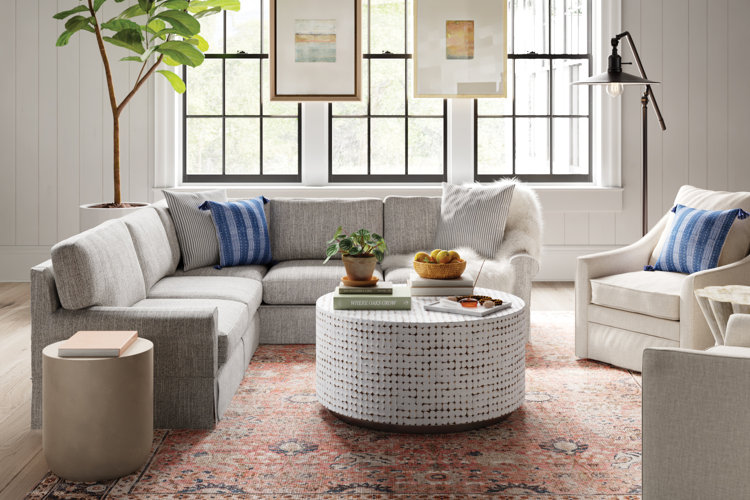
Sectionals are great for maximizing sitting space and making space for everyone to relax, but can be difficult to place in a room due to their size. Choosing the correct sectional size is key for ensuring it fits within your space and meets your seating needs. If you're not sure how to measure a sectional, we've got you covered. Keep reading to find simple tips that'll help you gather the sectional dimensions you'll need to get the right fit for your home.
In this guide:
Key Sectional Dimensions to Know
How to Measure & Replace a Sectional
How to Measure for a New Sectional Sofa
Frequently Asked Questions
Key Sectional Dimensions to Know
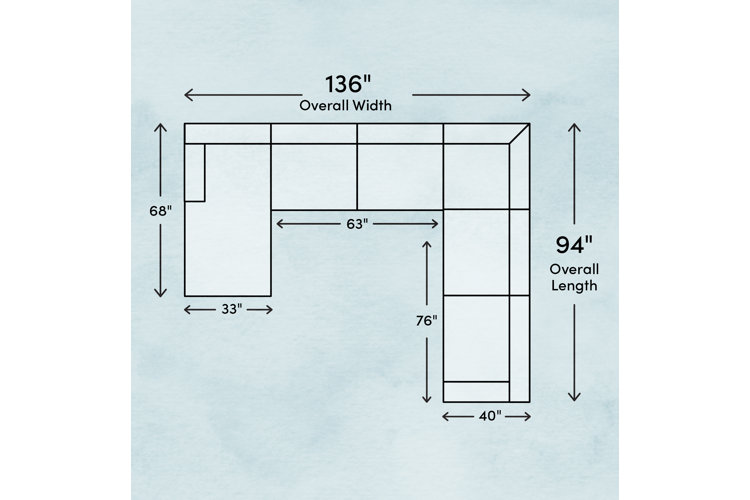
Because sectional sofas are highly customizable, there are no standard sectional dimensions. There are, however, a few general measurements to keep in mind when measuring for a sectional sofa. Refer to the sectional size diagram above for our definition of overall measurements
Overall Length (or Depth)
This is the combined measurement of both the right-hand (or left-hand) loveseat and the corner chair. The overall length/depth of a sectional sofa is usually between 94" and 156" (or between about 8' and 13') deep. To find a sectional's specific overall depth, read the product's "Weights & Dimensions" tab.
Overall Width
This is the total measurement of all the components along the back of the sofa. In the illustration, the components are the left-hand chaise, the armless loveseat in the middle, and the corner chair on the right side. The overall width of a sectional sofa is usually longer than the overall length and tends to fall between 90" and 168" wide. There are three options for sectional width: small (less than 89"), standard (90"– 109"), large (over 109"). To find a sectional's specific overall width, read the product's "Weights & Dimensions" tab.
Chaise Length
If your sectional includes a chaise, this extended seating portion typically measures 60" to 72" long. Factor this into your overall space planning, especially when positioning near walkways or other furniture.
Interior Measurements
When measuring a sectional, the measurements on the interior sides of the sectional as shown in the illustration are important if you’re considering pairing your sectional with a coffee table or other living room centerpiece, like an ottoman.
Seat Depth
If you have a preference for how deep your seat is, measure from the front edge of the seat to the back edge of the seat. There are four seat-depth options: shallow (less than 21"), standard (21"– 28"), deep (28" – 35"), and extra deep (35"+). To find a sectional's specific seat depth, read the product's "Weights & Dimensions" tab.
Curved Sectional Measurements
Measurements for curved sectionals, found under the "Weights & Specifications" section of their product descriptions, are listed for height, width, and depth. The best way to describe these width and depth measurements is that they correspond to the size of the smallest imaginary rectangle that could fit the curved sectional within it. The width is the measurement of the long side of the rectangle and the depth describes the short side. When measuring your space for a curved sectional, use the dimensions of this imaginary rectangle as you would the dimensions of a traditional sectional.
Tip!
Read How to Choose the Right Sectional for You to learn everything else you need to know before buying a sectional, including sectional shapes, materials, and chaise orientation.
How to Measure & Replace a Sectional
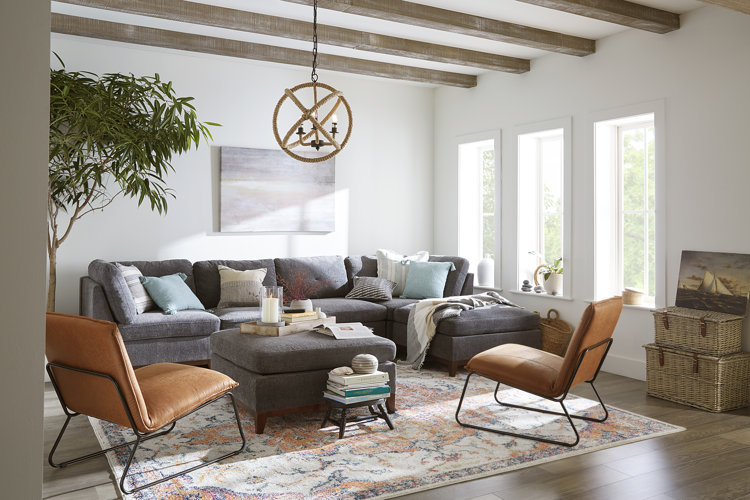
If you are replacing your current sectional with a new one, we recommend finding one that is the same size. To do that, you just need to measure your current sectional's overall width, overall depth, and height. Use a tape measure to measure the width and depth – in inches. To find the height, measure from the floor to the top of the arms arms, and then from the floor to the top of the sofa's back.
Measuring a curved sectionals is a little more difficult than measuring a traditional sectional. We suggest using masking tape or painter's tape to tape a rectangular area around the curved sectional so that no part of the sectional sofa is protruding. Once you've created a comfortable rectangle to fit the curved sectional, use a tape measure to measure the depth and width of that rectangle. These dimensions should serve as the dimensions of an area that would comfortably fit that sectional.
Tools You'll Need:
- Tape measure
- Masking tape or painter's tape
- Notepad and pen
To measure for a sectional, measure wall lengths, walkway space (30" – 36"), and sofa footprint (width, depth, and chaise length). Ensure doorways and hallways fit the largest piece.
1. Measure Your Space
To measure your living room or space for a sectional sofa, use a tape measure to measure the length, width, and height of the room. These measurements will be a baseline for what size sectional will comfortably fit in your space. You may use a measure app or AR ruler app in place of a tape measure to take your measurements, but we recommend using a tape measure for the most accurate measurement possible.
It’s also important to measure doorways, hallways, and other areas through which the sofa must be carried when it is delivered. Sometimes a sectional’s legs can be removed so it can squeeze through narrow spaces, but it’s still good practice to avoid buying a sectional that may not fit through your front door or hallways.
2. Tape the Area
Once you know how large your room is, choose the spot you’d like to place your sectional. It should be wide open and away from high-traffic pathways so the sectional doesn’t obstruct the natural flow of movement throughout your home. A corner sectional can be appropriately placed in one corner of your living area, but be sure to leave a few inches for outlet access if necessary.
Mark the spot you picked out on the floor with masking tape or painter's tape. Exact measurements don’t matter here – taping off the space will help you visualize how much space the sofa will occupy in the room. You can remove and re-mark as many times as you need until you’re sure you have a comfortable size and position.
3. Measure the Area
Measure the dimensions of the area you’ve marked. Though it’s unlikely you’ll find a sectional that will perfectly match those measurements, you can use them as an estimate or set of general guidelines for the sectional size that is best for your room.
If you're considering placing the sofa in front of windows, make sure to measure the height of the window sill. The rule of thumb is that the sofa back should not extend higher than the sill.
Tip!
You may want to move your sofa at some point. Before you buy, measure for multiple arrangements to ensure that your sectional can fit comfortably in other positions. There are even sectionals with reversible chaises so that you can place it on either side, which is ideal for those who plan on rearranging or moving soon.
Common Mistakes to Avoid
- Forgetting to measure doorways: Always measure all entry points, including front doors, hallways, and stairwells, before purchasing to ensure your sectional can be delivered.
- Not accounting for walkway space: Leave at least 30" to 36" of clearance around your sectional for comfortable walking paths.
- Ignoring windowsill height: If placing your sectional in front of windows, ensure the sofa back doesn't extend higher than the windowsill.
- Overlooking outlet access: When placing a corner sectional, leave a few inches of space for electrical outlet access.
Frequently Asked Questions
How much space do you need for a sectional?
It's best to leave 30" – 36" of clearance around a sectional sofa for comfortable walkways and natural traffic flow throughout the room.
What is the standard sectional size?
Standard sectionals typically measure 90" to 109" wide, though many sectionals range from 94" to 156" wide depending on the configuration and number of pieces.
How do you measure for sectional delivery?
To measure for sectional delivery, measure the width, height, and diagonal depth of all doorways, hallways, and stairwells, then compare these measurements against the largest piece of the sectional.
How long is a chaise?
Most sectional chaises measure 60" to 72" long, which should be factored into your overall space planning when positioning the sectional.
