Bed Sheet Thread Count: What You Should Know
All of your thread count questions, answered.
A common bedding misconception is that sheets with high thread counts are superior to sheets with low thread counts. Surprise! It's not always the case. Keep reading to learn all about sheet thread count and how factors like material, weave, and ply impact which thread count is the best.
In this guide:
What Is Thread Count?
Factors That Influence Thread Count
Frequently Asked Questions
What Is Thread Count?
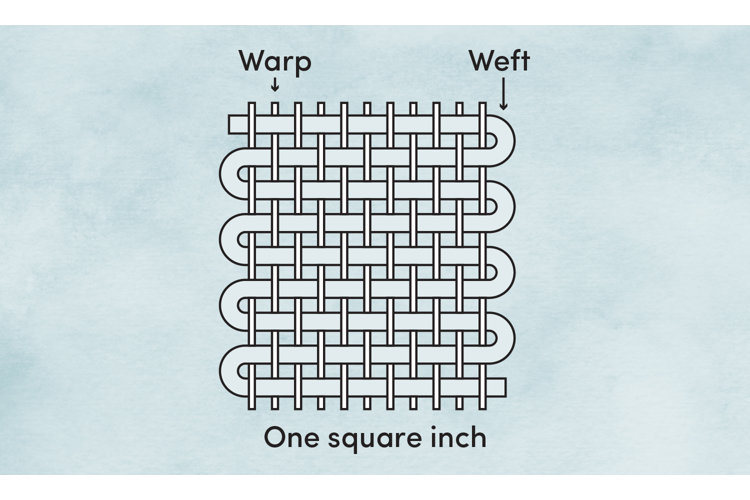
Thread count refers to the number of horizontal threads (weft) and vertical threads (warp) that are in a square inch of fabric. Generally, good sheets have a thread count between 200–800. However, while thread count matters, look at the material, ply, and weave to make a more informed choice when comparing options. For example, a 200-thread-count sheet may feel softer in one particular material than an 800-thread-count sheet in another material because of these factors.
Up to 200 Thread Count: Sheets with a thread count of up to 200 are more breathable and lightweight. They might not be as soft as higher thread counts, but they will keep you cool when you sleep.
200 – 399 Thread Count: Sheets with this thread count range are still breathable, but they're a bit softer on the skin and a bit more durable.
400 – 599 Thread Count: These sheets are softer, more durable, and less likely to pill compared to lower thread count sheets since there are more threads per square inch. As for breathability, they still offer good airflow, but this also depends on the material (cotton sheets are more breathable than polyester sheets of the same thread count, for example).
600 – 799 Thread Count: Although less breathable, sheets within this thread count range have a luxurious, soft feel and extra durability to uphold their quality over time.
800 or Higher Thread Count: Sheets with a thread count of 800 or higher vary in quality and softness depending on the material and the yarn ply used. At best, their dense construction helps trap warmth – good for winter bedding.
Factors That Influence Thread Count
Here's a breakdown of how material, weave, and ply density can have an impact on thread count, including the best ranges for each option.
Bed Sheet Materials
(Shop this image: striped bed sheets, gray pillowcases, and fern wall art.)
Sheets come in many different materials and each has its own benefit. Parents tend to opt for easily washable materials like cotton for kids, while silk sheets are a high-maintenance yet luxurious way to make a bed. Each material has their own thread count that is the “best” due to their makeup, weave, and ply.
Cotton: 200 – 400
Known for its breathability and softness, cotton is the most common sheet option. Cotton sheets can be made from a variety of fibers (short staples, long staples, and extra-long staples). Short staples are the lowest quality, long staples are high-quality, and extra-long are the finest quality. The softest sheets use cotton with extra-long fibers, which are spun into strong yarns. The best thread count for sheets made with cotton range from 200 to 400.
Pima: Made from long staple fibers, this is soft yet strong, durable, and long-lasting. For the best quality, aim for 300 – 600 thread count for these sheets.
Supima: Made from American-grown pima, this fabric is soft yet strong and retains color. Supima cotton sheets are also the softest with a thread count between 300 and 600.
Egyptian: Made from the highest-quality cotton with the finest and longest staple, this cotton material is soft and breathable. The best Egyptian cotton sheets have a thread count between 300 and 500.
Tip!
Organic cotton is grown without herbicides, pesticides, or fertilizers and will have the mark of US government–approved certification on the package.
Flannel: 170 – 180 or 4 ounces per square yard
Made from a blend of different types of cotton, flannel sheets have a soft, brushed surface that is extremely warm. These are typically measured in ounces per square yard, not thread count. We recommend sheets with at least 4 ounces per square yard to keep you cool and comfortable through the night. If you want to shop by thread count, we recommend starting with flannel sheets that have a thread count between 170 and 180, with a higher thread count if you're after thick winter sheets.
Linen: 80 – 140
Linen is a very breathable fabric that improves with age. It’s best for warm or summer months, and often has a lower thread count for breathability purposes. Because of this, the best bed sheet thread count for linen sheets range from 80 to 140.
Polyester: 200 – 800
This man-made material is less breathable than cotton, and it can be considered stiff and scratchy when on its own. Polyester blends are more popular because they have a softer feel that is durable, wrinkle-free, long-lasting, and easy to care for. Polyester sheets can have the highest bed sheet thread count since they range from 200 to 800.
Microfiber: 90 – 120 GSM (not thread count)
Microfiber is made from synthetic polyester fibers that are woven tightly together to create a thin but strong sheet. It is warm, very soft, and repels liquids. Microfiber is one sheet material that is not measured in thread count, but with grams-per-square-meter (GSM). If you choose bed sheets made with microfiber materials, your bed sheet thread count should range from 90–120 GSM.
Silk: 19 – 21mm (not thread count)
Considered the most luxurious sheet material, silk is produced by silkworms and has a soft and smooth feel. It often feels cooler than cotton, and is hypoallergenic. Silk is measured by weight (per 100 yards), and not thread count, so look for momme weight in the description. We recommend buying sheets with a weight between 19–21mm (in this case, mm refers to mommes, which is the Japanese measurement for silk fabric).
Weaves can affect your sheet's thread count, feel, longevity, and appearance, so it's important to keep the weave pattern in mind when choosing a sheet thread count. Here are the two main weave types and their average thread counts:
Percale Sheets: 200 – 400
Also known as “plain weave,” the cotton yarn is woven over and under each other (like a basket weave). Percale has a cool, crisp feel. It’s the most common weave for cotton, polyester, or silk sheets, and is very durable. Quality percale sheets have between 200 and 400 thread counts.
Cotton Sateen: 300 – 600
This weaving process comprises one vertical thread for every four horizontal threads. Made from cotton, sateen is tightly woven and produces a very soft feel. It is heavier than percale, but not as durable. It has a somewhat glossy appearance, doesn’t wrinkle easily, is hypoallergenic, but may be prone to snags.
Ply refers to the number of yarns in each thread and is a critical component in determining a sheet’s quality/overall thread count. There are three ply options: single, two, and multi. Single-ply means there is only one strand of yarn per thread, whereas two-ply means that two strands of yarn are twisted together in each thread. Multi-ply, like the name suggests, means there are more than two strands of yarn twisted together in each thread.
So What Is the Best Ply for Thread Count?
In this case, less is more! Single-ply sheets are the best option as manufacturers need to use high-quality material that is strong enough to be woven alone. Two-ply or multi-ply sheets are made with lower quality materials, which is why they need to be woven together – they aren’t strong enough to be woven alone. The result: coarse and heavy sheets.
Why Do Manufacturers Use Two- or Multi-Ply?
By weaving the threads together, they can fit more threads into an inch – increasing thread count and giving the illusion of quality. However, these are typically made with low-grade materials.
Frequently Asked Questions
What is thread count in bed sheets?
Thread count is the number of horizontal and vertical threads per square inch of fabric.
Why might high thread count sheets not be better?
High thread count doesn't always mean better quality; material, weave, and ply also affect softness and durability.
What is the ideal thread count for cotton sheets?
The best thread count for cotton sheets ranges from 200 to 400.
