A perfect fit.
Learn how to fit a sectional sofa in your space, big or small.
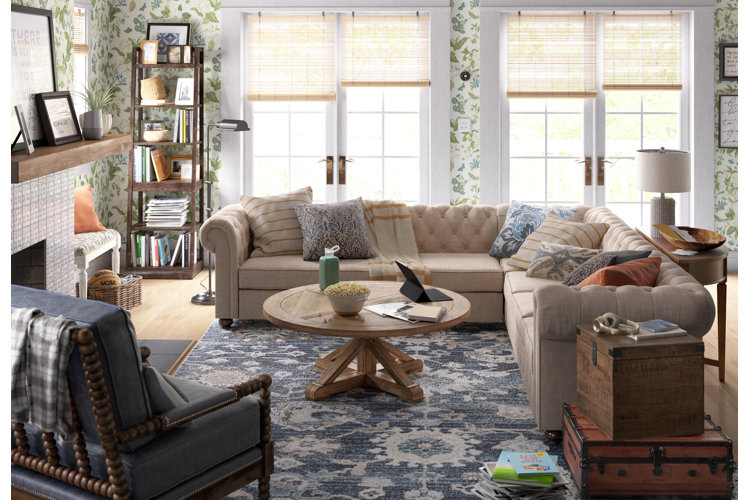
With ample seating and customizable configurations, sectional sofas can help you maximize your living space – giving you the perfect spot to watch season premieres, host overnight guests, or sprawl out on your own. We've put together a checklist for choosing the best sectional sofa for your home, including tips on getting the right sectional size, shape, and orientation.
Key Takeaways:
- Measure your space first – sectionals range from under 89 inches (small) to over 109 inches (large)
- Choose L-shaped sectionals for small rooms or corners or U-shaped for large, open spaces
- Select durable fabrics like microfiber or polyester for families with kids or pets
- Consider orientation (left-facing vs. right-facing) based on your room layout
- Budget-friendly options start under $1,000 — most quality sectionals range from $1,500–$3,000
In this guide:
Step 1: Consider the Size of Your Space
Step 2: Pick a Sectional Shape
Step 3: Choose the Orientation
Step 4: Select the Right Upholstery Material
Step 5: Think About Additional Features
Step 6: Set a Budget
Frequently Asked Questions
Step 1: Consider the Size of Your Space
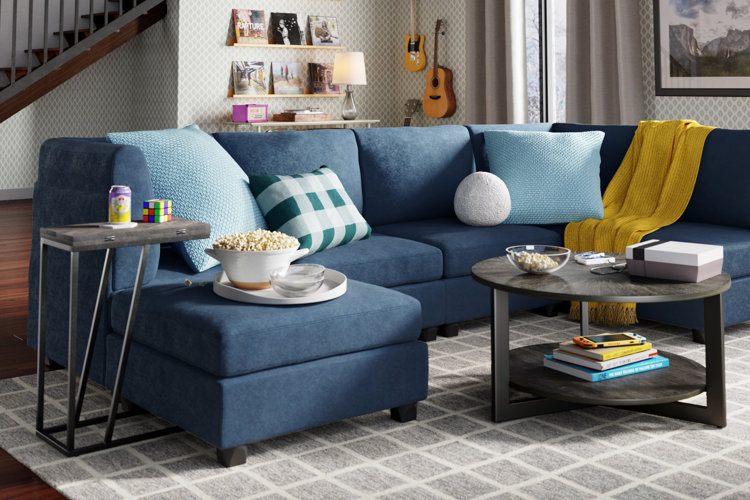
(Shop this image: blue sectionals, C tables, geometric area rugs, round coffee tables, and patterned throw pillows)
The most important consideration when buying a sectional for your living room is the size of your space. While adding a sectional sofa is a great way to maximize seating, it shouldn't disrupt traffic flow or overwhelm the rest of your furniture and decor. The largest possible sectional sofa size isn't always the best one for your entertaining needs. Select a size that gives you more choices on where to place the sectional within the room.
Whether you are looking for a small, medium, or large sectional, it's important to measure your space before you start shopping. Check out our guide How to Measure for a Sectional Sofa to ensure you know what sectional size will fit best.
Tip!
Knowing how much space you have is also important for delivery. Measure any doorways, stairwells, or tight corners that your new sectional will need to pass through.
Step 2: Pick a Sectional Shape
Select a sectional shape that can comfortably accommodate you, your household, and a couple of guests. Below, we outline the most common sectional layout options and their seating capacity.
- L-Shaped: These sectionals comprise one large, two- to three-seat sofa and an adjacent one- to two-seat loveseat or ottoman that comes together at a corner to form an L-shape. Sectionals with chaises fall under this category. L-shaped sectionals are some of the smallest and most popular sectional orientations. They can fit snugly in the corner of a room to face a TV or coffee table and are excellent for smaller spaces.
- U-Shaped: U-shaped sectionals are large, three- to five-seat central sofas flanked by two "arms." Usually, one arm is a one- to two-seat loveseat and the other is a one- to two-person ottoman. Because there are two arms that protrude into the room, these types of sectionals tend to feel a bit bulkier than the L-shaped options, making them better suited for larger spaces or open layouts. U-shaped sectionals encourage conversation and pair excellently with a coffee table because their seating surrounds a central space.
- Curved: Curved sectionals feature a curved back and can seat anywhere from four to ten people. The bowed shape makes it a bit difficult to place a curved sectional against a wall, but these statement pieces stun when they are positioned in the center of a room around a circular coffee table. Though curved sectionals aren't optimal for smaller spaces, they are prime examples of functional beauty.
The customization of sectional sofas doesn't stop with shape – you need to choose the orientation as well.
- Left- & Right-Facing: When looking at L-shaped sectionals, you'll see the phrases – left-facing and right-facing – which refer to the arm placement when looking at it head on. Once you know where you want to place your sectional, narrow down your search to the orientation that works best with the layout of your living room.
- Reversible: The shorter arm of these often L-shaped sectionals can be moved from one end to the other to convert the sectional from left-facing to right-facing (or vice versa) with ease.
- Symmetrical: Sectionals with a symmetrical orientation have protruding arms of equal length. These types of sectionals are great at unifying a room's design and tend to provide more seating than asymmetrical options.
- Modular: While some sectionals come in a preassembled shape, you can often customize your ideal layout using some of the modular components pictured below. These types of sectionals allow you to mix and match components to create the layout and orientation you want. These options are great for getting the most out of one piece of furniture.
Tip!
When putting together a modular sectional, pay close attention to left- and right-facing pieces to ensure you end up with a cohesive layout and orientation.
Once you have a size and style of sectional picked out, it's time to consider the upholstery. Sectionals come in a wide variety of fabrics and colors, so you can find a material that works for your lifestyle and budget. Velvet and chenille are two fabrics that provide a luxe feeling in your living room, while cotton and linen have a more subtle and cozy appearance. Don't forget leather and faux leather for natural color and texture. Need a material that stands up to sticky hands, dirty paws, or anything else life throws its way? Microfiber and polyester are both good options to consider. For an in-depth look at all the different upholstery fabrics' characteristics and benefits, check out our Furniture Fabric Guide: What to Look for When Shopping for Upholstery.
Step 5: Think About Additional Features
(Shop this image: gray sectionals, drum-style coffee tables, industrial-inspired floor lamps, and red area rugs)
- Reclining: One or more of the seats on these sofas recline, transforming your sectional from a place for conversation to a relaxation oasis.
- Sleeper/Convertible: These sectionals can be converted from a seating arrangement to a sleeping setup either by pulling a hidden bed frame out of the sectional's base or by flattening the back of the sofa into a mattress.
- Built-In USB Ports: Keep your devices charged with conveniently placed built-in USB ports.
Storage: These sectionals feature hidden storage below the seats or chaise, providing ample space to store spare throw blankets, games, or other living room essentials.
- Ergonomic: Sectionals with adjustable footrests, headrests, or lumbar support are designed to give you control over your comfort level, targeting each spot as you lounge and relax. Many ergonomic sectionals feature some sort of adjustable support, often with position lock to help keep your preferred configuration position in place while you relax.
- Stain-Resistant: If you have kids or pets or your household is prone to messes, a stain-resistant sectional sofa is probably a great investment. Cleanup is much easier, meaning you won't have to worry about spills or stains as much!
- With Console: The console is an integrated component – often featuring USB ports and drink storage – that can typically be found between some of the seats and functions as storage for smaller items. Many power-reclining sectionals will have consoles for extra convenience.
- Ottoman-Included: Just another component to make relaxation all that much easier, an included ottoman allows you to kick up your feet while you watch TV at the end of the day. But it can also serve as extra seating if needed.
- Removable Cushions: Removable cushions make cleaning between the seats much easier. Additionally, the cushion covers are often removable and machine-washable for added convenience.
- Slipcover: Slipcovered sectionals typically feature individual zippered covers that go over each cushion. This allows the slipcover to be removed for easy cleaning.
Step 6: Set a Budget
Not sure how much a sectional costs? While there are budget-friendly options below $1,000 and luxury ones priced at over $5,000, most sectionals hover in the $1,500 to $3,000 range with plenty of high-quality options to choose from. Here are some factors that can impact the price:
- Size: Larger sectionals often increase the price. A compact loveseat with a chaise will most likely cost less than a U-shaped sectional that seats seven.
- Materials: High-quality materials can make a sectional more expensive. Premium materials like solid wood frames, down cushions, or linen upholstery may result in a higher price tag. It's important to consider your lifestyle – performance fabrics may be a better choice than splurging for delicate upholstery if you have small children or pets.
- Features: Bonus features like built-in reclining, custom upholstery, or hidden storage may impact the total cost of a sectional.
Frequently Asked Questions
How do I determine the right sectional size for my space?
Measure your space and consider the room's layout to ensure the sectional fits without disrupting traffic flow.
What are the differences between L-shaped and U-shaped sectionals?
L-shaped sectionals are smaller, fitting snugly in corners, while U-shaped sectionals are bulkier and suited for larger spaces.
What materials are best for a family-friendly sectional sofa?
Consider stain-resistant fabrics like leather or microfiber, which are durable and easier to clean.
