What Is an Awning?
What is an awning? Find out and enjoy more time outdoors this summer
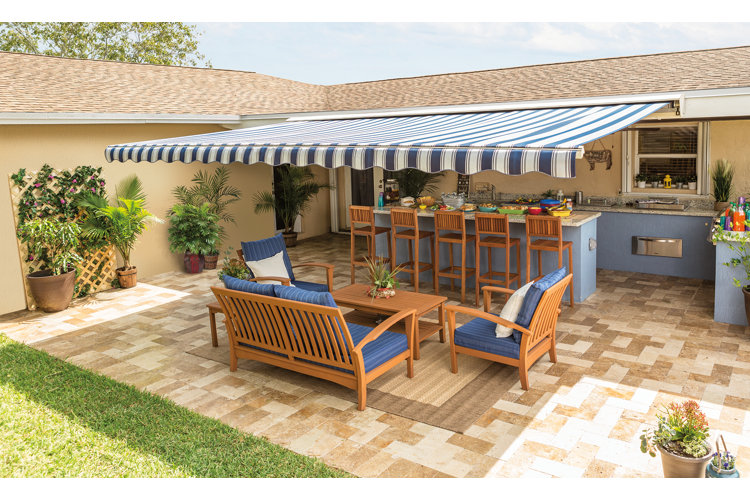
What is an awning and how do you choose the right one for your needs? Basically they are designed to make your outdoor spaces more comfortable while also protecting your outdoor furniture and house exterior. If you’ve decided to get an awning but aren't sure which one to select, consider reading this guide to find out more about the types, materials, and shapes.
What Is an Awning?
Types of Awnings
Awning Materials
Awning Shapes
Awning Features
What Is an Awning?
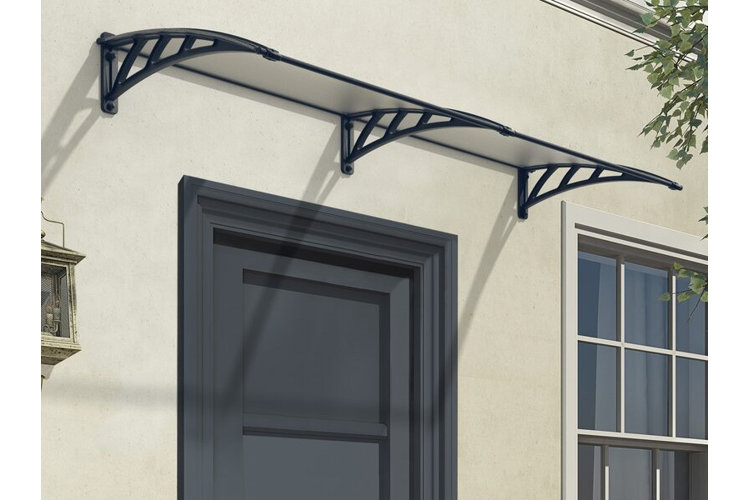
An awning is a secondary covering that is attached to an exterior wall of a building over a deck, door, or window. The purpose of an awning is to act as a canopy, create a break from strong winds, and offer protection from the sun, rain, and even snow. It also helps to keep the interior of your house cooler by preventing the sun's rays from directly shining through windows and sliding glass doors. Not only do awnings save on air-conditioning costs, they also conserve your furniture, carpets, and wallpaper by minimizing the damage from UV rays. As if you needed any more reasons to buy an awning, it also adds instant curb appeal to your home, making it more inviting and potentially raising the market value of your house.
Types of Awnings
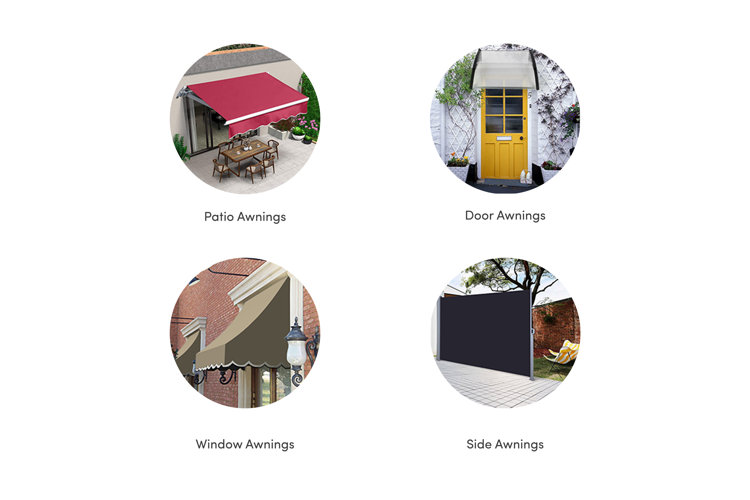
Before you buy an awning, you need to determine where you'll be installing it – this decision affects the type of awning you'll need.
Patio: Patio awnings are usually the first choice for most homeowners because of their large coverage area. Attached to an exterior wall, they easily add shade over the span of your patio, creating a nice and cool space to enjoy your morning coffee or Sunday brunch without having to worry about harmful UV rays. Patio awnings are an investment that adds to the overall value and comfort of the property's exterior while extending your living space to include the fresh air of your outdoor patio.
Door: A door awning is installed above the exterior door of an entryway. This type of awning will protect your doorway from precipitation and other harsh outdoor elements, as well as enhance the appearance of your property. Door awnings can be retractable or stationary and are available in a wide range of designs, materials, and shapes to provide a simple and stylish aesthetic.
Window: A window awning is installed above the exterior wall of a window. This is the best awning to protect your interior from repeated sun exposure while still letting natural light in. A window awning also shields the top of your windows from the outside, preventing passersby from looking directly into your home. It can be retractable or stationary.
Side: Usually referred to as a garden-side awning, this wall-like awning runs across your balcony, patio, or garden to create an instant outdoor wall barrier. Side awnings feature a large screen as an elegant and effective way to deal with constant wind and a low-lying sun while providing privacy from neighbors and any passersby. A side awning comes with a frame that needs to be installed to either a solid wall of 10-centimeter thickness or a sturdy pole. This is the easiest awning to install – it can be ready to use within just a few minutes. Many side awnings are manually retractable through strong retractable springs that provide good flexibility for smooth and long-lasting operation.
Choosing the right material dictates the longevity of your awning, potentially saving you money in the long run.
Glass & Plastic: Both glass and plastic awnings are made of polycarbonate, a thermoplastic material that is easily worked, molded, and thermoformed. This type of awning, though transparent, provides superior protection from rain, snow, and harmful UV rays while still allowing light through. Polycarbonate is water-resistant and features a clean-lined design that gives your door, window, or patio a fresh look. It is unobtrusive and virtually unbreakable, with 250x the impact resistance of normal glass. Polycarbonate expands and contracts with temperature changes without long-term damage or permanent shrinkage, making it a good investment.
Sunbrella: Sunbrella is an acrylic fabric that resembles cotton canvas. It is highly durable, fade-resistant, and repels water effectively, often lasting for a dozen or more years. Sunbrella awnings are great for homes in humid areas, as they resist mildew and UV-damage. Sunbrella awnings are scratch- and tear-resistant and can block up to 98% of the sun's harmful rays.
Fabric: Most fabric awnings are composed of polyester, which is a synthetic, manufactured fabric made using polyester yarns. Polyester awnings are strong and mildew-resistant and the material is light and flexible, making for easy installation.
Metal: Metal awnings are mostly made of aluminum and have been popular in residences around the world for a long time. They are sturdy but lightweight and can stand up to the harshest elements. Either the entire awning or just the frame can be made of metal. Metal awnings are available in many colors, which are usually painted on with a baked enamel paint. These types of awnings are mostly stationary and require regular painting to prevent rust.
Choosing the right shape for your awning will determine how well it shades your space and resists the elements.
Sloped: An open-sided sloped awning has a steep gradient, is open on either side, and is typically installed over a patio. This awning shape provides optimal shade protection during sunny days, and rainwater easily rolls off it rather than pooling on top. Some sloped awnings allow you to adjust the slope to the optimal shading angle for you.
Convex: Convex awnings are usually installed over doors and windows. They offer the same protection as sloped awnings and are even more effective at preventing precipitation from remaining on the awning surface. A convex awning also adds a modern aesthetic to your house.
Concave: Similar to convex awnings, concave awnings are installed above doors and windows. The concave shape slopes in a crescent-like design to provide plenty of protection against rain or sun while the stylish concave design adds the right amount of decorative flair.
Dome & Elongated Dome: Dome awnings have a rounded face and rounded convex sides that effectively block the elements. Dome awnings are often installed over doors and windows for an elegant and practical option. For wider windows or doors, elongated dome awnings offer even more coverage.
After learning about the different types and materials, there are a few more awning features to consider. Awning features like retractability and water- or UV-resistance can give you the customization and protection you're looking for.
Retractability
Some awnings can be completely retracted using a retractable mechanism that securely rolls up the awning. This helps keep the awning safe from intense weather, making this type last longer than non-retractable awnings. This also offers versatility if you want to let the sun shine on your patio.
There are two types of retraction for awnings: manual and motorized.
Manual: Manually-retractable awnings use a pulley system to open and close the awning by hand. This is the most budget-friendly awning option and requires no electricity.
Motorized: Motorized awnings retract automatically with the push of a button, thanks to a built-in motor. Although slightly more expensive than a manual system, this feature makes retracting your awning at the end of a day a breeze. Motorized awnings do require access to electricity. They often have a hand crank included for manual retraction just in case you lose electricity for some reason!
Durability
The last consideration when selecting the best awning is durability. This will help you decide which features give you the protection you are looking for from and for your awning.
Water-Resistant: Most awnings are water-resistant. A water-resistant barrier allows rain to roll off of the awning instead of soaking through the fabric, shielding you from light to moderate rain. This feature is especially helpful if you wish to sit outside on your patio when there’s mild precipitation.
UV-Resistant: Awnings are constantly exposed to the outdoor elements, making them especially vulnerable to the damaging effects of the sun (color degradation in fabrics and deterioration in textiles). UV resistance prevents this radiation from passing through the awning fabric. The more opaque the fabric, the better it will be at blocking UV rays and keeping you cool and comfortable beneath the awning.
Powder-Coated Frames: Powder coating is an advanced finish created by an electric charge emitted from an electrostatic painter, which is then cured by heat. Some awning frames can be coated in powder to provide protection from the elements and increase longevity. Once solidified, more layers can be added for extra thickness and protection. Powder coats are great for metal awnings because they repel corrosive materials such as chemicals and water.
No matter what type of awning you decide suits your needs best, we've got you covered.
