Show Related CategoriesCategory
to:
Modern
Country / Farmhouse
Mid-Century Modern
Traditional
Coastal
Boho
Figurines & Sculptures
Decorative Book
Vase Filler
Statue
Piggy Bank
Bust
Hourglass
Cloches & Water Globes
Crystal
5,684 Items

By Jim Shore
Rated 5 out of 5 stars.3 total votes
FREE Delivery
|
Mickey and Minnie get hitched! A tux-clad Mickey carries Minnie over the threshold in this heartwarming design by Jim Shore. Shore's distinctive folk art style is evident in details like the checkered ears, elegant rosemaling and Minnie's fuchsia shoes.
Packaged very well. Such a cute piece for a bridal shower.. Angelle. Mon Feb 09 2026


FREE Delivery
|
The strength of the human spirit is beautifully captured in this inspiring teamwork statue. The general form of abstract figures is captured as they help each other in their climb. Crafted from resin, the detail of this piece is enhanced by a rich bronze finish highlighted with gold leaf accents as they climb the faux stone rock. Whether you're adding it to your home office, entryway, living room, or corporate environment, this statue makes a stately addition to any space.
This was an anniversary present for my husband. The piece looks amazing and he loved it!. Patrick. Austin, TX. Sun Mar 15 2026


FREE Delivery
|
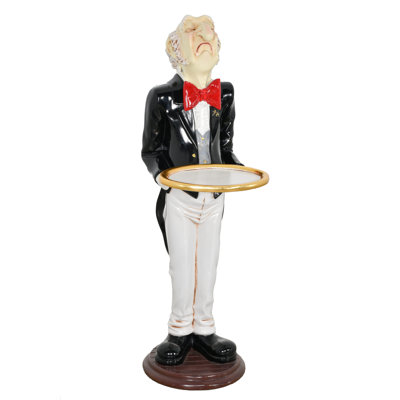
This waiter statue brings a playful yet classic presence to your home with its detailed design. The outstretched arms hold a built-in tray, making it a functional accent piece that's ready to assist. Hand-painted details add a stylized touch across the smooth surface, highlighting the character's tailored formal attire and expressive features. Its upright profile makes it easy to stand on its own beside your favorite seating arrangement or entry console. Plus, the resin construction provides a solid foundation while remaining lightweight enough to move around easily.
We love this statue! Everyone that visits loves him as well, so funny! Much taller than I even thought he would be. Great quality! It was packaged so well in the box that I had a hard time even getting him out of the box.. Denise. Cary, IL. Thu Mar 05 2026

FREE Delivery
|
Make a majestic statement with this breathtaking 72-inch Nataraja statue, a museum-quality masterpiece that embodies the cosmic energy of Lord Shiva. Standing an impressive 6 feet tall, this handmade brass sculpture captures the "King of Dancers" in his divine Ananda Tandava pose, symbolizing the eternal cycle of creation, preservation, and destruction. Every detail, from the flaming halo (Prabhamandala) to the intricate jewelry and the demon Apasmara beneath his foot, has been expertly cast by skilled Indian artisans using age-old traditional techniques. This monumental floor statue is ideal for grand interiors, serving as a powerful focal point for large entryways, meditation halls, yoga studios, or luxury hotel lobbies. The solid brass construction features a rich, antique gold-tone finish that warms any space, blending spiritual serenity with opulent global style. More than just decor, this heavy-duty, heirloom-quality sculpture is a testament to fine craftsmanship and brings a profound sense of balance, rhythm, and positive energy to your environment.

FREE Delivery
|
Celebrate the timeless bond of divine love and joy with this evocative wooden sculpture of Radha dancing to Krishna’s melody, a masterful embodiment of classical Indian art and spiritual storytelling. The statue captures both deities in the tribhanga posture—sinuous curves and contrasting angles that convey movement, harmony, and the dance of devotion. Krishna, slender and crowned, plays his flute with inward serenity, while Radha, youthful and vibrant, responds with a graceful gesture from Indian classical dance, her right hand raised in joy and her left holding a lotus blossom that mirrors her flowing hair. Her jewelry, floral bodice, and neatly coiled buns add layers of detail to the composition, reflecting the artistry and feminine beauty celebrated in ancient sculpture. An adorable cow, playfully nuzzling Radha, animates the narrative, grounding it in pastoral delight. The entire group stands on a tiered lotus pedestal, further enhancing the visual appeal and elevating the piece as a true centerpiece of Indian sacred art. Handcrafted from select wood, this statue brings warmth, narrative depth, and cultural tradition to any home—ideal for meditation spaces, study rooms, or as a focal point in global-inspired interiors. Its light weight and detailed carving make it both a tactile treasure and a visual delight, offering daily inspiration and a sense of serenity for those who value the stories and artistry of world cultures.

By Exotic India
FREE Delivery
|
The earth-touching posture or his 'bhumisparsha-mudra' constitutes the exact central point to the episode of Buddha's attainment of enlightenment. It depicts the phase when seated under the Pipal tree he was engaged in his penance and was almost on the verge of attaining Enlightenment. As always, it alarmed the forces of Evil, which fed on darkness or ignorance and delighted in obstructing the process of enlightening.

By Exotic India
FREE Delivery
|
This well-endowed woman with opulent breasts and luxuriant hips sways curvaceously, her body movement complementing the lush rotundity of her own form. Her magnified size in proportion to the two secondary figures at her feet makes her of Amazonian proportions, indicating her celestial rather than terrestrial nature. While her form is clearly idealized, the leaves and fruits of the vegetation framing the composition are much realistically rendered. Indeed, a voluptuous maiden under a flowering tree has remained a favourite motif with Indian sculptors since antiquity. They are a natural choice to symbolize fecundity and plenitude. In Indian literature, a woman is frequently said to bend under the weight of her breasts, just as the tree does under its own fruit. What gains the special attention of the viewer here is the astounding amount of jewelry ornamenting her body. According to the Indian aesthetic, adorning the visible, material body satisfies a universal longing for the embellishment of its intangible counterpart, namely the human spirit. Complementary to such thought is the conventional view where the graceful form of a woman is said to epitomize the ideal beauty and mystery inherent in nature. Thus befittingly each and every part of the feminine physique including the head, torso, limbs, and between the appended parts - have consistently been used to support ornaments, often in ingenious ways. The Indian idea being that only things covered with ornaments are beautiful. Poetry must overflow with rhetorical ornaments (alamkara), metaphors, alliterations, and other musical effects. The verb alam-kara, "to adorn, to decorate," means literally "to make enough": for the simple appearance without ornament is "not enough"; it is poor, disgraceful, shocking, except in the case of an ascetic. Hence the stress on adornment of the women, who are but the poetry of nature.Also, it was believed that just as a woman beautifies her home so should she her body. Such a combination was supposed to invite blessings and prosperity from the gods. Thus is her sensual form bedecked here with karn-phools (flower-earrings) and numerous anklets, armlets and bracelets. Her hair too is parted in neat coils with the long tika diving it into two. In addition, her small neck (incised with three curving lines, signifying that her speech is as sweet as the sonorous sound of a conch-shell) is adorned with a large number of collars (chokers) and long necklaces, one of which cascades down the cleft between her bare breasts, crowned with well-defined nipples. In ancient times, a woman, with her necklaces resting on her full breasts was compared to a sloping hill with a sunlit cascade coursing down its sides. Such ornamentation not only serves to please the eyes of the beholder but also fulfils an auspicious purpose. The impulse to adorn stems from a deep rooted sensibility to mark every occasion of life with auspicious symbols, designs and figures to obtain good fortune and protection from evil. Thus a fully bedecked woman evokes in the viewer a deep and ingratiating feeling of tranquil contentment, springing from an intuitive realization that evolving before him is an image of perfect beauty, symbolically conveying the richness and completeness which is but natural to nature. If it is true for humans that to beautify the mind is to beautify the body, the converse is equally true: to beautify the body is to beautify the soul. Creative Indian psychology nurtured a positive attitude. The desire to cultivate physical beauty was not considered shameful and superficial. The philosophers of love, like Vatsyayana in the Kama Sutra, advise that the art of makeup be practiced as a ritual. Even the 'plainest' woman adorns herself, she doe not resign herself to her fate that either one is beautiful or not, and there is the end to it. The essential significance of the above exegesis can be summed up in the fact that in the canons of Indian art, whenever a lady was represented in the nude, i.e. without any trace of clothing, her glorified physical form always carried the same weight of jewelry which she would have worn, when fully clothed. Thus rightly said A.K. Coomarswamy, noted authority on Oriental Art: "One needs to be an Indian woman, born and bred in the great tradition, to realize the sense of power that such jewels as earrings and anklets lend their wearers; she knows the full delight of swinging jewels touching her cheek at every step, and the fascination of the tinkling bells upon her anklets" This artwork was sculpted in Thammapatty, Tamil Nadu. Of Related Interest: Temple Carvings Free Shipping. Delivered by to all international destinations within 3 to 5 days, fully insured.

By Exotic India
FREE Delivery
|
The Puranas perceived arrogance that Lord Ganesha in his Ekadanta manifestation commands as the aspect of personality that breeds non-acceptance and thereby disharmony with the world and thus with oneself for one is not only destined to live in it but is himself the world, its microcosmic form. Hence, arrogance does not target so much beyond as within oneself. Lord Ganesha as Ekadanta vanquishes arrogance and breeds and nourishes harmony with the world around, the people and the environs. Mythically, Ekadanta eliminates diversions and promotes singleness of mind and symbolises utmost sacrifice to help the righteous as also to punish the wicked. A single tusked form apart, almost a universal feature of his iconography occurring invariably in most of his images, the moon-related myth gave to his image also another most salient feature, the ‘nag-bandha’ – a bellyband consisting of a serpent, mythically the serpent Vasuki. While punishing moon for its arrogance he also punished Vasuki by tying it around his belly for frightening his mount mouse that throwing him away ran for life. In every form Lord Ganesha is the custodian of knowledge and promoter of learning; however, as Ekadanta his role as the patron of literature is outstanding. As one of the traditions in regard to his single tusk form has it, it was for scribing the great epic Mahabharata that he had removed one of his tusks. After great persuasion sage Vyasa agreed to compose the great epic but on condition that he would dictate it nonstop and wanted someone who recorded it uninterrupted. Lord Ganesha agreed but when taking dictation his pen broke. Pressed under the condition he removed one his tusks and noted with it the rest of the epic. The myth affords the rationale not only as to why the worship of Ganesh precedes the worship of Saraswati, the goddess of learning, when a child begins schooling, but also as to why, till recent times before the use of ivory was legally banned for minimizing cruelty against the innocent animal, an ivory pen was considered as the most prestigious tool of learning. Dually auspicious and effective, the image, conceived with a huge pot-like belly, combines along with his Ekadanta form his Lambodara and Mahodara manifestations that vanquish infatuation and anger, the two most injurious weaknesses in human nature. Manifesting either as Lambodara or Mahodara – the forms with extra large belly, Lord Ganesha is believed to contain all the universes within it, unfathomable knowledge and all stores of riches. Highly auspicious and delightfully modeled, both forms bless the devotee with natural wisdom, great common sense, ability to face every crisis, and with abundant riches. Except a variation or two in the attributes that the two forms carry, the two images are almost identical, being four-armed, carrying in normal right hand the broken tusk, ‘modak’ in one of the other hands and a pot in the knotted trunk, and a large pot belly often tied with a serpent comprising a bellyband, alike characteristic of both forms. In other two hands, Ekadanta carries rosary and battle-axe, and Lambodara, noose and goad. The pot : ‘purna-ghata’ is symbolic of accomplishment which the great Lord makes possible. In both manifestations the figure of Lord Ganesha is voluminous cast with bold but highly balanced forms. Hence, ‘utkut akasana’, as this brass-image has, is the best suited sitting mode for these forms. Installed on a three-tiered high pedestal consisting of an octagonal base moulding adorned with lotus forms, a plain narrower one in the middle, and another, as large as the base moulding, on the top, the figure of Lord Ganesha has its thighs straightened as if to support the belly’s volume and bulk on them. In both manifestations the figure of the elephant god has an average height and is adorned with few ornaments, a modest crown and often just a loincloth. This description by Prof. P.C. Jain and Dr Daljeet. Prof. Jain specializes on the aesthetics of ancient Indian literature. Dr Daljeet is the chief curator of the Visual Arts Gallery at the National Museum of India, New Delhi. They have both collaborated on numerous books on Indian art and culture.

Get it by Thu, Aug 6
|
This Egyptian goddess Bastet incense burner is made of polyresin, individually hand-painted and polished.
So nice. Just perfect.. Kimberly. Yuma, AZ. Sun Aug 02 2020

By Exotic India
FREE Delivery
|
According to legend, Buddha was born from the right side of his mother. Immediately upon his birth, he stood up and took seven steps, and wherever his feet touched the earth lotuses sprang up. Raising his finger he said: "Worlds above, worlds below, there's no one in the world like me." Finally, Suzuki elaborated. "They tell me that when a baby is born, it cries. What does the baby say when it cries? The baby says 'Worlds above, worlds below, there's no one in the world like me!' All babies are Buddha babies." So what was the distinguishing characteristic of Queen Maya's baby? He knew that he was a Buddha baby. According to Joseph Campbell, "The whole thing of Buddha consciousness means getting to know you are it. That takes a lot of work, principally because society keeps telling you that you are not it."

Get it by Wed, Aug 5
|
Though the history of the Roman empire is awash with the feats of emperors, no tales told were nearly as cruel as those of the formidable emperor Caracalla. Though history hasn't been kind to the tyrannical monarchy of his reign, this bust statue of the ruler the Romans feared is important for the history and culture it represents. Caracalla fancied himself a military genius, the reincarnation of Alexander the Great. Their impressively, life-size sculptural bust is cast in quality designer resin.
Very good quality, pretty hefty but arrived broken. Dylan. New York. Thu Feb 20 2025

By Exotic India
FREE Delivery
|
The Lamp is a double-layered brass lamp balancing on a beautifully coiled vine. This lamp which includes a stylized branch or vine in the design as a stand is a captivating fusion of elegance and cultural heritage. Crafted with meticulous artistry, this masterpiece showcases the idea of traditional lighting amalgamated with the styling of natural elements preached by the Hoysala art experts. The lamp exudes timeless allure, merging traditional craftsmanship with contemporary sensibilities. It is a perfect fit for a festive decoration where the age-old traditions have been experimented with and brought to light with new ideas.

By Exotic India
FREE Delivery
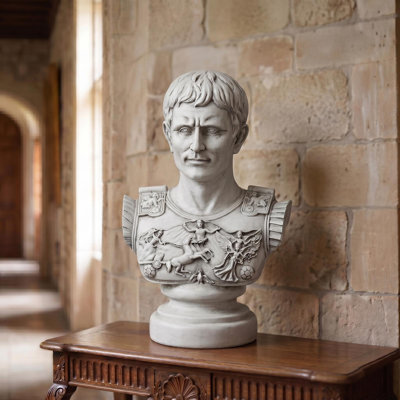
|
Lord Ganesha's presence is captured in a stylized form that blends traditional symbolism with contemporary aesthetics. This unique interpretation offers a fresh perspective on the beloved deity, while retaining the core essence of his wisdom and benevolence. The stylized moderation brings a sense of modernity to the ancient wisdom of Lord Ganesha. This interpretation becomes an invitation to engage with tradition in a new light, recognizing the deity's relevance in our ever-evolving world.

By Exotic India
FREE Delivery
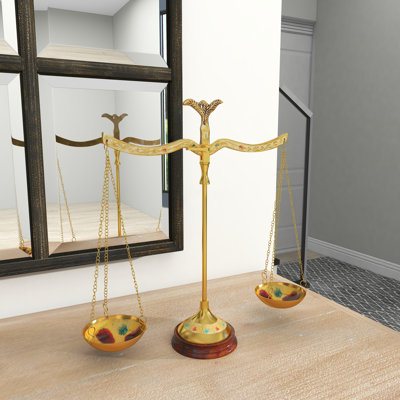
|
This pair of vintage wooden wall hanging tissue holders boasts unique corner designs, blending traditional charm with a minimalist approach. Each holder is crafted with clean lines and subtle decorative elements, making them both functional and aesthetically pleasing.The corners feature intricate yet understated patterns that add a touch of elegance without overwhelming the simplicity of the design. Perfect for adding a rustic or vintage touch to any space, these tissue holders provide a stylish and practical solution for tissue storage, reflecting a thoughtful balance of form and function.

By Exotic India
FREE Delivery
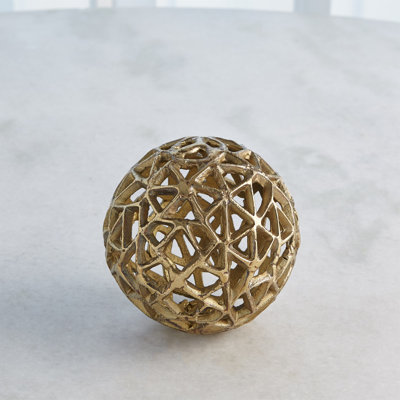
|

By Exotic India
FREE Delivery
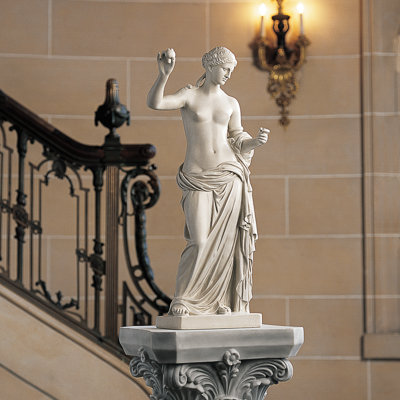
|

By Exotic India
FREE Delivery
|
This magnificent metal-cast represents Vishnu and Lakshmi riding their vehicle Garuda. Vishnu, the Vedic god of sacrificial rituals, came to be Narayana, when 'puranas' associated with him his Shakti, namely, Shree or Lakshmi, who bestowed wealth and fortune. Vishnu as Narayana, the patron of 'Naras', or men, which in its broader sense stood for all created beings, was more resplendent when associated with Lakshmi for she patronised growth while he offered protection. By the time of 'puranas', much ahead of Vishnu, Lakshmi-Narayana became the divine foundation of human society in India.

By Exotic India
FREE Delivery
|
Ananta or Shesh, Vasuki, Takshaka, Karkotaka, Padma, Mahapadma, Shankhapala, Kulika among others are the names of some of the multi-hooded serpents, each heading a line, and each capable of taking to any form. Ananta, Vasuki and Takshaka are said to have been five-hooded. Maybe, the artist has conceived this five-hooded Naga-kanya as the wife of one of them. This Naga-kanya statue blends three forms – woman, viper and bird. With their exceptional beauty Naga-kanyas have been conceived mostly as ‘apsaras’ – nymphs, the creatures of ocean as well as sky, and hence, often perceived as having wings, besides the serpent part. The figure’s lower half, below the waist, is a mighty serpent. It is so massive in breadth that the figure’s upper part seems to emerge out of it. Except her five hoods over her head, the upper half of the statue is an absolute woman with fine features and glowing face, young, vigorous, beautiful or rather sensuously modeled. Unlinked with the statue’s lower serpent-part the five hoods, more like a thing grafted rather than something grown over her head, serve as her crown without distorting her form as a woman. With a conch in her hands the figure of the Naga-kanya is obviously in the prayer mode making an offering. Though the deity, the offering is made to, is not known, the conch being Lord Vishnu’s attribute, the Naga-kanya might be seen as offering it to him. Being a creature of the ocean, and the conch, ocean’s product quite within her reach, for the Naga-kanya the conch might have been the most natural thing to offer to Lord Vishnu. Perhaps a forgotten context in a myth or legend, the Naga-kanya is seeking to please Lord Vishnu so that he commands the Great Bird Garuda, his vehicle, not to destroy the Nagas’ race. Mythical bird Garuda, something like a divine transform of eagle, is serpents’ traditional enemy. Maybe, the image refers to the mythical occasion when principal Nagas, perhaps with their consorts, went to Brahmadeva – Vishnu, seeking his intervention in the Sarpa-yajna – a sacrificial ritual, performed by Janameyaja, a context comprising part of the great epic Mahabharata. Mythology refers to numerous Sarpa-yajnas performed from time to time seeking to eliminate serpents. The statue might also be seen as representing an occasion from any of these other Sarpa-yajnas. This description by Prof. P.C. Jain and Dr. Daljeet. Prof. Jain specializes on the aesthetics of literature and is the author of numerous books on Indian art and culture. Dr. Daljeet is the curator of the Miniature Painting Gallery, National Museum, New Delhi. They have both collaborated together on a number of books. Free Shipping. Delivered by to all international destinations within 3 to 5 days, fully insured.

By Exotic India
FREE Delivery
|
In Buddhism, the Vajra is the symbol of Vajrayana, one of the three major branches of Buddhism. Vajrayana is translated as "Thunderbolt way" or "Diamond way" and can imply the thunderbolt experience of Buddhist enlightenment or Bodhi. It also implies indestructibility, just as diamonds are harder than other gemstones. It even plays great importance in Hinduism, being the weapon of Indra against his enemies.The toughness and superiority of this paradisiacal weapon entices the spectator in its bewitching charm, as a rich mixture of iron and brass blends together to fashion a perfect imitation of the celestial destroyer, the Dorje, depicting the wickedness and evil that prevailed long ago, simultaneously commending the fine, Nepalese, jaw-dropping artistry that knocks off the socks of the beholder, with its amazing beauty and a tinge of religious nostalgia that grips the devout worshippers.The ribs of this fantastic club meet in a ball-shaped and spherical structure with fine curves that are spectacularly sculpted on it, symbolising the primordial unity of all things in the universe, portraying that good would always prevail against evil. The five-pronged Vajra is the most commonly seen which portrays the five wisdoms strengthening the modern Buddhists in their belief.

By Exotic India
FREE Delivery
|
The sculpture that you see on this page is of the healing manifestation of the Buddha. His name is Bhaishajyaguru, and He is popularly known as the Medicine Buddha. His skin is the resplendent golden colour of pure brass, over which the deep aquamarine blues and reds of the inlaid robe make for a striking contrast. In fact, the colour blue is indispensable to the iconography of Lord Bhaishajyaguru. The distinguishing aspect between the Buddha and the Medicine Buddha lies in the hands of the latter - a spring of myrobalan in one, a pot of nectar resting on the palm of the other.Traditional Tibetan medicine revolves around the gunas of the myrobalan. The concoctions prepared from it are variously designed to reverse disease, senescence, and death, a mixture of all three of which is to be found in the pot in Lord Bhaishajyaguru’s hands.

FREE Delivery
|
Look at this gorgeous fairy sculpture. This piece will make an eye-catching addition for your display shelves, desktops, or office decor. This fairy figurine will add a splash of color to your home. Sweet decoration for your home, and perfect gift choice for those that love fairy.

By Exotic India
FREE Delivery
|
In front of the demon Hiranyakashipu, stood the Lord in the form of a man-lion (Nara-simha). He had fierce eyes shining like molten gold and a swollen face with dazzling hair and mane. His teeth were fearful and the razor-edged tongue was brandishing about like a sword. He looked all the more frightful on account of the overall frowning countenance. The ears were motionless and erect and He had an amazing, gaping mouth with nostrils wide like mountainous caverns. The wide, parted jaws presented a horrible picture and His neck was short and sinewy. The Lord's chest was broad enough but the waist slender. His whole body was covered with fur, white like the rays of the moon and the many arms, extending on all sides had claws for weapons. (Shrimad Bhagavata Purana 7.8.20 - 22) Giving forth a shrill pearl of laughter, rendered all the more terrific by the accompanying roar, making the demon mommentarily blink, the Lord seized the villain, who was darting up and down with the swiftness of a hawk, brandishing his sword in many (expert) ways. Thereupon, being afflicted sore with that severe hold of Narasimha, like a rat seized by a serpent, the demon made every effort to get out the former's grasp. But Lord Shri Hari carried the asura to the threshold of his own house and there placing him (whose skin not even the thunderbolt of Indra had not been able to scratch) on His thighs, rent open with His talons Hiranyakashipu's bowels and entrails as sportively as Garuda would tear apart a venomous snake to shreds. (7.8.28 - 29) The Lord, whose fearful eyes were difficult to gaze at due to their enormous wrath, now licked with His tongue the corners of his gaping mouth. His countenance and the manes on the shoulders had turned crimson, besmeared as they were by the demon's blood. He then, having garlanded Himself with the entrails of the fallen villain, shone like a lion who has just killed an elephant. (7.8.30) Free Shipping. Delivered by to all international destinations within 3 to 5 days, fully insured.

By Exotic India
FREE Delivery
|
Devi Sarasvati is the wife of Lord Brahma. She is the presiding deity over learning and the arts, both of which are integral to the process of srshti. In turn, Lord Brahma is the presiding deity over the srshti (projection) of existence as we know it. One of the most distinguishing aspects of this murti is the crown towering above Her head. It is a stately, superfine number, unlike the relatively unassuming crowns assigned to the devi pantheon in contemporary devotional sculpture.Then there is the statement-making pedestal. It is divided into multiple panels, each depicting a rudimentary but precisely done silhouette of other Hindoo devas and devis. A slender aureole, replete with traditional motifs and perfect symmetry, gathers at an image of kirtimukham above Her head. Note the dual sprig of vine growing out of the aureole that touches Her tall crown.

By Jim Shore
Rated 5 out of 5 stars.1 total vote
FREE Delivery
|
With a love story as pure as gold, this pair of precious pups snuggle together sweetly. With intricate rosemaling and inspiring intimacy, this Lady and the Tramp piece steals hearts. This enchanting piece is a charming addition to any room.
Love it. Nice addition to my Disney collection. Linda. Sun Feb 16 2025

By Winston Porter
FREE Delivery
|
This decor piece gives a unique touch to your home and enhances the style of the room. Show off your style and character with this beautiful accent piece.

By Exotic India
FREE Delivery
|
Both the idols stand on lavishly carved inverted lotus pedestals and hold a lotus bud each in their right hands and left hands are in blessing mudra. The one on the left is Sahajanand Swami or Swaminarayan who was a yogi and ascetic whose teachings brought a revival of Hindu practices of dharma, ahinsa and brahmacharya. He is garbed in an exclusive frock and a loose pleated dhoti that beautifully veils his body, a stole that hangs on his hands and a densely chiseled crown topped with a feather like broch along with a garland of flowers and royal jewels. He was also given the name Nilkantha Varni when he left his house at an early age and mastered the Astanga yoga (eight fold yoga) along with the correct understanding of the four primary schools of philosophy.The idol on the right is Gunatitanand Swami, who was a prominent paramhansa of Swaminarayan Sampradaya and was ordained by Swaminarayan himself. He was accepted as the first spiritual successor of Swaminarayan sanstha; garbed in a robe of beautiful loose pleats that has its ends hung from his hands, a beautifully striped turban and a long flower garland.The realistic facial expressions, urdhva pundra tilak and the carefully incised charming floral and ethnic carvings on Swaminarayan’s dress reflects the sculptor’s painstaking time and professional skills to create these smooth and shining masterpieces. We are selling these statues in a pair for the customer to have a complete insight into Akshar Purushottam Darshan.

By LIULI Crystal Art
FREE Delivery
|
These crystal glass chopstick stands feature two love birds cuddling with each other. It makes the most unique wedding, anniversary, housewarming gifts, and wedding favors.

(Set of 2)
By DYAG East
FREE Delivery
|
Tianlu is the name of the legendary spiritual beast of the Han people. A Tianlu is shaped like a deer with one horn. It is an auspicious beast. This pair of carved stone Tianlu provides protection to a home.

By Exotic India
FREE Delivery
|
The exquisite pointed tusks are decorated with a thin carved band that compliments to the sumptuous and traditional hews on the trunk. As you gaze at its heavy loaded head, you will be overwhelmed by the richly chiselled flappy ears, large enough to showcase their individual identification with the ghungroo-like structures joined at the end highlighting Ganesha’s classic enchantness.Ganesha’s head is confided in the most awe-struck patterns as the two multiple layered circles incised at the sides represent his cosmic eyes, the other deep carvings done in an unimaginative intricate design form beauteous, clear and smooth chiselled motif.

By Exotic India
FREE Delivery
|
Her two-armed form, something most normal, as also the multi-armed almost rigidified in visual arts, is the artistic interpretation of her form in texts. With its three Suktas devoted to Lakshmi, though by her name as Shri, Lakshmi being a later addition, , the Rig-Veda is the earliest text to allude to Lakshmi. The Rig-Veda perceives Shri as equaling an army well accomplished with horses, chariots, elephants … and considers a house as the most blessed if Shri makes it her perpetual abode. Obviously the Rig-Veda associates Lakshmi with riches and abundance but says nothing expressly about her anatomy or form. The Atharva-Veda, subsequent to the Rig-Veda, hails her as large-breasted full of milk capable of feeding the universe and becomes the earliest text to allude to an aspect of Lakshmi’s anatomy. The ‘Devi-Mahatmya’ in Markandeya Purana that perceives her as one of the three manifestations of the Devi by the name of Mahalakshmi, Lakshmi’s initial form, provides a more elaborate vision of her. It perceives her as the goddess of battlefield carrying a number of attributes and thus visualizes, not manifestly but suggestively, her multi-armed form. The Rig-Vedic Lakshmi, the goddess by invocation, is mythicized into a role in Devi-Mahatmya. Lakshmi’s personalized form, not the deity’s or the feeding mother’s, emerges in Vishnu Purana like later texts where she stands in relation to Lord Vishnu, the sustainer of the universe, as his humble consort massaging his feet and serving upon him, a fully domesticated form almost completely concretized into passivity as representing riches, abundance, fertility … that Lord Vishnu uses in his act of sustaining and upholding creation. Again as before, such texts do not mention, at least expressly, as to the number of hands that this normal wife of Vishnu had but as a normal woman should have in this new form Lakshmi’s anatomy has been visualized with normal two hands. Endowed with great aesthetic charm and oceans of wealth the most devoted coy consort of Vishnu perpetually engaged in massaging his feet is usually the common man's image of Lakshmi and is usually two-armed. Thus, while a multi-armed forms represent her votive image – the deity-form, the normal two-armed, aesthetic and personal. Apart the great divine aura, unfading beauty and timeless youth, the attributes that texts associate with Lakshmi as the essence of her being, which this statue of the goddess manifests, her towering Vaishnava crown, ‘makara-kundalas’ – ear-ornaments, that she is wearing, both essentially the attributes of Vaishnava icons, and prevalence of lotus element, one being held by her in her left hand, and other, as her seat being pervaded by her, reveal the identity of the represented figure as goddess Lakshmi. The Rig-Veda lauds her as ‘hiranya-kaya’ – gold-bodied; in every exactness her figure in the statue abounds in the same golden lustre further magnified by the colour of her wear, magenta, a mystique in colours as blending into any it transforms it into another, the same as would the goddess when she blesses any with her presence. Normally her two-armed aesthetic image is her personalized form manifesting when she is with her Lord Vishnu serving upon him or otherwise; however, such personal aspect of the image has been as powerfully revealed in the poise of her figure : completely informal, romantically postured and sensuously modeled. Highly innovative, the artist has conceived her waistband with a buckle consisting of elephant-trunks, an essential element of her imagery it further emphasizes her identity as Lakshmi and, perhaps, also her Gaja-Lakshmi form. This description by Prof. P.C. Jain and Dr Daljeet. Prof. Jain specializes on the aesthetics of ancient Indian literature. Dr Daljeet is the chief curator of the Visual Arts Gallery at the National Museum of India, New Delhi. They have both collaborated on numerous books on Indian art and culture.

By Red Barrel Studio®
Get it by Thu, Aug 6
|
Condition: This sculpture is in perfect conditionBronze Dimensions with Marble Base: Height 19 inches X Width 12 inchesMarble Dimensions: Diameter 12 inchesHeight without base:18 inchesWeight:33 LBSInventory:53YCN13217535Original or Reproduction: Original Indulge in the timeless allure of the human figure with our captivating Nude Naked Girl Sitting Cross Legged Bronze Metal Figure Statue a masterpiece bearing the signature of the renowned artist Colinet This sculpture beautifully captures the essence of feminine elegance and poise making it a remarkable addition to any art collection or interior decor Meticulously crafted through the ancient lost wax casting technique this sculpture boasts the exceptional quality of hot cast bronze ensuring its longevity and enduring beauty The figures serene pose with crossed legs and a contemplative expression showcases the artists extraordinary ability to capture the natural flow of movement and intricate anatomical details As the leading dealer of small to medium-sized bronze sculptures globally we take immense pride in offering a diverse selection of European bronze artworks at competitive prices With prompt delivery from our New York warehouse within just one business day your new art piece is guaranteed to arrive swiftly and in impeccable condition Elevate your space with the timeless elegance and tranquility encapsulated within the Nude Naked Girl Sitting Cross Legged Bronze Metal Figure Statue a true celebration of the human form and artistic excellence

By Theodore Alexander
FREE Delivery
|
A set of two large variously patinated brass cranes, standing on walking turtles. Inspired by 19th-century Japanese Meiji period originals.

By Currey & Company
Get it by Wed, Aug 5
|
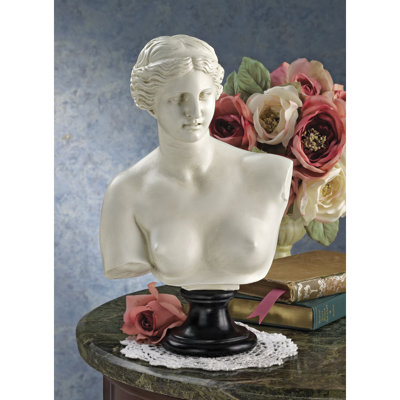
Sold as a set of two, the Venus Head on Stand brings an old-world, gallery-like presence to a console in the entryway or a curated living room vignette. Two classical head sculptures rise from faceted crystal blocks at different heights, creating an instant sense of rhythm and collected history. Each piece is crafted from composite with a stone-like, timeworn look for a traditional finish that feels artfully found, not freshly made.

By Exotic India
FREE Delivery
|
Elevate your sacred space with this exquisitely handcrafted 21-inch bronze Radha Krishna idol, rendered in the distinctive style of Hoysala art. This solid cast masterpiece captures the youthful divine couple standing in classical tribhanga poses beneath a meticulously detailed tree, showcasing artistic finesse and spiritual harmony. Krishna, adorned with the iconic Kiritamukuta crown, Makara kundala earrings, and intricate jewelry, embodies his playful and blissful form, while Radha’s elegant triple-bent posture, adorned with mor-pankha hair ornament and delicate attire, exudes feminine allure and devotion. The bronze tree’s leaves are crafted with stunning naturalism, enhancing the lifelike setting for this divine union. This statue celebrates the eternal love and spiritual union of Radha and Krishna, bringing a serene ambiance and classical charm to meditation spaces, personal temples, or refined home interiors. Its durable bronze construction and polished finish ensure lasting beauty and a rich, warm patina that deepens with time.

By Exotic India
FREE Delivery
|
"With Ganesha's blessings, every obstacle becomes a stepping stone." - The elephant-headed deity's benevolence is boundless. Intricately formed in brass, the small Ganesha sculpture radiates positivity. His elephant head embodies intelligence, his large ears symbolizing profound listening. The sweet delicacy of the modak he holds signifies the sweetness of life's rewards. Ganesha's curved trunk, capable of uprooting obstacles, guides the way. The symbolic mouse at his feet is tamed, representing his mastery over desires. As the remover of obstacles and the bestower of blessings, Ganesha offers a tender reminder that with determination and wisdom, even the most formidable challenges can be overcome.

By Exotic India
FREE Delivery
|
Hindu mythology refers Kubera as the god of riches and gold treasures who bestows fortunes and prosperity. In Sanskrit, Kubera means, ‘deformed or monstrous’, indicating his deformities. He was Ravana’s step-brother, who left Lanka after Ravanas’s end and moved to Alakapuri near Kailash. He is revered in all forms of religion in varied forms, Buddhist texts worship Kubera as one of the four heavenly kings associated with four cardinal directions, in Jainism, he is the attendant of Yaksha named as Sarvahana and Vedic texts describe him as a demon or a chief of evil spirits.

By Currey & Company
FREE Delivery
|
The Adara Madame's Cocktail Dress brings a couture-inspired moment to a console or bookshelf, with carved marble shaped in flowing lines that feel like a gown caught mid-swish. Natural veining runs through the stone, so every sculpture has its own one-of-a-kind surface. A metal base gives the piece a clean, contemporary presence that layers easily in a living room or entryway.

By Exotic India
FREE Delivery
|
In the heartland of India, where artistic mastery and spirituality intertwine, we present to you an exquisite manifestation of divine grace: Lakshmi and Ganesha in Brass, sculpted in the illustrious North Indian style. This sacred sculpture set embodies the convergence of prosperity and wisdom, all meticulously captured within the warm embrace of traditional artistry.

By Exotic India
FREE Delivery
|
Goddess Kali in Hindu tradition is the aspect of the great mother which is unbounded, beyond the wisdom of gods, and yet benevolent to her devotees. This brass statue is devoted to her form as Dakshina-Kali, the blissful and calm form in the aftermath of cosmic battles, with Shiva lying under her feet. Devi Kali is adorned with Mundamala (garland of skulls) and a girdle of severed hands, a royal crown, and her hair forming a stunning backdrop for her form. In such a small space, the sculptor has managed to evoke the ethereal beauty of the dark mother, with her ornaments, her posture, and the jackal that is reaching the head in Maa Kali’s hand, representing the unparalleled affection of the mother for all her creations.

By Exotic India
FREE Delivery
|
Vajrasattva is a Buddhist archetype deity. Like Manjushri, Avalokitesvara, Tara, and the other celestial Bodhisattvas, he is a Buddha who persists in a Bodhisattva form to help beings on the path. Sattva means "extremely pure" and vajra (diamond or thunderbolt) is associated with power and maleness.Vajrasattva is the subject of many hymns and verses. He is supplicated in the special yoga of repentance that employs his special, well-known hundred-syllable mantra. He is represented seated in the dhyana asana (posture of meditation), holding a vajra before his heart in his right hand and a bell in his left hand, which rests akimbo on the left thigh. The vajra and the bell are symbolic of male and female, compassion and wisdom, magic body, and clear light, respectively, depending on the level of reference of the symbolism.

By Exotic India
FREE Delivery
|
A statement lamp with a long, curvaceous stem to grace your home. To this day, the traditional ghee-lit lamp is an integral part of almost every Indian home. It symbolises the confluence of the three existential constituent elements ie tamas (inertia), rajas (motion), and sattva (stability). By lighting it in a corner of one’s home, one celebrates Mother Prakrti (nature) Herself as well as the hoped-for predominance of sattva over rajas over tamas. The lamp that you see on this page would serve just the purpose in a modern Indian home or office. It is fashioned from pure brass and features a tray of five discrete lamps at the mouth of the stem. The way the stem has been carved is sure to make it stand out from your traditional straight-stemmed Indian lamps. It is poised upon a shallow, upturned stand engraved with miniscule lotus petals; as legs, the same features three sprigs of luxuriantly spreading vine. Miniature blooms at either end of the stem, and a series of perfectly symmetrical petal carvings along its gentle, upward-curving length. A gorgeously plumaged peacock graces the zenith of the lamp. It is a stately bird, the feathers on its breast engraved with considerable precision. Its layered tail rises high above its head behind its body, as if fashioned from gold itself. Such a lamp is sure to add to the aesthetics and the Indian sensibilities of your space.

By Exotic India
FREE Delivery
|
Green Tara, the majestic deity of Buddhism associated with the compassion of Avalokiteshvara and the powers of Amoghasiddhi is a celestial queen mother for the practitioners of Buddhism. In this copper statue of Green Tara sitting in meditation, she is portrayed as a lovely maiden, exuding exqusiteness. Tara's left hand is raised in the "Vitarka" mudra, or gesture of intelligent dialogue, with her right hand open and her fingers pointing downward in the mudra of distributing blessings. During meditation, Buddhists who concentrate on this form of the Green Tara envision many precious gems and gifts emerging from her hand as a symbol of her boundless giving.