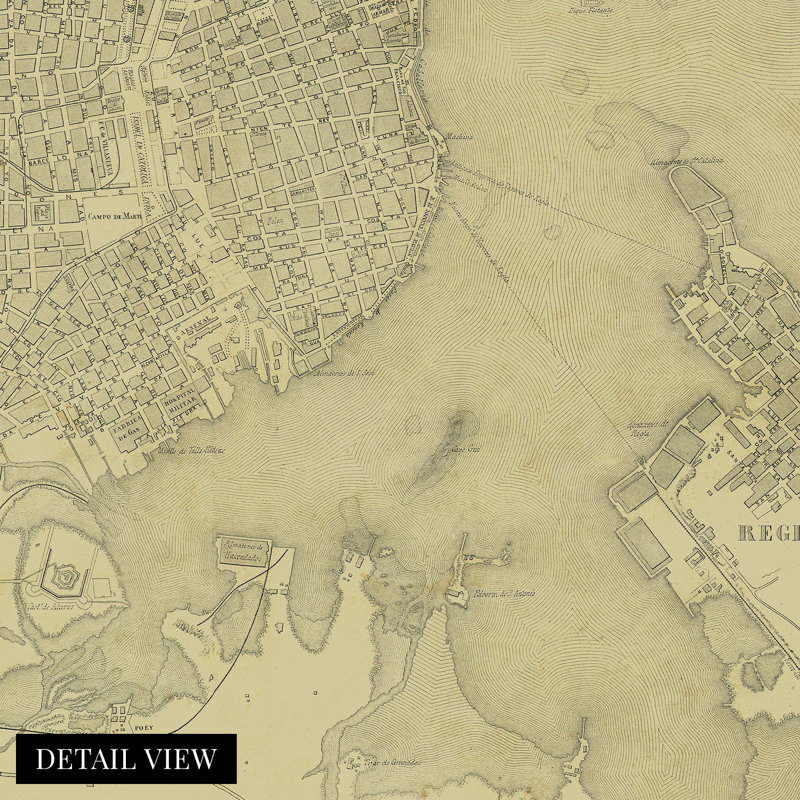
Produced by one of the most important scientific researchers in Cuba during the nineteenth century, Esteban Pichardo, this unique depiction of the iconic Havana shows the city in a period of significant prosperity as trade between Cuba, the United States, and the Caribbean islands supported a flourishing economy. The cities theaters featured the most famous actors, and it came to be known as the Paris of the Antilles due to its fashionable nature. In 1837 Cuba became the fifth country in the world to have a railroad which connected Havana to the sugar cane fields in Bejucas. Cuba gained independence from Spain in the late nineteenth century, effectively ending Spanish Colonial Rule in the America’s. Havana was the political, cultural, and economic center not only in Cuba but throughout the Caribbean during the nineteenth and early parts of the twentieth century. One of the greatest literary minds of the twentieth century, Ernest Hemingway, immortalized pre-communist Cuba in some of his most well-regarded works. The city’s unique culture is a blend of Spanish and European influences with distinctly Caribbean traditions and legacies. The city walls were demolished in 1863 to account for an increase in population and the need for new developments.The unique aesthetic and distinctive style immediately transport the viewer back in time, creating an indelible bond between the past and present. Pichardo produced this map as part of a larger thirty-five-page map that incorporated symbols that would become the norm in contemporary cartographical productions.Our museum quality giclee print comes printed with archival ink on premium heavyweight matte paper.


 or
or