What Is Travertine?
It's an ancient look that looks just right into today's homes, too.
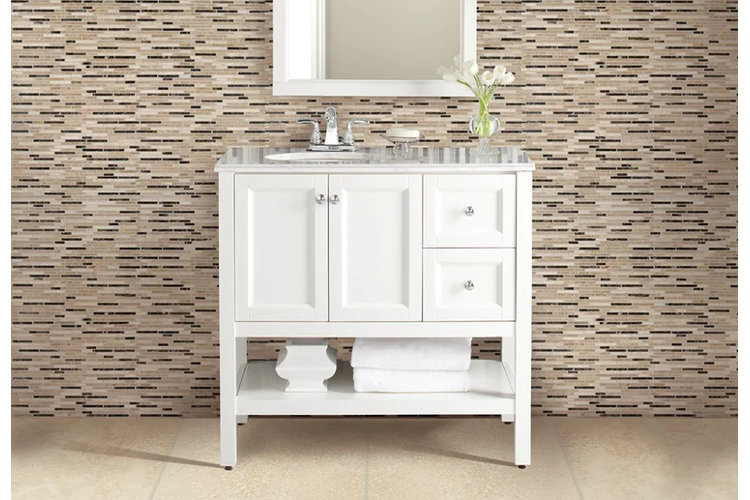
If you love the look of natural stone surfaces but want something different than marble or granite, travertine is an excellent alternative. This durable yet affordable stone can look elegant and smooth or aged and rustic depending on the installation. The best part? There are plenty of travertine tile options available right here at Wayfair. Read on to learn more about what is travertine.
In this guide:
What Is Travertine?
Travertine Finishes
Frequently Asked Questions
What Is Travertine?
Travertine is a type of limestone derived from deposits of calcium carbonate found in mineral springs or other terrestrial bodies of water. Travertine is touted for its beauty as well as its durability, and the best proof of this is the Colosseum in Rome; the massive structure was built centuries ago using nearly all travertine.
More modern-day installations of travertine include the lobby of the Willis Tower in Chicago (formerly known as the Sears Tower) and the Getty Center in Los Angeles, which was constructed of more than a million square feet of natural and polished travertine shipped directly from Italy. Italy is the biggest source of travertine, but there are quarries in Turkey, Peru, Mexico, China, and even Yellowstone National Park in Wyoming.
While travertine has certainly made its mark on world-renowned landmarks, it's also used in making tiles that you can have installed on various surfaces in your own home.
Travertine vs. Limestone
Limestone and travertine are both part of the sedimentary rock category, though their origins differ slightly; limestone is created when calcium carbonate and sediment from the ocean accumulate.
While both limestone and travertine are good options for muted or neutral-colored flooring and walls, limestone is harder and less porous than travertine. This makes limestone the stronger, more expensive option of the two stones.
Travertine vs. Marble & Granite
Many homeowners look to travertine vs. granite or marble, preferring the softer neutral-colored waves in travertine over the veins and speckles of marble and granite.
For those wishing for a more rustic look for their home, travertine's texture also makes it a welcome departure from marble and granite. While there's no doubt that granite and marble make for smooth and sleek countertops and bathroom walls, they can be too slippery for floors, especially in bathrooms and kitchens. Not a problem for travertine, which has a pitted texture that makes for a surface with a better grip. This makes travertine tiles appropriate for high-moisture areas like the kitchen, bathroom, and even a pool deck.
Travertine Finishes
Travertine is a natural stone that can be finished in a variety of ways depending on the look you prefer for the space:
Glossy/Polished: Travertine tiles with a polished surface offer a glossy look that reflects light well, making any room look larger.
Matte: For a more rustic, Old World look, choose travertine tiles with a matte finish that show off the veins and texture of the natural stone.
Satin/Honed: For the best of both worlds, choose travertine with a semi-gloss finish that offers a smooth surface while also highlighting the rich texture of the stone.
Kitchens: The natural color of travertine tiles plus its ability to stand up to moisture and heat make it an excellent counter, backsplash, or flooring choice for any kitchen.
Bathrooms: Travertine is a natural stone, and it goes well with other natural stone like granite countertops and marble tile, particularly in the bathroom. And since travertine has a texture that offers a firmer grip than marble or granite, on top of being water-resistant, it makes it a better choice for bathroom floors and shower walls.
Walls: While you'll likely choose a smoother travertine for floors, a rougher-finished travertine looks stunning as a wall covering or as fireplace tile. Choose a mosaic travertine tile for a unique, natural look to any room.
Patios: Want to mimic the look of an Italian palazzo at your own casa? Install travertine tile for a patio or terrace floor, which is weather-resistant and won't fade or rust. It also pairs well with other hardscape surfaces, like brick.
Pool Decks: The ideal pool deck is as beautiful as it is safe. Travertine tiles for a pool deck offer the best of both worlds.
Driveways: Curb appeal is important for a home, and it truly starts at the curb! A driveway made from travertine is just the ticket to wowing visitors, not to mention providing an elegant welcome home for yourself.
You don't have to travel far and wide to find a travertine quarry to get the tiles you need for your home. Shop Wayfair for a wide selection of travertine tiles suitable for floors and surfaces — everything from interior floors and walls to patios, driveways, and pool decks.
Frequently Asked Questions
What is travertine made of?
Travertine is a type of limestone derived from calcium carbonate deposits in mineral springs.
How does travertine compare to marble and granite?
Travertine has a softer, textured surface with better grip, making it less slippery than marble and granite.
Where can travertine tiles be used in a home?
Travertine tiles can be used in kitchens, bathrooms, or outdoor spaces on walls, floors, patios, pool decks, and driveways.
Written by Barbara Bellesi Zito
