What Is a Daybed? Types, Sizes & Uses
From seating to sleeping.
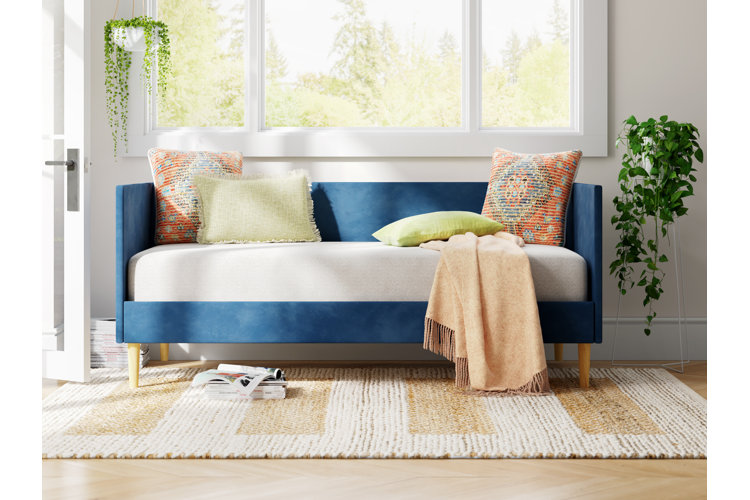
A daybed is a sofa-and-bed hybrid: a frame with two arms and a backrest, left open in front, and topped with a mattress instead of sofa cushions. Most daybeds fit a twin mattress (about 38" by 75") and are designed to effortlessly transition between daytime seating and nighttime sleeping.
What Is a Daybed Used For?
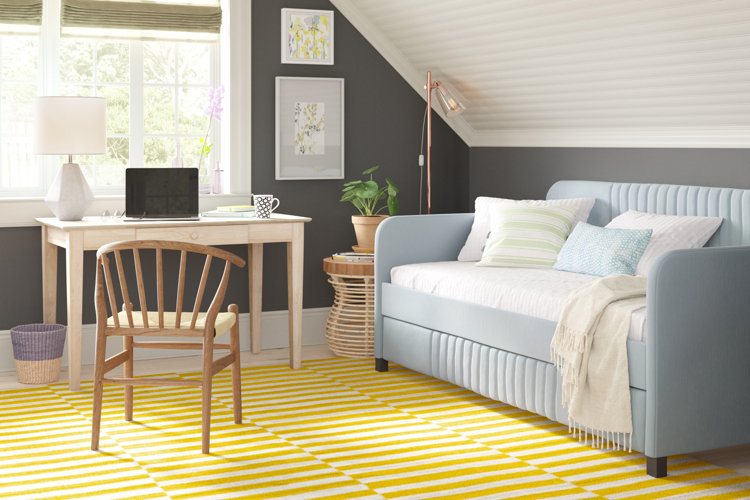
Daybeds are known for their uniquely attractive and space-conscious design that allows them to function as both a bed and a sofa. Rather than a headboard and footboard, most daybeds feature a panel on either short side with another connecting them along the back – this design leaves the "front" open for convenient access. In place of traditional sofa cushions, daybeds are topped with a mattress to accommodate both lounging and sleeping – making them a versatile piece of furniture used in home offices, guest rooms, children’s rooms, and small apartments.
Daybed vs. Sleeper Sofa vs. Futon vs. Twin Bed
| Type | Best for | Sleep setup | Looks like |
|---|---|---|---|
| Daybed | Guest room or studio | Always made; no fold-out | Sofa with a mattress |
| Sleeper sofa | Living room first | Pull-out mattress | Standard sofa |
| Futon | Budget flex space | Folds flat | Sofa until unfolded |
| Twin bed | Sleep-only bedroom | Standard twin mattress | Headboard and footboard |
A daybed is built to look finished as seating or a bed without any need for conversion. On the other hand, a sleeper sofa hides a mattress you pull out and a futon folds from sofa to flat bed, with the sofa cushions functioning as a mattress. A standard twin bed has a headboard and footboard only (no backrest) and is not designed to double as seating.
Types of Daybeds
| Type | What it adds | Best room | Watch-out |
|---|---|---|---|
| Tufted | Padded, sofa-like back | Living room | Needs a real mattress |
| Panel | Solid wood sides | Guest bedroom | Boxier, cozier look |
| Slat / spindle | Open wood or metal rails | Kids or sunroom | Less lounge padding |
| Trundle | Second mattress underneath | Sleepovers | Not a storage drawer |
| Storage | Drawers, not a bed | Small bedrooms | No extra sleeper |
| Convertible | Trundle and/or drawers | Studio or kids | Heavier, more parts |
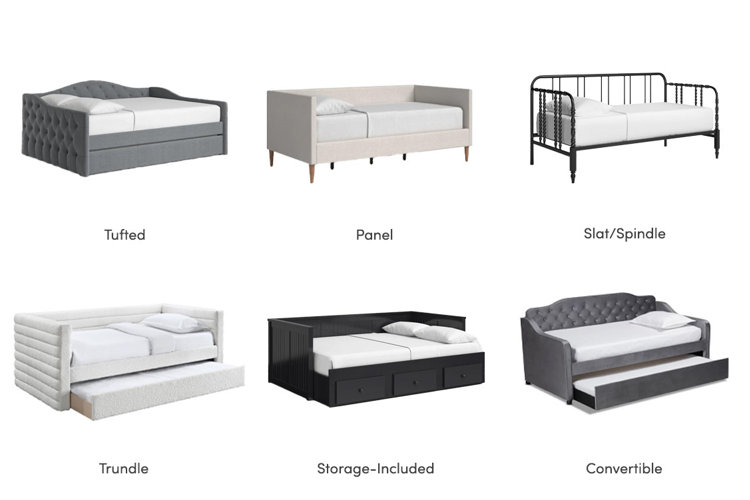
Tufted, Panel & Slat Frames
- Tufted: Tufting is a decorative feature that is typically used on upholstered furniture. Upholstered daybeds often showcase this diamond button design on the long backboard, creating a more sophisticated look while also offering extra padding thanks to the cushioning in this design.
- Panel: The addition of panels to one or both sides of the bed is what makes a panel daybed. These wood panels tend to make the daybed look angular and boxy, creating a more confined and cozy feeling.
- Slat/Spindle: The top frame or surround of the daybed is typically made from wood or metal slats placed horizontally or vertically, or thin spindles situated vertically.
Trundle, Storage & Convertible Daybeds
- Trundle: A trundle daybed features a pull-out drawer fitted with a mattress that is stored under the frame. This type of daybed is ideal for sleepovers, providing a second bed option in the same piece of furniture! Pop-up trundles are designed to raise the trundle frame to the same height as the daybed, making for a larger and more comfortable sleeping surface.
- Storage-Included: It is common to find daybeds with a pull-out drawer designed to provide extra storage. Not to be confused with a trundle bed, this drawer is used exclusively for storage of items like throw pillows, blankets, and other spare bedding.
- Convertible: These daybeds typically have an extra feature beyond the standard design – whether that be a trundle or added storage. They offer just a little more to make your life that much more convenient.
Daybed Sizes & Mattress Dimensions
| Size | Mattress (W × L) | Sleeps | As a sofa |
|---|---|---|---|
| Twin | 38" × 75" | One adult | Best seat depth |
| Twin XL | 38" × 80" | Taller guest | Same depth, longer |
| Full | 54" × 75" | Two kids / one adult | Deep; less sofa-like |
| Queen | 60" × 80" | Two adults | Often too deep to sit |
Neighborly Tip!
For a more in-depth overview of daybed sizes, how to choose the right one for your home, and sleeping capacity needs, read Your Guide to Daybed Sizes & Daybed Mattress Sizes.
Daybed Materials
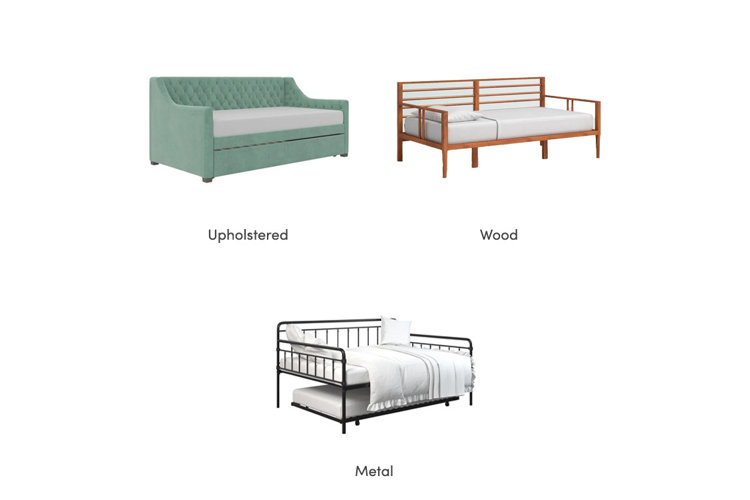
- Upholstered: Upholstered daybed frames are covered in fabric – including the back and sides – and often a thin layer of padding. This makes them especially comfortable when functioning as seating. Choose from a variety of upholstery materials, colors, and patterns to add charm to a kid’s room or multifunctional living room.
- Wood: Wood daybeds are made of solid or manufactured wood (or a mix of both), giving them a sturdy construction. They come in a range of wood tones or can remain unpainted for a natural look. Wood daybeds have a more rustic feel and do well in guest bedrooms and offices with farmhouse or traditional styles.
- Metal: Metal daybeds are most often made with steel or iron, featuring slats or decorative designs on the back and sides. They have a more industrial look but aren’t the most comfortable to lean back against when the daybed is used as seating.
How to Use a Daybed
Due to its multifunctional design, a daybed can be placed almost anywhere but is particularly suited for rooms with limited floor space. Studio apartments, offices, and guest bedrooms are all perfect places for one of these dual-function pieces. Daybeds are a great solution for smaller condos and dorms – and if you don't have a guest bedroom, your daybed can be placed right in your living room. It will provide a comfy option for sitting during the day and an additional sleeping spot at night.
Layer your daybed with bedding and a durable coverlet to protect the mattress during the day. Top it with throw pillows and blankets to style your daybed as a sofa when it’s not in use. Lining the back of a daybed with thick pillows can help make it more comfortable when sitting on it like a sofa. Simply remove excess pillows and pull back the coverlet for an effortless transition from sofa to bed.
Neighborly Tip!
For more ways to make the most of your daybed, read our guide How to Style a Daybed: Step-by-Step Styling.
Frequently Asked Questions
What is the main function of a daybed?
A daybed functions as both a sofa and a bed: you sit on it during the day and sleep on the same mattress at night without unfolding a mechanism.
What types of daybeds are available?
Common types include tufted, panel, slat or spindle, trundle, storage-drawer, and convertible frames. Trundles add a second mattress; storage drawers do not.
Where can you usually place a daybed?
Daybeds work in guest bedrooms, home offices, studio apartments, dorms, and living rooms where you need seating and an extra sleep spot.
Why is it called a daybed?
The name comes from furniture meant for lounging during the day that could also be used for rest. Today it still reads as a sofa by day and a bed at night.
Can a daybed be used as a couch?
Yes. Add pillows along the back panel and a throw on one arm so the open long side faces the room. Twin-size frames usually sit at a more sofa-like depth than full or queen.
What size mattress does a daybed take?
Most daybeds take a twin mattress about 38 by 75 inches. Full, twin XL, queen, and some king frames exist—always match the mattress size listed on the frame.
Does a daybed need a box spring?
Usually no. Most metal and wood daybeds use slats. Check the product specs; some upholstered frames specify a foundation or bunkie board instead of a box spring.
Daybed vs futon: which should you buy?
Choose a daybed if you want a finished sofa look and a mattress that stays made. Choose a futon if you need a fold-flat bed and a lower price, and you do not mind converting it each night.
