Basic Parts of Bedding You Need to Know
Create the perfect bed!
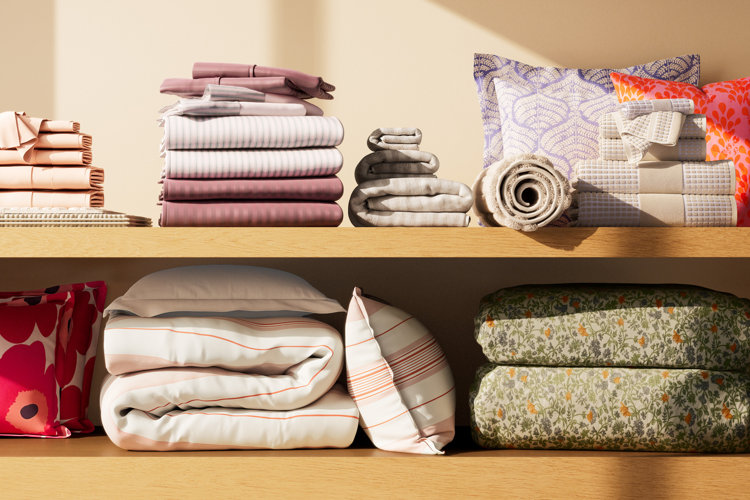
If you dream of having a luxurious sleep setup, you’ve got to know the essential parts of bedding. Here are all the super soft elements that go into making your dream bed – beginning from the bottom and making our way up.
In this guide:
Parts of Bedding Glossary
What Are the Key Parts of Bedding?
Frequently Asked Questions
Parts of Bedding Glossary
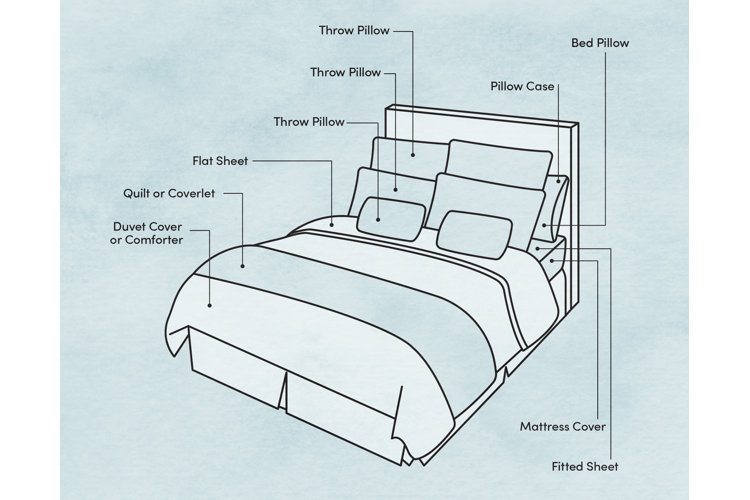
The basic parts of bedding include mattress covers, sheets, a quilt, coverlet, duvet cover, or comforter, and pillows. Take a look at the diagram above to see the different types of bedding your bed may include and where each piece belongs.
What Are the Key Parts of Bedding?
While how you make your bed is highly customizable, here’s a quick rundown on bedding basics.
1. Mattress Covers & Protectors
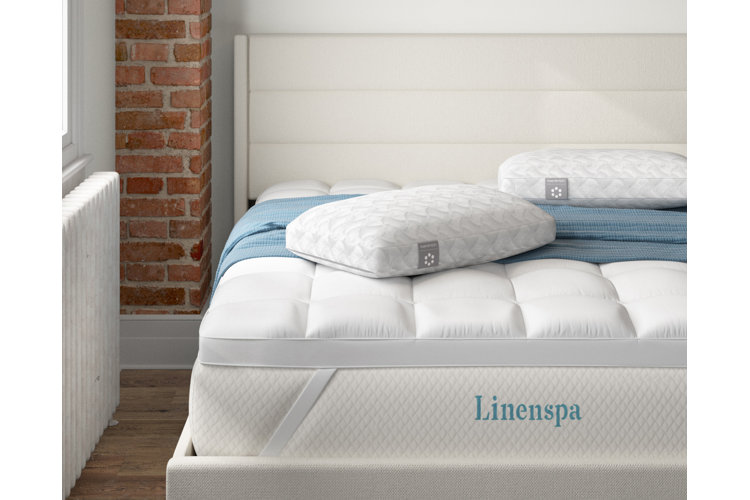
Your mattress is the most important part of your bed, so you will want to protect it from stains, spills, and any other accidents. A mattress cover is typically waterproof and designed to defend your mattress against allergens, dust, and perspiration. It will also increase the longevity of your mattress by decreasing the amount of cleaning needed since you will only need to remove and wash the cover instead of cleaning the entire bed itself.
There are three main types of sheets to consider when buying bedding: fitted, top, and pillowcases. As the layer closest to your skin, sheets and pillowcases provide cozy comfort and can help regulate body temperature while sleeping.
- Fitted: The fitted sheet is the first layer of bedding. It features an elastic band around the edges to ensure it fits snugly on top of your mattress. If you have a mattress protector, the fitted sheet will go on top of that. The elastic prevents the sheet from coming off in the middle of the night.
- Flat: A flat (or top) sheet is the next layer to your bedding. It lies on top of the fitted sheet with the decorative trim at the head of the bed. Some prefer to skip a flat sheet, while others consider it a must-have – it’s up to your personal preference. To make the bed, tuck the flat sheet into the sides and foot, leaving the top untucked so it can be folded to make room for the pillows. When sleeping, pull the flat sheet over you for a light layer of warmth.
- Pillowcases: These fabric coverings are made specifically to protect your pillows from wear and tear. Pillowcases typically match your fitted and flat sheets, but you can switch up your style by choosing one with an eye-catching pattern. Any bed larger than a twin typically has two pillows, so make sure to buy the correct amount of pillowcases for your bed.
- Sheet Sets: You can get the best value by choosing a complete sheet set which comes with at least one fitted sheet, a flat sheet, and a pair of pillowcases.
Tip!
Stock up on sheets in multiples. The rule of thumb is three sets: one for the bed, one for the linen closet, and one in the laundry. Not only does this ensure you always have a clean set at the ready, but it helps minimize wear on each set. Check out our guide Bed Sheet Buying Guide: How to Choose Bed Sheets for tips on choosing the right material and size.
From the heaviest comforter to the lightest coverlet, each type of bedding offers a different level of warmth, texture, and coziness. There are four main options: quilts, coverlets/bedspreads, duvet covers, and comforters.
- Quilts: A quilt is made up of three pieces: a top sheet, inner batting, and a bottom sheet. The stitching is usually visible and made into many designs or patterns. They are perfect for colder months, as they can be paired with a heavier layer like a duvet or comforter. Quilts can create a rustic vibe and are great for styles like traditional, farmhouse, and coastal farmhouse styles.
- Coverlets/Bedspreads: A coverlet is an extra layer of bedding used for decoration or warmth. Since they typically don't extend far beyond the corners of your bed, coverlets work well in cold climates or seasons as an additional layer atop your comforter or duvet. However, they can also be used as your main bedding option in warm climates or seasons.
- Duvet & Duvet Covers: A duvet is made up of two soft, flat pieces of fabric, is typically white in color, and is filled with down or synthetic fibers (also known as down alternative). Duvets are often paired with a cover to keep them clean. You can choose from many colors or patterns or change it up seasonally. You can keep your duvet and switch out the cover seasonally or as often as you want to switch things up. Learn more about duvets and duvet inserts What Is a Duvet Insert?
- Comforters: A comforter is a quilted, fluffy blanket that sits on top of your sheets. It is made up of two breathable pieces of fabric and filled with down or synthetic fibers to add warmth. Comforters are great for colder months where you want to bundle up at night.
- Bed-in-a-Bag: Just like you can get a sheet set, a bed-in-a-bag is the easiest way to get a complete bedding set. They will include one bedspread/comforter along with a complete set of sheets. Each set varies, so check the product description to make sure you’re getting all of the essentials you need!
Tip!
For more info on how to choose the right size bedspread for you, check out Blanket & Quilt Sizes for All Your Needs.
4. Pillows
Pillows are the finishing touch to any bed, and play a crucial role in how soundly you sleep at night. It's recommended to replace them every 12–18 months as pillow-fill deteriorates and becomes less comfortable. A standard bedding arrangement typically has a combination of bed pillows and throw pillows. Try layering these two types with the largest pillows in the back and the smaller, more decorative ones in the front.
- Bed: Bed pillows are the primary neck support you use every night. Beds larger than twins should have two pillows. For example, a king bed should have king bed pillows. You can also personalize your bed pillows to support your sleep type: back, side, or stomach.
- Throw: Decorative pillows (aka accent or throw pillows) are quick yet impactful parts of bedding that add finishing touches to the whole aesthetic. Add a dash of style and comfort that's easy to change at any time. Bedding sets of five or seven pieces often include these as well as pillow shams. The following are the different-shaped throws you can experiment with: throw, lumbar, Euro, and bolster.
- Shams: If you’re worried about investing in throw pillows because you like to change up your bedding with the seasons, there’s an easy solution. Shams are decorative covers for throw pillows. You can change them out like you would a pillowcase. Most shams have overlapping flaps in the back that make the throw easy to remove.
Tip!
Don’t forget to protect your pillows just like you would a mattress or a sheet. You can also learn How to Wash Pillows with care by reading our guide.
Extra Types of Bedding
Beyond bedding essentials, there are additional layers that can amp up the comfort and personality of your sleep setup.
- Throw Blankets: From quick afternoon naps to extra-chilly nights, keeping a spare throw blanket or two nearby can help you dial in the right warmth. Fold one and place it near the end of your bed, layer between your flat sheet and duvet, stash a few in a basket, or drape one over a blanket ladder for an ultra-cozy display.
- Bed Skirts: Also known as a dust ruffle, the bed skirt is placed beneath the mattress (on top of the frame or box spring) to hang over the sides of the bed. It is typically pleated or ruffled to add a decorative element as well as hide the frame or box spring and anything stored beneath the bed. Many bed skirts are comprised of one rectangular piece of fabric that rests between the mattress and the bed frame, but a second option – a wrap-around bed skirt – features one long elasticated piece of fabric that slips over the frame like a skirt and is fixed in place with special pins.
- Mattress Pads & Toppers: Mattress pads and toppers provide an easy solution for a mattress that doesn't meet your needs. More affordable than purchasing a new mattress, this layer is placed atop your existing mattress and can offer additional cushioning, temperature regulation, and targeted support.
Frequently Asked Questions
How many sheet sets should I own?
The rule of thumb is three sets: one on the bed, one in the linen closet, and one in the laundry to ensure you always have clean bedding and minimize wear on each set.
What are the essential parts of bedding?
The basic parts of bedding include mattress covers, sheets (fitted and flat), pillowcases, a top layer (quilt, coverlet, duvet, or comforter), and pillows. Other components can be added or additional comfort or decorative flair – it’s up to your preferences!
What's the difference between a comforter and a duvet?
A comforter is a quilted blanket with filling sewn permanently inside, while a duvet is a soft insert paired with a removable, washable cover that you can change out for different styles or seasons. Read more about the difference with our guide The Age Old Debate: Duvet vs. Comforter.
Why do I need a mattress protector?
A mattress protector shields your mattress from stains, spills, allergens, dust, and perspiration, extending its lifespan and reducing the need for deep cleaning since you only wash the cover.
