Safe Buying Guide
Find out everything you need to consider when purchasing a safe.
https://www.wayfair.com/Gardall-Safe-Corporation-1-Hour-Fireproof-Wall-Safe-GF1074.html
How to Choose the Right Safe
The first point to understand about buying fireproof safes and cabinets is the rating system used to delineate the protective quality of the unit. Underwriter's Laboratories (UL) is the trusted source across the globe for product compliance. This not-for-profit, independent testing organization's sole purpose and function is to test for public safety. Benefiting a range of customers—from manufacturers and retailers to consumers and regulating bodies—they've tested products for public safety for more than a century.
Most safes are constructed to protect their contents from fire damage. However, before you purchase a safe, you should know that many safes will not protect all kinds of contents from fire. Safes are designed with linings that are specific to the kinds of items that will be stored. For this reason, it is important to take into consideration what will be stored in the safe you are purchasing.
It is also important to note the wording of claims made by safe manufacturers. A safe that is labeled "tested to UL standards" has not necessarily passed those tests. While there is no government set standard for fire or impact protection in safes, UL ratings are a widely used measure of how resistant a safe is to fire, impact, water, and burglars.
Not all safes are UL tested, but this does not mean that they are not built to the same standards as those that are UL tested. Rather, the manufacturers of these safes may use other standards or methods for testing their products. It is important to carefully examine the specifications given by the manufacturer of a safe to determine if it is the right safe for you. Begin searching for your perfect safe by choosing what specific hazard you wish to protect the contents of your safe from, or scroll down to learn about them all.
Fire
Impact
Explosions
Water Damage
Burglary
Key Considerations
What will you be storing and protecting in your safe?
Safes are made specifically to protect various contents, from keys to laptops and files to guns.
What type of protection will your safe need: protection from fire, impact, explosion, water damage, or burglary?
Based on the safe's rating, insurance will cover damaged contents. You should know that water damage is less defined than the other ratings, though, and lower cost safes may not cover these, meaning that you will not be able to make a claim.
Where will you be using your safe? In a hotel, business, or at home?
Many safes are recommended for commercial use, but some are not. If the safe is for your home, usually a safe with a 1-hour rating is sufficient. The price increases dramatically the higher the rating.
How will your safe ship?
Our safes come in all different shapes and sizes, and depending on which size you choose the shipping method may vary. Many of the safes we carry are very large, and will need to be delivered by a truck freight service. If you are having your safe delivered to a home or business address and require additional assistance, we provide additional levels of service for an added charge. Speak to one of our business account managers for more information about this by calling 888-884-5570.
What will you be protecting in your safe?
While it may seem like all safes are the same, this is untrue. Whether it is the layout of the safe or the amount of protection, most safes are designed to protect a certain type of material.
Features
Look for the following features that are available:
- Floor Safe: These are built into the floor, often in the foundation of the building, for complete safety. Floor safes can be hidden, and are some of the most effective safes protecting against burglary and fire.
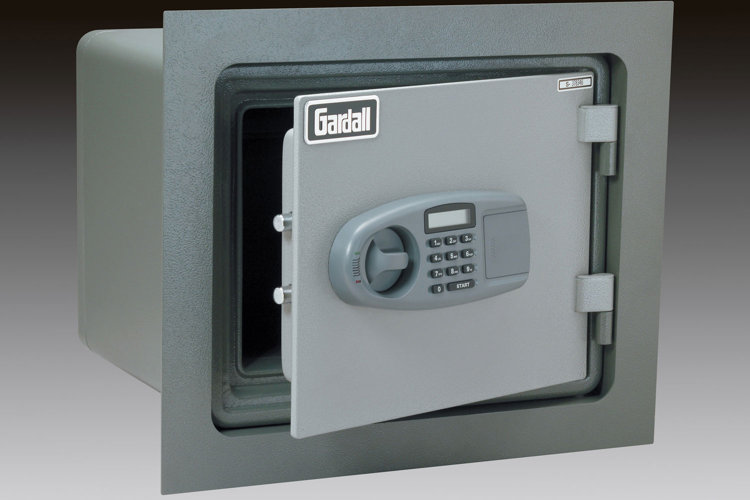
- Wall Safe: Wall safes are constructed into the wall of a business or home, between sturdy support beams. These can also be hidden behind paintings or tapestries, while being easily accessible.
- Depository Safe: These are ideal for businesses with many deposits of moneys or confidential paperwork. This is the only variety of safe in which users can place items in the safe without having the ability to open it.
- Bolt Down: These are some of the most secure safes, as they are built to be permanent fixtures and never to be moved or removed. It is recommended that these safes be bolted down to a concrete foundation in order to keep the entire safe and its contents from being taken. Bolting a safe to hardwood floors or other flooring will slow down a burglar, but they could ultimately remove the safe from the floor.
- Interior Light: Safes with interior lights are typically motion-activated, so as soon as you open the safe the light will turn on. If the safe that you want to buy does not have this feature, this can be installed separately and run on battery power.
- Diversion Safe: These are made to look like everyday objects such as books, clocks, or even food containers.
Types of Locks
Most safes come standard with one type of lock, but may have an option to change the lock type or add another lock for added security. There are a variety of lock options: key, electronic, biometric, dual combinations, dial, and card swipe.
- Key Locks: When using a key lock, make sure you store your keys in a safe place. It is a good idea to have more than one set of keys for extra security. In the case that you lose your keys, most companies will be able to send you a new key if you have a key reference number (located on your safe).
- Electronic Locks: If multiple users will be using your safe, an electronic lock may be the best fit for you. Most electronic locks can be programmed with more than one combination for multiple users. If you will be changing your combination frequently for added security, electronic locks make the task quick and easy. For extra protection you can choose a lock with both an electronic and key lock.
- Dual Combination Locks: Most combination locks are three or four digits, allowing quick access to all of your belongings. If you are interested in added security, you can chose a safe with both a combination and key lock.
- Dial Locks: This lock is one of the older varieties of safe locks. The dial combination is three to four digits. Be sure to take care of this type of lock, as the small parts in the lock mechanism can become dislodged over time or from overuse.
- Biometric Locks: This technological lock relies on battery to use thermal or optical scanners to read fingerprints. There is often a second step involving a code after the fingerprint is scanned. This is ideal for safes that should be accessed by one person or very few select people. There is often a backup key in case the battery dies or the system fails.
- Card Swipe Locks: These are ideal for hotel or tenant environments. The card works like a credit card swipe and opens the safe.
Protection From Fire
UL rates products by a 1, 2, or 3. This means that the product successfully withstood an external fire temperature of 1700 degrees Fahrenheit to 2000 degrees Fahrenheit for one, two, or three hours while the internal temperature did not exceed 350 degrees for paper storage and 125 degrees for media storage.
It is important to note that the hour ratings are how long the products were tested, not how long they will stand up in a real fire. Many independent tests have found that they last much longer.
Paper versus Media Storage
There is a great difference in deciding on a fireproof storage product for paper versus a product for media, such as CDs, disks, photographs, etc. Paper ignites at 400 degrees and begins to sustain damage at 350 degrees, which is why products pass UL tests only if the internal temperature does not go above 350 degrees.
Electronic media, and any other non-paper products, are much more susceptible to heat and humidity damage. Media safes are constructed differently and insulated more heavily than those designed to protect paper.
Keep this in mind when looking for a fireproof safe or cabinet; you can keep paper in a media safe without it sustaining damage, but you cannot keep media in a paper safe and expect the same protection. Both types, however, use the same 1, 2, and 3 hour rating system.
Paper Documents, Valuables, and Firearms
The average heat intensity of a house fire is 1200 degrees. At that temperature, nearly everything would be destroyed. Since paper begins to char at 400 degrees, UL has chosen 350 degrees as the maximum internal temperature the contents of a safe can reach to be classified as fire-resistant.
In their strict testing, safes are heated to a given temperature, usually above 1400 degrees, for up to four hours then cooled naturally. In order to be UL certified as fire-resistant, the safe's contents must never reach above 350 degrees. This ensures that important paper documents will not be destroyed by the intense heat of a fire.
Computer Storage and Media
It is always recommended that computer media be stored at a temperature around 70 degrees and humidity between 35% and 60%, however through UL testing, it was discovered that computer media can withstand temperatures up to 125 degrees and humidity of 80% for short periods of time without losing the information they contain.
For this reason, safes that are meant to protect computer media must go through tougher testing. Computer media safes are heated to temperatures above that of an average household fire for a given amount of time, either a half hour, one hour, two hours, or longer, depending on the desired rating.
In order to be UL certified, the contents must be functional after the test has ended, and at no time during the test may the contents of the safe exceed 125 degrees or 80% humidity.
Media includes: Negatives, photographs, DVDs, CDs, hard drives, flash drives, thumb drives, etc.
Protection From Impact
In the event of a fire, there is a good chance that debris may fall on your safe, or worse yet, a structural collapse could cause it to fall a significant distance. Impact-resistant safes are UL certified to resist being damaged by falling debris or being dropped up to 30 feet, effectively protecting whatever you have stored inside.
Impact-resistant safes generally go through the same testing as fire-resistant safes, but are then put through an additional set of tests. To simulate a structural collapse that might occur during a fire, safes are dropped 30 feet onto broken concrete and other debris after being put through standard fire-resistance tests.
Then, to accurately simulate the events of a fire, the safe is turned over and reheated. Once the product has re-cooled, it is opened and dismantled. For a safe to qualify as impact-resistant, the contents must be protected through all of these tests and still be in working condition.
Protection From Explosions
In the event of a fire, a safe may be exposed to periods of very intense heat. If the safe is not built to withstand this, it may explode, both damaging all of its contents and creating an additional threat by projecting shrapnel. In order to test for an explosion hazard, a furnace is heated to 2000 degrees.
Once it has reached this heat, a safe is quickly inserted and left at this temperature for 30 minutes. If an explosion does not occur, then the safe is dismantled and all of its working parts, as well as the contents, are carefully examined for damage and functionality.
These tests ensure both the safety of the contents of the safe in the event of an intense fire, and the safety of individuals who would be harmed by an explosion.
Protection From Water Damage
Just because a safe is fireproof does not necessarily mean that it is water-resistant. When a fire occurs, often much of the damage that occurs is caused by sprinkler systems and other firefighting efforts. During a fire, many safes will create a positive internal pressure that keeps water away from your valuables and data inside.
It is important to be sure that your safe has this feature so that water does not damage the contents of your safe in a fire. However, in the event of a flood or other water damage where there is no fire present, your belongings may not be entirely protected. Be sure to invest in a waterproof safe if this is a concern.
Protection From Burglary
In addition to protecting your valuables and important information from being destroyed in a fire, a safe also serves the purpose of keeping these items from being stolen. The threat of theft does not always come from individuals that do not have access to the safe. In many industries, such as food service and retail, various employees may have access to a safe, but for one reason or another leave the company. In this situation the safe should be equipped with a re-programmable locking system to protect from future burglary, such as an electronic keypad or a fingerprint scanner.
A UL technician will attempt to enter a safe for a sustained period of time with a given amount of tools, and the Burglary Rating that the safe receives will correspond to both how long it takes the UL technician to enter it and the tools used.
Burglary Classifications
- TL-15: Offers protection against forced entry using common mechanical and electrical hand tools, such as chisels, hammers, and drills, for up to 15 minutes.
- TL-30: Safe offers protection against forced entry for 30 minutes using common mechanical and electrical hand tools, such as chisels, hammers, and drills.In addition to safes with UL's Burglary Classification, there is also a variety of Residential Security Containers (RSC) on the market. To be classified as an RSC, it must have the ability to withstand at least 5 full minutes of rigorous prying, drilling, punching, chiseling, and tampering by UL technicians.
- RSC-B rating means that the safe has less than a ½-inch thick steel body construction and passes all RSC testing.
- RSC-C rating means that the safe has at least 1-inch thick steel body construction and passes all RSC testing.
Safe Sizes
The most common sizes are up to .9 cubic feet, followed closely by 1-2 cubic feet and safe that are 10 or more cubic feet. Before purchasing a safe, think about the contents that you will be storing. If you will be accumulating more items over the years, it is smart to buy a larger safe. Sometimes people outgrow their safes and have to purchase another, which can be expensive.
It is important to measure for the depth, width, and height of both the inside and outside of the safe, as the walls and door are very thick. Do not do any construction for wall or floor safes until the safe arrives, as the measurements can vary slightly and it would be costly to make changes.
Tip!
Include these items in your new safe:
- Adoption Papers
- Birth & Death Certifications
- Citizenship Paper
- Child Custody Papers
- Deeds
- Divorce and Separation Papers
- Health Records
- Home/Property Inventory
- Marriage Certificate
- Passport
- Warranties
- Will
- Bank and Credit Card Records
- Contracts
- Tax Records
- Insurance Policies
- Loan Papers
- MortgageStock
- Bond Certificates
