How to Choose the Best Rug Material
Add texture to your floors.
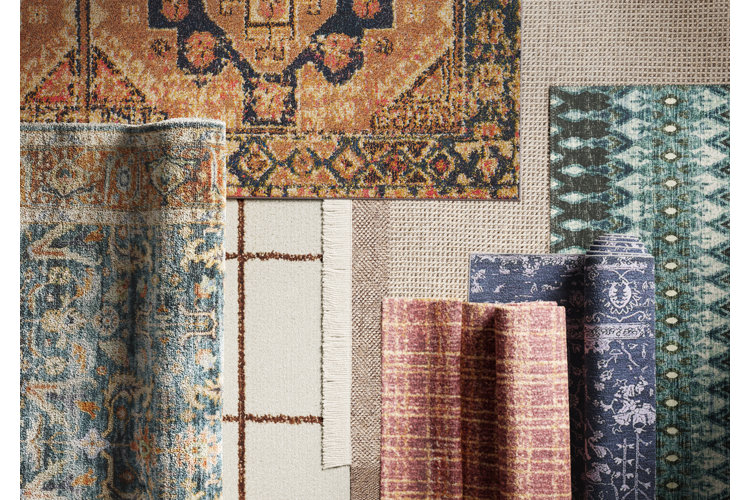
The material of a rug determines both its durability and comfort, making it a core consideration when shopping for a new rug. To find the right rug, you must take into account how the placement, functionality, and style of a rug will fit in your home. Here, we’ve outlined a few easy steps to help you find a rug that will suit all your comfort and style needs.
In this guide:
1. Review Types of Rug Materials
2. Identify Your Rug Requirements
3. Consider Weave Techniques
4. Choose the Right Pile Height
5. Determine a Comfortable Price Range
Frequently Asked Questions
1. Review Types of Rug Materials
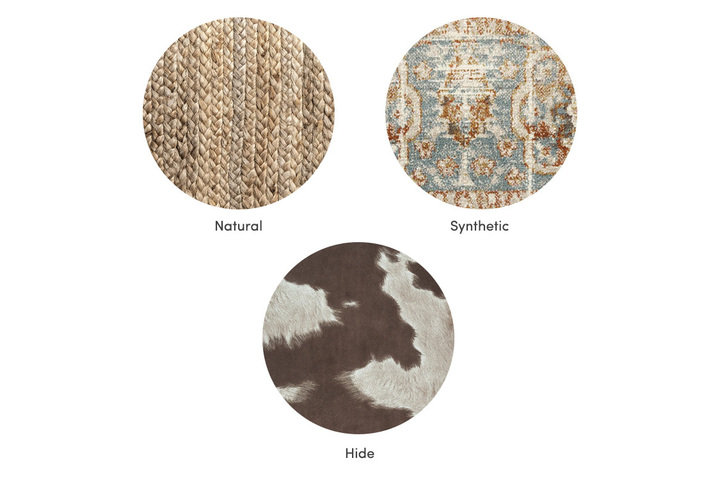
When choosing a rug for your space, you'll need to consider factors like durability, cost, and maintenance – all of which are dependent on the rug’s material. Rugs are made of three main types of materials: natural fibers, synthetic fibers, and hides – which we outline below.
Natural Fibers
Wool: Soft wool fibers spring back when compressed, making these rugs ultra-durable and comfortable. They’re even stain-, dust-, and flame-resistant. Presumed to be a traditionally Greek design, flokati rugs are thick, woven wool rugs that are sure to make a statement.
Cotton: Cotton is an inexpensive alternative to wool. These often flat woven rugs are fairly durable yet soft and can even be put in the washing machine. Chenille rugs are cotton rugs with a fuzzier texture.
Silk: Though expensive, silk rugs are luxuriously soft and can be beautifully intricate. They must be cleaned professionally, however, and can wear down easily, so we recommend placing them in areas that are not high-traffic.
Jute & Sisal: These textured natural fiber rugs are firm and affordable. Sisal can be coarse, but is more durable and easier to wash than the softer jute. Both materials are usually dyed with earth tones and require careful cleaning.
Bamboo Slat & Seagrass: All-natural and eco-friendly, these rugs are highly durable and water- and stain-resistant.
Hemp: Resistant to dirt, water, and allergens, this material is durable. Hemp rugs are good for high-traffic areas and homes with pets. Though they aren’t as soft or vibrant as wool or cotton, these rugs are affordable and low-maintenance.
Tip!
Read our guide What Are Natural Fiber Rugs & Which Do I Pick? for more tips on choosing a natural fiber rug.
Synthetic Fibers
Polypropylene: Vibrant, soft, and affordable, polypropylene rugs are made of synthetic material. They are stain-resistant, easy to clean, and can withstand indoor and outdoor weathering. Because of their chemical makeup, however, they are highly flammable, so keep them away from intense heat such as ovens and fireplaces.
Polyester: These rugs have the same benefits and drawbacks as polypropylene/olefin rugs except they are slightly less durable and offer a softer texture. Microfiber rugs, which are light, durable, and soft (but also highly absorbent), are often made of polyester.
Nylon: Nylon is one of the most common rug materials because of its versatility and affordability. It is similar to polyester except it’s less durable and often cannot be machine-washed.
Viscose: The human-made answer to silk, viscose rugs are beautiful and affordable but extremely fragile and prone to shedding, especially when they come in contact with water.
Faux Fur: If you want to avoid decorating your home with real animal hide, thick, soft faux fur rugs made of acrylic fibers and suede are a good, affordable alternative. Though they get dirty easily, many can be machine-washed.
Recycled P.E.T: If you want a sustainable rug, a recycled P.E.T rug is your best option. It is made from recycled plastic, making it a strong and durable rug. It is stain-resistant, making it easy to care for.
Animal Hides
Sheepskin: Sheepskin rugs are soft and luxurious, making them perfect for low-traffic areas where you want lots of cozy textiles.
Cowhide & Leather: These unique, stylish rugs can be expensive and don’t hold up well against water or spills, but they are highly durable to foot traffic and easy to maintain.
(Shop this image: chevron area rugs, vintage-look area rugs, geometric area rugs, abstract area rugs, and Oriental rugs)
As you shop for a rug, you’ll need to consider which materials are best suited for certain locations in your home. If you’re shopping for an entryway rug that will see a lot of traffic, it’s important to choose a material that is both durable and easy to care for – so a synthetic material may be the best choice. If you prioritize texture and appearance, a soft but high maintenance material like sheepskin could be ideal for a low-traffic area in your home.
(Shop this image: southwestern area rugs, blanket ladders, vintage storage trunks, and ceramic vases)
Depending on the material of a rug, they can be made using a variety of weaving techniques, from machine-loomed to hand-braided. The weave will impact your rug’s style, comfort, cost, and ease of cleaning. Here are the most common weaving techniques to look for:
Power Loom: Because they’re machine-made, power loom rugs offer intricate weave patterns and designs at a much lower price than handmade options.
Tufted: These detailed pile rugs are soft, textured, and quite durable at low pile heights.
Hand-Knotted: Meticulously made by professional weavers, these rugs are some of the most durable, intricate, and expensive available.
Looped/Hooked: The threads of these rugs end in loops rather than tufts, so they tend to be firmer and denser than hand-tufted rugs.
Braided: Threads in braided rugs are woven tightly together, often concentrically, to create durable, firm, ridged mats.
Flatweave: Great for layering, these tightly woven, thin, flexible, and often reversible rugs can be found in countless bright colors and patterns. They’re extremely light, durable, and easy to clean. Traditional styles include, kilim, a Central Asian form of flat weaving that leaves a very small slit between each color block, and dhurrie, which are Indian floor covers.
Tip!
Looking for handmade styles but trying not to break the bank? There are machine-made rug options that mimic handmade techniques at a lower cost.
(Shop this image: plaid area rugs, abstract area rugs, geometric area rugs, Moroccan-inspired area rugs, and vintage-look area rugs)
Pile height refers to the thickness of a rug and is an important factor in the comfort and functionality of a rug. Rugs with a thinner pile height are well-suited for high traffic spots and are a breeze to clean, while rugs with a thicker pile height are ideal for cushioned comfort in low-traffic spots like a bedroom.
Best Rug Pile Height for High-Traffic Areas
Thin Pile (0" – 0.25"): Flat pile (or thin) rugs are often made of natural fibers and are incredibly durable. They work best in high-traffic spots like entryways, hallways, or kitchens and spaces like dining rooms where a thin pile rug makes it easy to maneuver chairs. Their thin pile height also makes them easy to vacuum!
Medium Pile (0.25" – 0.75"): These unobtrusive rugs are great for giving a room a little texture without going overboard.
Best Rug Pile Height for Low-Traffic Areas
Thick Pile (Over 0.75"): Thicker rugs are comfortable and warm, making them a must-have for bedrooms and low-to-medium traffic spots.
Shag: These thick, loose rugs stand out and are good for cozier room designs and low-traffic areas like bedrooms due to their plush weave.
High-Low: A combination of a flatter pile and a thicker pile often blocked by color or design creates compelling texture. These are also best suited for low-traffic spots like bedrooms or living rooms because of their uneven pile heights that can catch dirt and debris.
When determining the best rug material for your home, it’s important to take budget into consideration. While other factors like construction and size also impact the price of a rug, the material you choose can contribute to a large portion of the cost. Generally, synthetic fiber rugs are less expensive than rugs made of natural materials.
Most Affordable Rug Materials
Polypropylene: Polypropylene is a type of thermoplastic and one of the most budget-friendly but durable rug materials. It is resistant to stains and fading – making it a good rug material choice for high-traffic areas, though the material can feel stiff.
Polyester: Polyester is another affordable synthetic rug material. It has a soft feel and can mimic the texture of wool rugs without the price tag. Though not as durable as polypropylene, polyester rugs are more comfortable and better suited for low-traffic rooms.
Most Expensive Rug Materials
Wool: Wool is a natural but extremely durable rug material, making it among the most expensive. Wool rugs are naturally stain-resistant and offer the perfect balance of practicality and comfort – making them suitable for high-traffic areas.
Silk: Silk rugs are luxury epitomized. Made of natural protein fiber, silk is an expensive rug material that offers soft texture and sheen. These rugs are delicate and difficult to maintain – making them better suited to low-traffic areas where they are more decorative than functional.
Tip!
Need more help finding the right rug? Read these guides for helpful tips:
- Area Rug Buying Guide: How to Choose a Rug
- How to Choose the Right Rug Sizes
- How to Choose the Perfect Rug Color for Your Space
Frequently Asked Questions
What are the benefits of wool rugs?
Wool rugs are durable, comfortable, stain-, dust-, and flame-resistant, making them a practical choice.
Which rug materials are best for high-traffic areas?
Synthetic fibers like polypropylene and natural fibers like hemp are ideal for high-traffic areas.
What is the best pile height for low-traffic areas?
Thick pile or shag rugs are ideal for low-traffic areas due to their comfort and warmth.
