DIY: How to Sand & Stain a Table (With Photos!)
Follow this handy guide for step-by-step instructions on how to sand and restain an old table.
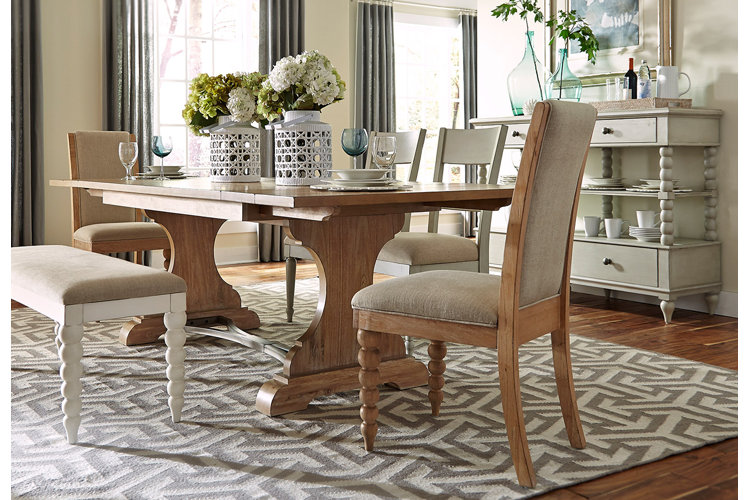
Whether you want to update an old table or customize a new one to your home decor, sanding and staining a table is a DIY project with rewarding results. Keep reading for a step-by-step overview of this process, so you can give your dining area a brand new look.
What You'll Need:
- Plastic gloves, face masks, and protective goggles
- Floor or ground covering/protector
- 2 to 3 paintbrushes and sponges
- 2 to 3 lint-free and tack cloths (treated with tacky material to trap excess dust)
- Sandpaper in varying grits (80 coarse, 150 medium, 220 fine)
- Hand sander (for fine-grit and very-fine grit sanding at the end)
- Electric sander (an optional tool to cut down sanding time)
- Wood conditioner
- Desired stain color including polyurethane (or a separate polyurethane finish for table)
Before beginning, think safety first! Wear protective goggles, gloves, and a mask for every step. Work in a well-ventilated area. Read and abide by all precautions on product labels and use only as directed. Use protective covering on the floor under your wood table and workstation.
How to Sand & Stain a Table
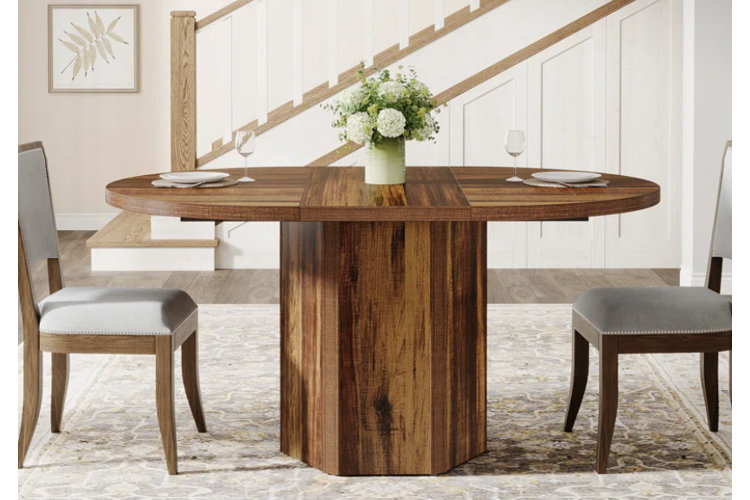
1. Prepare Your Workstation
Set up your table in a well-ventilated area. Be sure to place protective covering on the floor beneath your workstation. Then, put on protective goggles, gloves, and a face mask before proceeding.
2. Sand the Table
Begin by wiping down your table with a lint-free or tack cloth to remove dirt, dust, or food remnants. Then, put sandpaper on the bottom of the hand sander or electric sander (whichever you've chosen). Break your table into manageable sections, sanding each section with coarse-grit sandpaper (80 grit). Then, progress to medium-grit sandpaper (150 grit), and lastly fine-grit sandpaper (220 grit) until you’d covered the entire table.
Coarse-grit sandpaper removes old finishes and rough patches, and should be used for 5 to 10 minutes per section of your table until the surface is smooth. Medium-grit sandpaper should be used for 5 to 7 minutes per section to refine your surface. Lastly, fine-grit sandpaper should be used for 3 to 5 minutes per section of your table to remove any remaining imperfections. Be sure to wipe down the wood with a cloth between each sanding.
3. Remove Dust & Condition the Wood
Use a tack cloth to remove all dust particles from your table before applying wood conditioner. Stir the wood conditioner thoroughly before applying. Use a sponge, cloth, or paintbrush to apply one even coat to your entire table’s surface, letting it sit for 10 minutes before removing excess conditioner with a cloth.
This process gives the conditioner time to penetrate the wood, serving as a primer for your stain to smoothly sit on the table. Wait at least two hours after applying your wood conditioner before you stain, checking manufacturer specifications for dry times.
4. Apply Your Stain
Stir your stain thoroughly before applying each coat. Take a paintbrush, then dip it into the stain to coat the wood with a thin, even layer. After a few minutes of drying, use a lint-free cloth to wipe away the excess stain – this process helps your stain dry evenly. Lightly sand your table with a fine-grit sandpaper (220 grit) between each coat of stain to give it a smooth finish. The number of coats you apply depends on your color preference, but you should apply at least two light coats. The longer your stain sits before you wipe the excess can impact the final color – the longer it sits, the darker your stain color will be. Let the stain dry according to manufacturer specifications.
5. Sand & Finish
Let your stain sit for 24 hours to completely dry. For a polished finish, use a hand sander with fine-grit sandpaper (220 grit) to smooth your table’s surface. If your stain did not include polyurethane, apply four coats of a polyurethane finish now to protect the table. Let each coat dry before sanding with fine-grit sandpaper (220 grit) to prevent debris from contaminating the polyurethane when wet. Let your final coat dry for at least 24 hours before using your table.
Then, sit back and enjoy meals with friends or family around your freshly stained table!
Tip!
Check out these 7 Inspiring Kitchen Table Ideas for more guidance on dining in style.
Frequently Asked Questions
What grit sandpaper for refinishing a table?
Start with 120, before finishing with 220 grit.
How many coats of stain should you apply?
You should top the table with 1–2 coats depending on depth of color.
Do you need to seal stained wood?
Yes, it's best to seal the table with a polyurethane or protective topcoat.
How long to wait before sealing stain?
You should usually wait at least 24 hours.
