How to Choose the Right Outdoor Lighting
Find the best option for your needs, from the front door to walkway to garden.
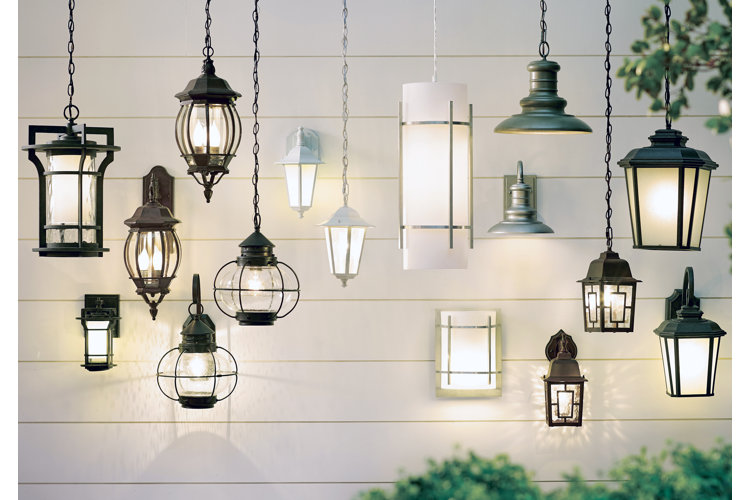
Whether you're looking to illuminate the way home at night, bring in a layer of safety, or highlight your home's architecture, we're here to help you find the outdoor lighting solution for you.
Find out more about:
Lighting by Location ›Common Questions ›Landscape Lighting 101 ›
Lighting by Location
Entryway
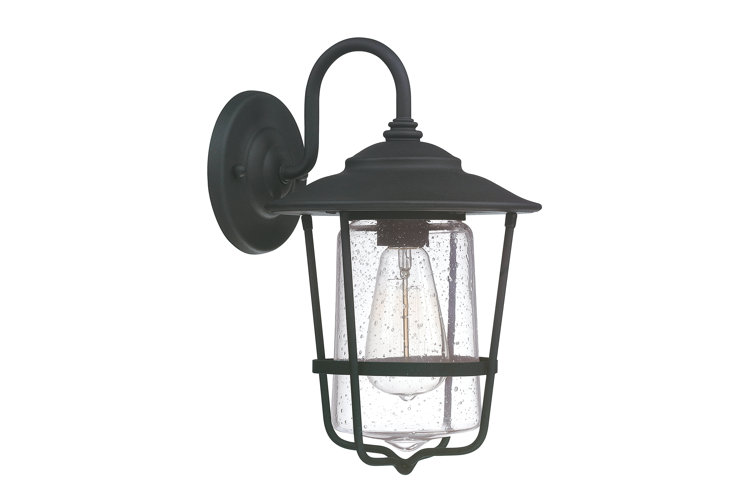
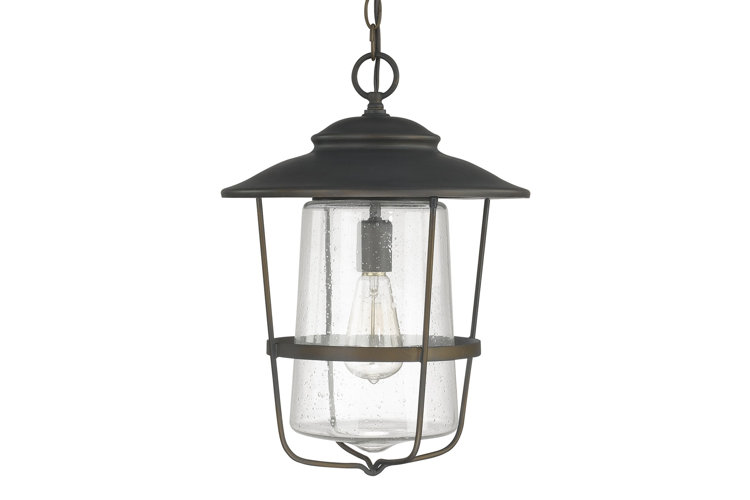
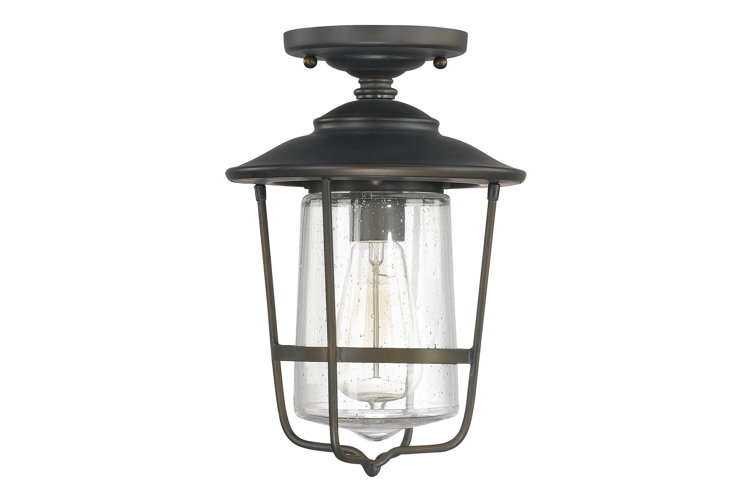
Flush Mount
https://www.wayfair.com/lighting/pdp/birch-lane-remington-1-light-outdoor-semi-flush-mount-bl4357.html
- Wall mounts pair well on each side of a door or alone to illuminate the house number
- Hanging lights have adjustable lengths that tailor to your space and are best for front doors
- Flush mounts include both ceiling and wall fixtures and are ideal for tighter spots
Post
https://www.wayfair.com/Mercury-Row-Bissonnette-1-Light-Lantern-Head-MROW5207.html
- Pathway lights typically come in sets, stake into the ground, and sit low
- Step lights, also in sets, are intended for stairs often have motion sensors
- Post lighting either mounts on top of an existing pillar or come with one included
Lantern
- Ceiling fans bring in dual function and help extend the outdoor living season
- String lights, along with cove or rope lights, enhance ambiance with a soft glow
- Lanterns are a decorative accent that also offer ambient lighting
- Spot lights cast upward illumination to highlight key landscape features
- Well or pond lights sit flush to the ground and require digging to install
- Poolside lights are waterproof and float
Common Questions
What's the right size fixture for my front door?
Strike a balance between proportion and light output, considering how it will look from the street, where it tends to appear half its true scale. When in doubt, err on the larger size.
- Hanging lights: 1/3 of the height of your front door
- Wall mounts: 1/4 the height of the door
What wattage do I need?
For front porches or outdoor dining spots, the same pro trick for indoor spaces applies: Multiply the dimensions by 1.5 (length x width x 1.5) for estimate of the total wattage required. If using LED lights, divide that number by 4.
If you plan to use multiple lights for one space, go with a lower rated wattage for each fixture to achieve a warm, soft glow and avoid overlamping—an overly bright affect.
How can I reduce my energy usage?
Solar-powered lights collect energy during the day then switch on at sunset (and off again at sunrise). These are particularly common for pathway, step, and spot lights.
Motion sensors are another great way to cap the lighting to only when it's necessary, and are often used for security around a garage, like flood lights.
Can I install the fixtures myself?
Some outdoor lighting is as simple as unpacking and securing—especially solar-powered options. For outdoor light fixtures that involve wiring, it's worth enlisting a professional for install.
Landscape Lighting 101
Enhance your curb appeal—by both day and night—with an outdoor lighting plan that covers all aspects of your home's exterior and property.
Lighting Types
For the best coverage, leverage all three types of lighting:
- Ambient : General illumination that sets ambiance and overall light level in a space
- Task: Secondary source that provides enough light for a distinct spot
- Accent: Decorative lighting that reinforces the overall style
Understanding Your Space and Needs
The first step in creating a lighting plan is to identify the areas of your home and property you want to illuminate. Do a complete walk through at night with a flashlight to asses the current state of your lighting, what's missing, and how the light interplays.
As you walk around the property, take note of:
- Existing lighting that you like and works well to keep
- Fixtures you want to replace for style or function (or both!)
- Dark spots that compromise safety for you or guests
- Missed opportunity to highlight a key feature
Entry and Pathways
In the evening, lighting becomes your home's first impression—and it's important not just for style, but safety too. Start at your entrances (front door, garage, side doors) and trace the pathway backwards to the driveway or street to determine the lighting needs for easy navigation.
Outdoor Living
To make the most of these multipurpose spaces, leverage all three types of lighting—paying special attention to task lighting for outdoor cooking, ceiling fans for covered seating spots, and ambient accents for dining.
Swimming Pools
The color of the pool liner and tile will determine how much light is required to prevent the pool from looking like a murky pond at night. Lighter colors reflect light while darker colors absorb it.
Security
Double check that all entry points of the home are well lit—and for an added layer, cover any side of the house in the shadows with spot lights installed in eaves or fixtures by side doors, windows, or garages.
Light Containment
Be a good neighbor and don't accidentally let your outdoor light trespass on the property next door. When installing uplighting like spot lights, check its trajectory is anchored on the intended target and not spilling over.
You can also filter for Dark Sky compliant fixtures, which are fully shielded to reduce light pollution and minimize glare. The International Dark Sky Association (IDA) has a Fixture Seal of Approval (FSA) program that identifies responsible outdoor lighting. Check to see if your community has a Dark Sky ordinance that limits light pollution in the sky from light fixtures. If so, then you will need to select fixtures that direct light downward.
