Summer Slim Down: 4 Ways to Reduce Your Environmental Footprint
As the days heat up, find out how to make your home more eco-friendly (and lower your energy bill).

Design: Clean Design Partners
http://www.wayfair.com/Shop-The-Look/Designer/Clean-Design-Partners-D6372
A home doesn't need expensive solar panels on its roof to be eco-friendly. There are small changes you can make that have an everyday effect on the energy and water resources your home consumes. Read on to discover our top four ways to reduce your environmental footprint and make your home a little greener today.
1. Use Energy-Efficient Lighting

Design: Chango & Co.
http://www.wayfair.com/Shop-The-Look/Photo/25-Informal-Dining-Area-And-Hallway-Plandome-Dutch-Colonial-by-Chango-Co-P100487
Your home is likely illuminated with outdated, standard light bulbs. Technology has evolved significantly with bulbs that use less energy and last longer, resulting in fewer bulbs in landfills. Compared to standard incandescent bulbs, LED (light emitting diode) and CFL (compact fluorescent lamp) bulbs use 75 percent less energy and last up to 25 percent longer. LED and CFL bulbs also emit far less heat than standard light bulbs.
What you can do now: Use natural sunlight when possible. Use dimmers if you have them. Don't forget to turn lights off when you leave a room.
Make a plan: Replace light bulbs with LED or CFL bulbs. Look for indoor and outdoor lighting fixtures that are outfitted with efficient bulbs. Shop LED and CFL lighting »
Tip! Be mindful of how many lights you use throughout your home. Use a solitary table or floor lamp, instead of multiple overhead fixtures. Always remember turn them off when you leave a room.
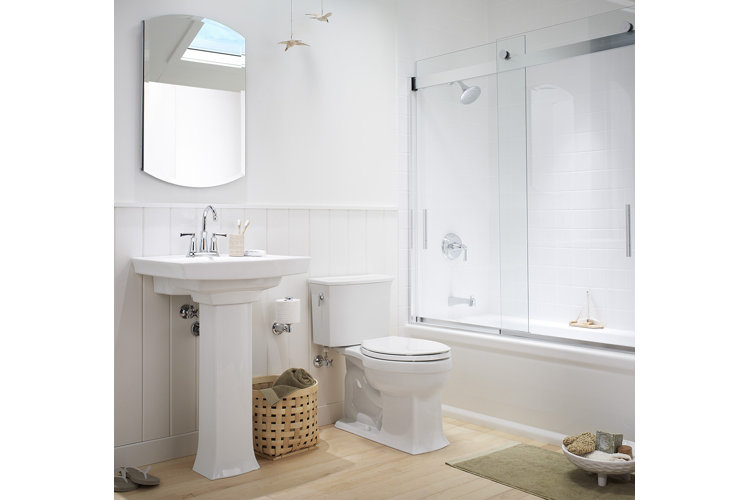
2. Install Water-Saving Plumbing
http://www.wayfair.com/Shop-The-Look/Photo/-P76228
Water is not an unlimited resource. The EPA estimates the average American family uses 300 gallons of water per day, while household leaks add up to more than 10,000 gallons of water wasted per year. An eco-friendly home aims to make the most of this precious resource.
What you can do now: Don't let water run while brushing your teeth or washing dishes. When possible, use less water by taking a quick shower instead of a bath. Fix minor leaks before they become a problem.
Make a plan: Install WaterSense® certified faucets and shower heads on existing sinks (in the bathroom and kitchen) and showers. One WaterSense® shower head can save an estimated 2,900 gallons of water per year. If you are planning a bathroom renovation, look for the WaterSense® logo on toilets, shower enclosures, and bathtubs. Shop WaterSense® bathroom fixtures »
Tip! Only run the dishwasher or washing machine when they are full, as both of these appliances use the same large supply of water to operate, no matter the load.
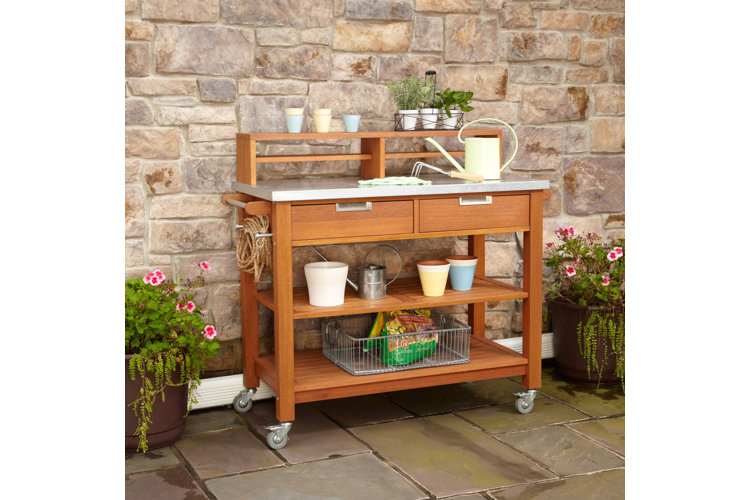
3. Green Your Garden
https://www.wayfair.com/outdoor/pdp/freeport-park-cranbrook-wood-potting-bench-w000458229.html
There are a variety of ways to reap the benefits of having a home garden, and ensure you’re being as eco-conscience as possible in its maintenance. Over the course of a season, you can save money and trips to the grocery store from just a few low-maintenance fruit or vegetable plants.
What you can do now: Start by making your outdoor space more eco-friendly by not using toxic pesticides. If you haven’t planted a vegetable garden yet, find the perfect spot within your outdoor space: It should have lots of direct sun, access to water, and rich soil. Select the plants you'd like to grow with our 5 Tips for Planning Your Vegetable Garden ».
Make a plan: Start composting with a small container in the kitchen with food scraps (eggshells, coffee grounds, and fruit and vegetable peels). You'll see the most benefits from a larger outdoor compost bin, where food scraps can be mixed in with yard trimmings. This creates a natural, pesticide-free soil enhancer. To conserve water, use a rain barrel to collect and water your garden. Shop gardening supplies »
Tip! Think non-toxic beyond the soil. Many intense cleaners contain harsh chemicals, but have equally effective natural alternatives. A combination of vinegar, baking soda, and lemon juice is an all-in-one cleaner that is safe to use throughout the home.
4. Decorate with Recycled Furniture
Outdoor furniture must stand up to constant sun, wind, rain, as well as regular use. Opting for furniture made from recycled materials, like plastic, resin, or even reclaimed wood, saves both energy and raw materials. This also makes use of something that would take hundreds of years to break down in a landfill or nature.
What you can do now: If you plan on replacing your furniture, find out if your current set is recyclable or consider dropping it off at a local donation center.
Make a plan: Look for outdoor furniture that is made from post-consumer plastic. (Laundry detergent bottles are the most common source of this plastic. Who knew?) At the minimum, it's eco-friendly to purchase furniture that was made in the U.S., as shipping within the country requires less materials, energy to transport, and waste emissions. Shop eco-friendly patio conversation sets »
Tip! Look for the ENERGY STAR and WaterSense® logos when shopping for appliances, plumbing, and furniture ensure you are buying the most energy-efficient products.
