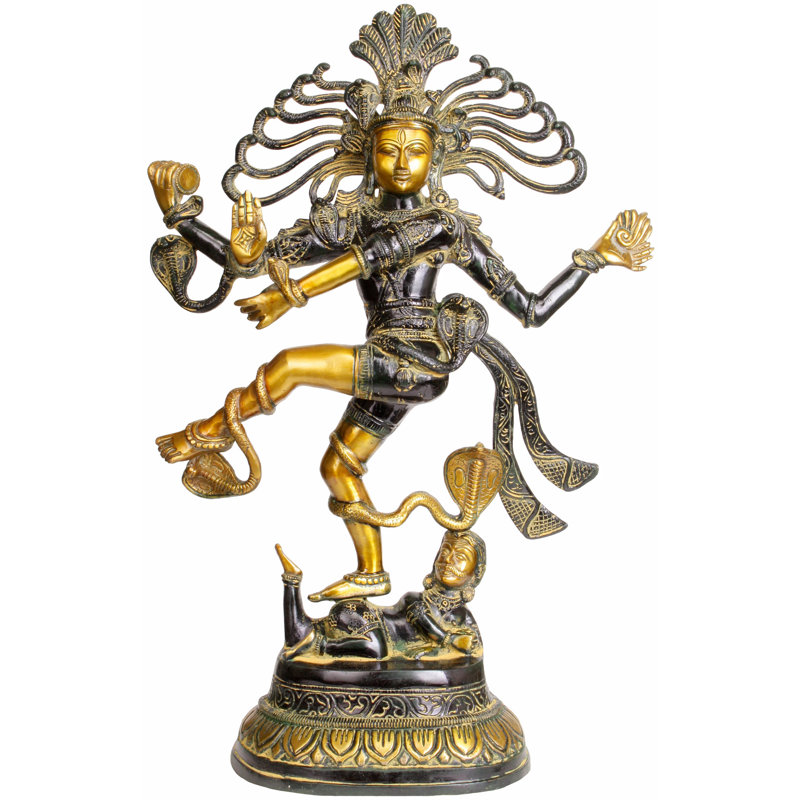
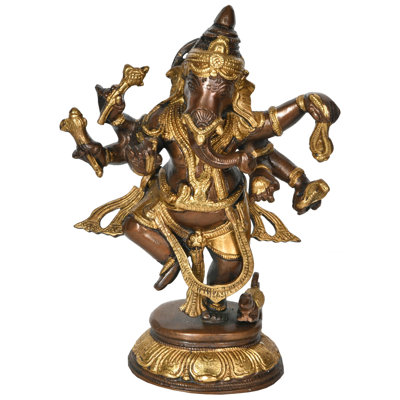
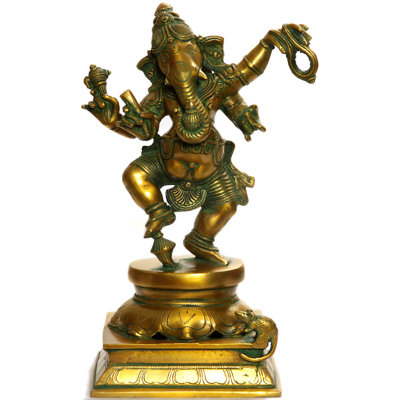
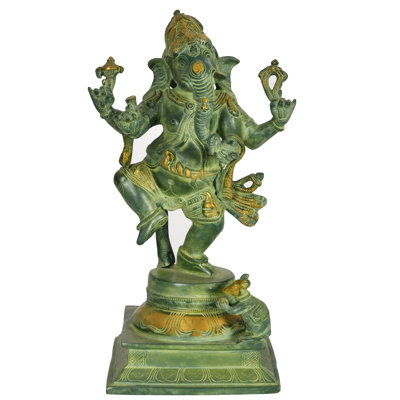
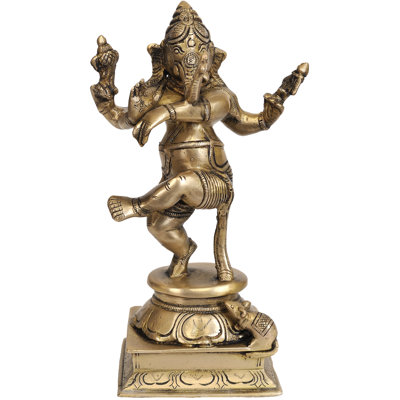
Shiva’s eternal presence as the celestial dancer has been documented well within the tenets of Hinduism – from the rock caves of Elephanta to the bronze casts from the Chola dynasty, and this wonderful manifestation from the hands of the ‘sthapati’ from Swamimalai pays an honourable tribute to our Indic traditions. Executed in the historical ‘madhuchista vidhana’ lost wax technique, we see the four-armed Shiva carrying the ‘damru’ in his right hand – from which spurs the cosmos into existence, its first vibration presenting the primordial ‘Om’ – and carrying the eternal flame in his left hand, which cleanses the impurities of the soul. The fluid movement of his other two free hands compliments the torsion of his body as he dances on the raised double lotus platform. Interestingly, in this ‘nadanta’ ‘panchaloha’ image, we do not arrive at any evidence of the famous episode of Shiva performing his ‘tandava’ at Chidambaram, vanquishing the three miseries manifested in the tiger, the serpent, and the dwarf. Nevertheless, Shiva’s image as the reclusive ascetic is beautifully presented with his inornate garb covering him, and the sparse jewellery that is spread over his body. The dance of Shiva is not decorative – it is performative, it is active, and it is in all of us.