- Fast Delivery
to:
Filter By Category
Filter By Price
Filter By Color


Filter By Availability
The Caruso Collection
4 Items

FREE Delivery
The bold graphic tribal vocabulary of Turkish Oushak weaving found a natural audience during the Arts and Crafts movement when designers and collectors were drawn to handmade textiles with strong uncluttered forms and saturated color and this hand knotted example carries that spirit with real conviction. The coral red field is organized around a loose central diamond outline with large stylized sunburst medallions at the top and bottom abstract geometric figures flanking the center and scattered smaller motifs filling the open ground all rendered with the deliberate slightly raw quality that defines genuine tribal Oushak work. The wide teal and turquoise border carries its own bold figural vocabulary with large abstracted botanical and animal forms placed across the perimeter with the same confident irregularity. Across the full surface the palette of coral teal turquoise navy ivory light gold and taupe works together with the kind of saturated intensity that wool pile at this depth of construction holds particularly well each color retaining its character while the whole reads as a composition that is bold without being discordant. Hand knotted wool on a cotton foundation gives the rug real weight and density underfoot and ivory fringe finishes both ends in keeping with the traditional format.Story Behind the Art: Oushak Rugs originating in the west-central Anatolian town of Oushak in Turkey are renowned for their exceptional texture expansive design and elegant style. These rugs are made using a family of designs that originate in Ushak Turkey. They�re recognizable for their large-scale designs and are typically based on geometric motifs with central medallion drawings smaller all-over medallions or scattered sprays of vine scroll and palmettes. Made from lustrous wool they favor muted earth tones and are extremely versatile.

FREE Delivery
Oushak weaving has long favored open fields large-scale botanical motifs and warm earthy palettes and this hand knotted transitional interpretation carries those qualities into a contemporary setting. The field is worked in a rich honey tan with the design rendered in tone on tone so the stylized feathered fronds through the center and geometric star figures in the lower register emerge as soft receding impressions within the pile. New Zealand wool gives the pile its warmth and resilience taking the dye in a way that produces golden saturation without looking flat while the cotton foundation keeps the structure stable and the lay even underfoot. Ivory fringe finishes both ends in keeping with the traditional Oushak format. The overall effect sits naturally in modern interiors that favor neutral tonal palettes.Story Behind the Art: Oushak Rugs originating in the west-central Anatolian town of Oushak in Turkey are renowned for their exceptional texture expansive design and elegant style. These rugs are made using a family of designs that originate in Ushak Turkey. They�re recognizable for their large-scale designs and are typically based on geometric motifs with central medallion drawings smaller all-over medallions or scattered sprays of vine scroll and palmettes. Made from lustrous wool they favor muted earth tones and are extremely versatile.

FREE Delivery
Lori tribal weaving comes out of the nomadic traditions of southwestern Turkey where geometric patterning and bold field compositions developed over generations of weavers working outside any formal court or workshop tradition. The design here centers on a large diamond medallion in warm blush that sits against a deep tobacco brown field its pointed form drawing the eye inward to a scattering of small geometric diamonds and medallion figures in burnt orange red aqua and ivory each one placed with the kind of deliberate irregularity that distinguishes genuine tribal work from anything more formal. A zigzag border in dark navy and multicolor runs the perimeter with real graphic energy while banded kilim ends with ivory fringe complete the traditional Lori format at both ends. Hand knotted wool pile on a cotton foundation gives the rug a dense substantial feel underfoot and the natural wool takes the earthy warm palette.Story Behind the Art: The Luri are a nomadic tribe of shepherds who live in the Zagros Mountains of southwestern Turkey. Deeply rooted in tribal tradition their weavings often feature bold geometric motifs stylized flora and symbolic patterns passed down through generations.Heavily influenced by neighboring Kurdish weaving styles Luri rugs are known for their spontaneous artistry and vibrant color palettes achieved using natural dyes. Their designs often include hexagonal medallions tree-of-life motifs and abstract animal forms all rendered in earthy tones mixed with vivid reds blues and saffron yellow. The wool used is typically handspun and high in lanolin giving the rugs a soft lustrous feel.
FREE Delivery
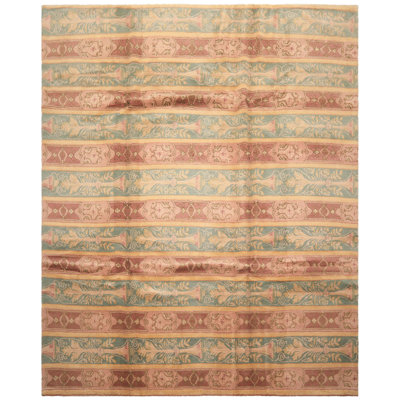
Tibetan transitional weaving lends itself particularly well to striped compositions where the hand knotted construction allows different bands of pattern to develop with a clarity and definition that gives the format real architectural presence. The full field here is organized into alternating horizontal bands each carrying its own distinct motif scrolling acanthus and vine forms in aqua and gold geometric diamond figures on mauve grounds and narrower plain stripes in blush and beige that give the eye room between the more detailed rows the whole sequence repeating across the surface. The palette of blush aqua gold beige and mauve sits across the full surface with a softness and tonal harmony that wool pile on a cotton foundation carries with particular depth the plush Tibetan construction giving each band of color a richness that holds the composition together as a whole.Story Behind the Art :For centuries Tibetans have woven rugs for both functional and decorative purposes drawing inspiration from geometric motifs auspicious symbols mythical creatures and natural imagery to create designs rich in color and meaning. The craft underwent a pivotal transformation after 1959 as the Tibetan diaspora spread across Nepal and India sparking a commercial revival of rug weaving. By the 1970s Tibetan rugs had gained international prominence with Nepalese artisans�trained alongside Tibetan refugees�becoming central to sustaining and evolving the tradition. Distinctive for their unique slit-loop technique known as the Tibetan knot these rugs possess a pile of remarkable depth texture and softness. Today Tibetan Nepalese and Indo-Tibetan rugs range from reimagined traditional motifs such as branching florals and snow lions to modern free-form patterns that bridge heritage with contemporary design.