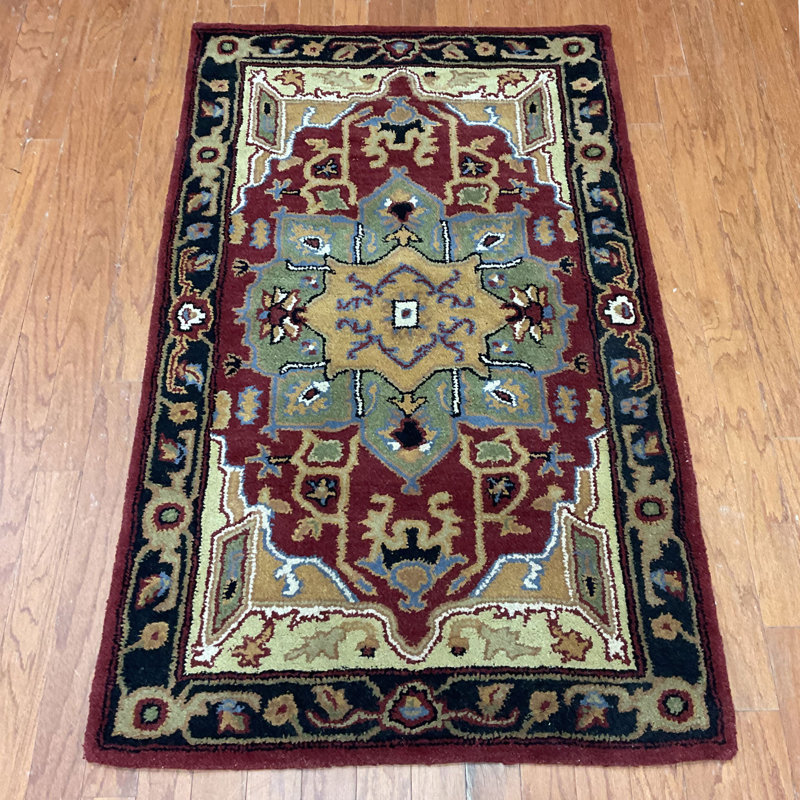
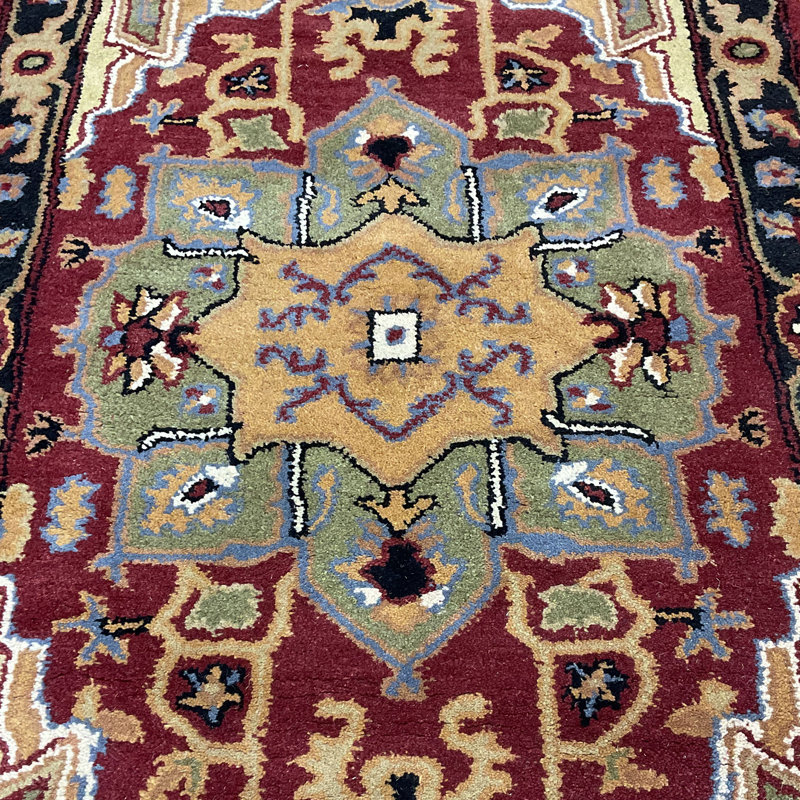
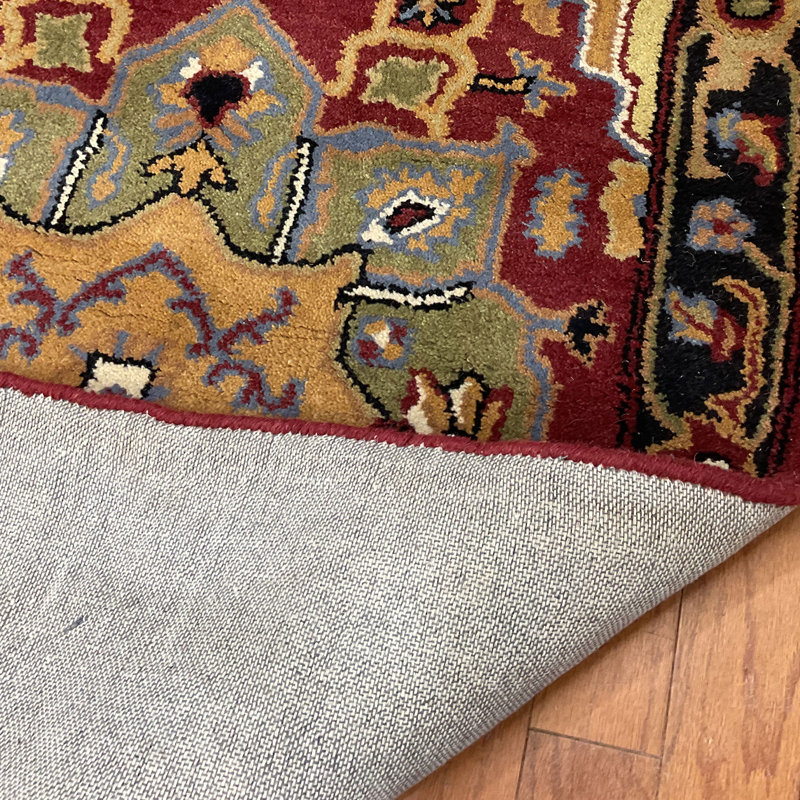
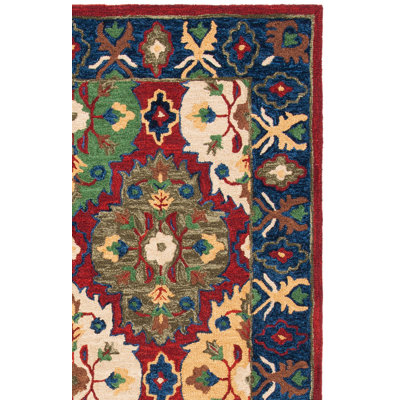
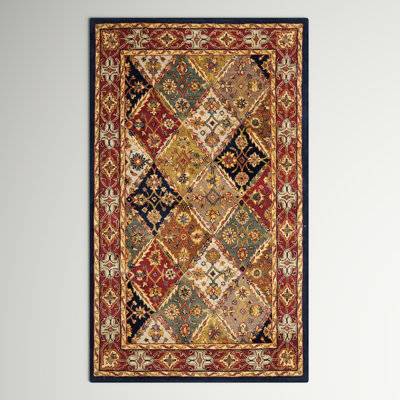
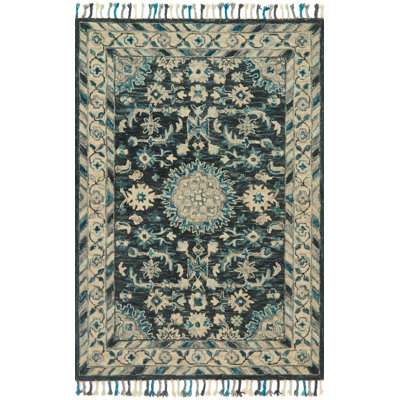
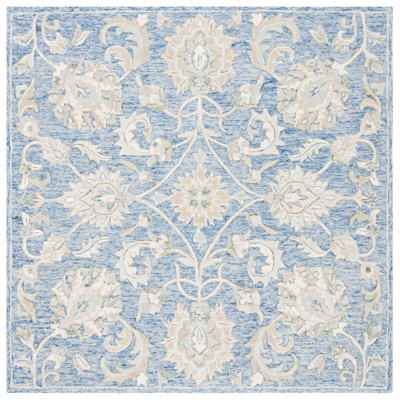
The town of Heriz is known as one of the most significant historical places in the Azerbaijan province. This particular rug was created in the Varanasi region of India, in the Bhadohi village, where weavers re-create the original Heriz design. The symmetric and geometric pattern of the Heriz has been extremely popular in the US and Europe. Since the rugs are tribal, they are made of 100% wool pile and vegetable dyes. The weaving technique is hand-tufted, which is a rug-making process, where weavers insert yarn into the rug backing with a hand, holding tufting a gun to push and pull the threads through a pre-woven grid foundation. In a tufted rug, the tops of the loops are sheared to expose the ends of the threads for a softer, plusher pile.


 or
or