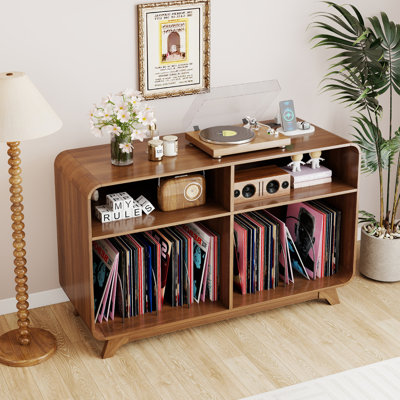
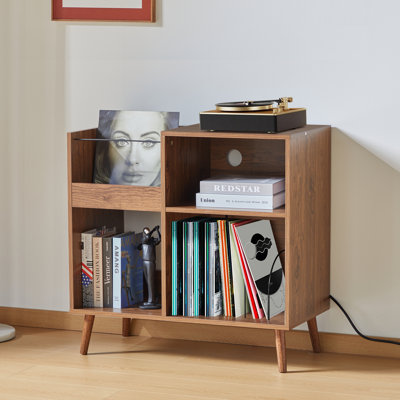
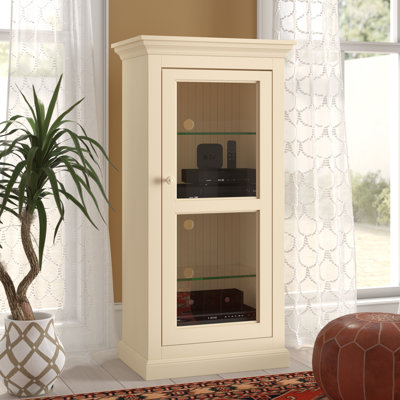
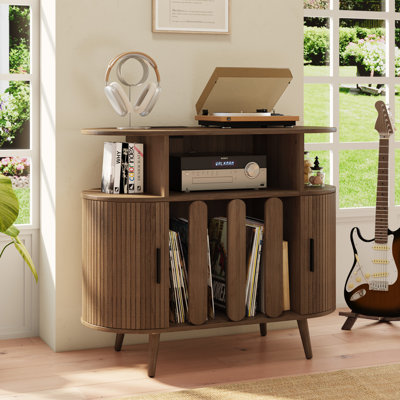
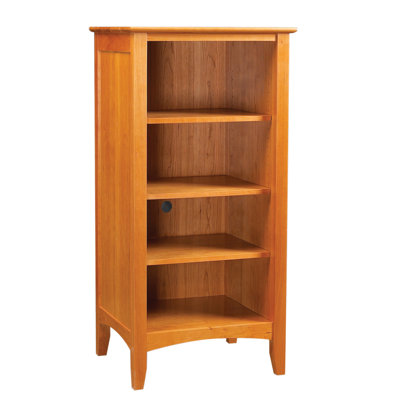
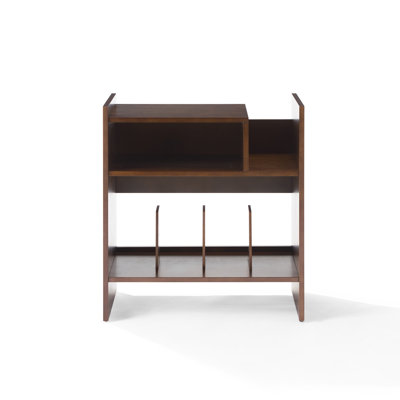
I knew this rack was going to be a little work before I got it, so as to make it strong and functional for me as I live in earthquake country. How much work was necessary was the only concern. It sure did have a lot of potential for me from what little I could see on the internet picture.This is like buying a wood rifle stock that has been chipped down and you have to finish it off so as to fix the metal parts of the rifle ... except this is a bunch better and needs less hand work. It is American manufacture, made out of North Carolina Oak three quarter board as I can reckon. The sides and large shelf panels are the same oak three quarter board that has been glue laminated together. The solid oak rail on the from and back, are groove slotted to accept oak three quarter board that moves side to side in adjusting to the feet width of the components as that is what passes for a component shelf THIS IS A WELL VENTILATED BOX for the rack, and it is well manufactured, and well thought and a little cheap in the end. In the constitution of the rack, it is done up right, just that the back panel is necessarily inadequate for a rack of any height .. as you will see later, if you bring modular units home to build in a rack stack of 3, 5 or 7 components high.The work that I am doing is to make the rack stack stronger, such as using construction grade solid adhesive tape between the box sections that get stacked on top of each other. They provided a pair of metal pins to keep the stack from sliding a bit and this is no where near enough. They also send you 1/8 inch wood fiberboard backings to the rack sections in the shipment which I did use, since they fit snugly into a recessed grove in the side panel rear and the top panel rear for added strength but this is NOT ENOUGH. You really need more .... so, I also purchased an quarter inch finished Birch plywood sheet to go over these fiberboard backing parts (glued them together on to the plywood) on an over lap to the rear of the rack making for what added up to a 3/8 inch thick rear panel that LOCKS nicely into place. This extra strengthened rear panel to the back of the rack, is then glued and screwed in place after all the cut outs have been done as provided by the [...]fiberboard backing parts as a template. Or other custom cut outs as needed by your rack devices are done now. These cutouts allows for great ventilation and to let the component cables go straight out the rear of the rack away from the components and down the back on the outside for ease of use and safety reasons. You could keep all the wires INSIDE the rack if you wanted to do the work that way, but that is a big mess of things to my thinking and also promoting fire hazard.Anyhow, this rack is in modular stack able parts, a bottom, a top, and two different box middles to switch about if you like as you build your rack. I kept all the big heavy components on the bottom of the rack stack. The BIG BOX middle part of the rack, I think is called CM-8, well that is a size necessary for a Stereo Amplifier, or maybe a 6 CD or larger CD player that is 6 inches tall as there is 8 inches of room between sliding oak rack bars (NOT REALLY A SHELF) that are for the component feet of the next higher component. The smaller middle box part of the rack, that is called CM-3 I think, is a tight 6 inches between oak rack bars, and I would like to call it 5 and 9/16th inches as it is real tight for any amplifier size components as well as getting in the way of ventilation. If your component is only 4 inches tall or less, then this is the place to put it, otherwise NO is my big IMO. Use the big box modular unit for big components as it is penny wise and dollar foolish the other way. And you are only cutting 4 inches off the over all height of your stack to use a small box over a big box modular unit.I had to purchase a ventilation fan to put on top of my energy efficient 300 watt amplifier so it blows out the back as my concern for heat buildup was there. The manufacture recommends 4 inches of clearance from the top of their components. This is like ... 2 inches of clearance at best here with the big box middle. This easily allows for a 1 inch thick metal box exhaust fan to be put in there if you like. I only needed one fan for the amplifier but it would also drive wind for the whole rack once in high powered operation as the wood box would hide any sound from the fan operating. The rest of the rack can easily get by with passive ventilation offered from front to back, it is amazing how little wood is here to make up these box parts, and also amazing how almost all of it is solid oak. It is rather nice and well built.On the bottom of the rack, the base unit (CM-1c), it has a solid oak laminated shelf for a top and bottom that are pinioned together with a screwdriver on a cam and metal post screwed to the laminated side panels. The smaller top unit (CM-4) is also pinioned together with the same cam and metal post system and needs powered screwdriver work as well in putting it together. Go slow with the powered screwdriver, use steady careful force, it is oak and in most cases it goes in easily when done carefully. Some oak is tougher and needs more slow careful pressure but it all gets done. Well it is here on the base unit (CM-1c) that I also made an outside purchase of a sliding oak shelf that supports the phonograph player ... so it pops out easy for me to put a LP on it after lifting the plastic dust cover. The 8 inches of room for that is nice to have for the component and to make room for the 1.5 inch height of the sliding oak shelf with its hidden glides. (This pull our shelf addition is also useful for a computer printer if you want an office rack set-up) My rack stack of 5 modular pieces is 77 inches tall and has 7 component slots in it, where 5 of the slots being 8 inches tall for 5 six inch tall stereo components.Oh ... on delivery, the smaller box unit (CM-3) of the rack was slightly popped apart from the shipping. None of this was damaged, just the glue they use is only good for a hundred pounds or so, and I used Gorilla Glue to make it much better. It only fits together ONE way if you want to take it apart, it is dowel work throughout. It took me a hour to glue it back into service as I did not want to return it for replacement. If this happens to you, check your work on the other ones shipped, so it is done up correctly before the new glue dries with it is being pressed together.I strongly recommend that a solid plywood back be built by the rack owner with a 3 component rack (bout 44 inches tall), or a 5 component rack (bout 62 inches tall) or 7 components tall rack in the stack to keep this thing together as it can pop apart easily enough by itself .. and the few necessary parts they give will not do the real job as they are suggesting to you that it does. So .. a little skill is needed by the purchaser and two powered garage tools. If you have done furniture or wood work before, you can easily do this and have what you need in some two hours of effort along with 20 dollars in wood and glue.A "Rack for Dummies" book is not included with this purchase. This rack stack system is a good purchase if you are an experienced consumer and can take it up a notch, otherwise this rack stack will be a fairly quick hard expensive lesson for you if you build it on their terms. I was correct in my assessment prior to purchase that this needs work and I am very happy with this USA manufactured product for it is a good buy for the person who has minor skill and basic knowledge in the garage. Get a breathable rack component cover to slip over the top to keep dust out after you shut your rack down for the day, as this smooth wood stack design lends it self very well to such a component care device.I got a lot of win win win out of this purchase.Maybe you can to."..." Read more
- sumbuddie wear blind sea in Santa Rosa, CA