Design Definitions: Global Patterns
Bring the world into your little corner of the globe with five of our favorite motifs.
Embrace the travel bug from the comfort of your own home! Global patterns infuse your rooms with culture and personality, whether you're injecting a tribal vibe with mud cloth, lending a sophisticated air with Chinoiserie, or giving your home a one-of-a-kind feel with block prints. Discover our editors' five favorite worldly prints and the history behind each one.
Ikat
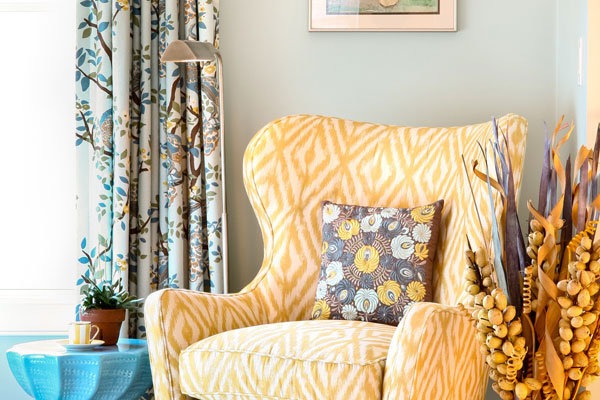
Design: Molly McGinness Interior Design
https://www.wayfair.com/Shop-The-Look/Photo/Bedroom-P106513
Region of Origin: Indonesia
Characteristics:
Blurred edges give a handmade appearance to ikat textiles, often found in a trellis, geometric, or paisley-like pattern. Seen in many colors, this pattern works well with almost any decor.
History:
Ikat motifs of centuries' past were much more detailed, depicting animals and scenery, while modern-day ikat features a larger scale pattern printed on a white fabric with a contrasting dye color.
Block Print
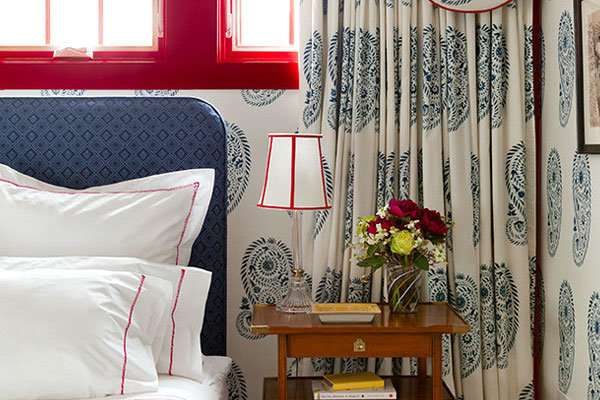
Design: Robin Henry
https://www.wayfair.com/shop-the-look/slp/larchmont-house--photo-id101988
Region of Origin:
India
Characteristics:
Block printing produces a repeating pattern, often with imperfections due to the process. The most popular motifs are animals, florals, and paisleys with the occasional geometric design. Typically seen on white fabric, the pattern can be produced in any color.
History:
Originally block printing was done by hand. Artisans carved pieces of wood into intricate designs. Once the stamp was complete, it would be dipped in dye and the fabric would be stamped to create a repeating pattern. Many of today's block print patterns are produced by a machine.
Suzani
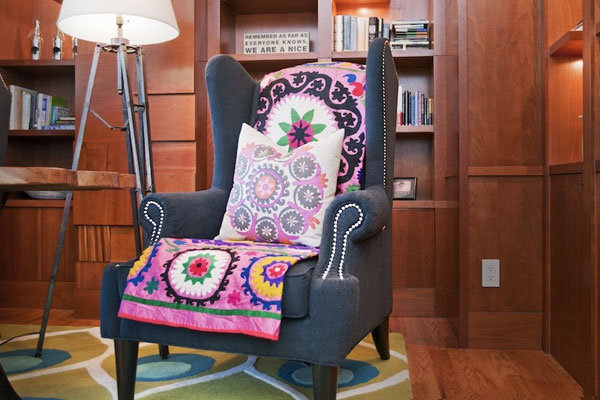
Design: A. Clore Interiors
https://www.wayfair.com/shop-the-look/slp/vangundy-library2--photo-id102362
Region of Origin:
Persia or modern-day Iran
Characteristics:
Recognized by the round medallion motif, suzani is generally a large-scale pattern with rich, bold colors. The delicate designs embroidered within the medallion create a layered look that adds texture. Popular design motifs include sun and moon disks, flowers (especially tulips, carnations, and irises), leaves and vines, fruits (especially pomegranates), and occasionally fish and birds.
History:
Due to the scale and detailing in every design, textiles featuring suzani often adorn walls as hangings and tapestries. Suzanis were traditionally made by Central Asian brides as part of their dowry, and were presented to the groom on the wedding day.
Bogolan or Mud Cloth
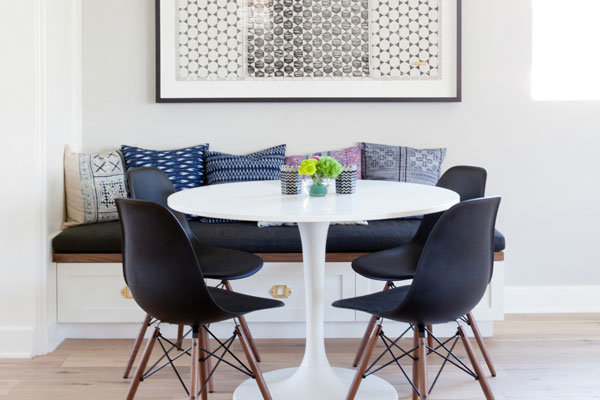
Design: Veneer Designs
https://www.wayfair.com/Get-The-Look/Photo/IMG26-P149452
Region of Origin:
Mali
Characteristics:
The two-tone pattern is produced by dyeing the fabric with fermented mud and then bleaching it to create the desired pattern. Sometimes another dye is used after the initial process for an added layer of color. Geometric shapes laid out linearly form repetitive patterns.
History:
Today mud cloth is inspired by tribal communities in Mali, where every tribe's pattern is unique to their own people.
Chinoiserie
Design: Tobi Fairley Interior Design
https://www.wayfair.com/shop-the-look/slp/1-cover3--photo-id149268
Region of Origin:
Europe
Characteristics:
Often found on pottery and wallpaper, Chinoiserie is delicate and detailed in its design, portraying flowers, birds, and other scenery. Similar in style to toile with its lifelike landscape depictions, Chinoiserie is popular in traditional-style homes.
History:
The motif first appeared in the late 17th century and grew to popularity within the next century when much of Europe was enamored with Asian cultures. The name is derived from the French word "Chinois" meaning "Chinese."
