Colander vs. Strainer: Is There a Difference?
Learn the difference between colander vs. strainer.
There is no doubt that both colanders and strainers are practical kitchen tools that have a place in creating delicious home-cooked meals. Though they seem to perform similar functions, the truth is that they both have different uses. If you are unsure of the difference between a colander vs. strainer, read on so you can find out which is right for your needs. Read 11 Must-Have Kitchen Gadgets for other kitchen essentials to make your life easier.
What Is a Colander?
Choosing the right kitchen tool for the job is an imperative part of creating the perfect meal. At first glance when it comes to the debate between colander vs. strainer – they may seem the same, however they do in fact serve distinct functions.
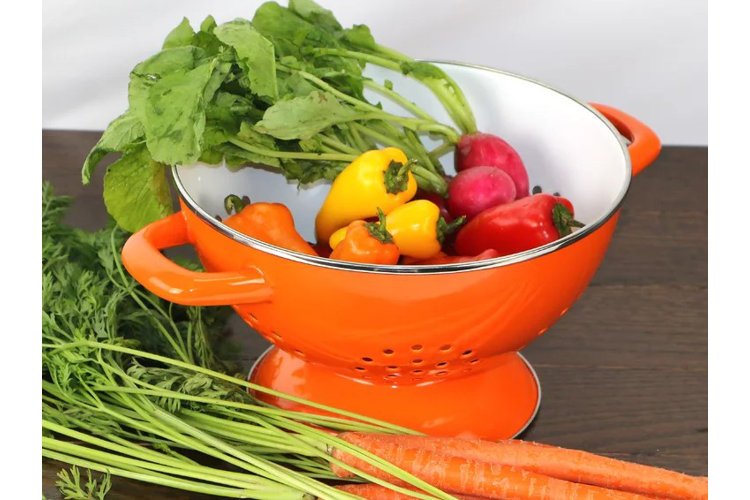
A colander is a round bowl with large perforations that serve to drain liquid from food – especially those that have been boiling in a pot. Most often, colanders have a base that allows them to be placed in the sink to allow for easy draining of things such as pasta or eggs. Colanders can also be used for rinsing fruit and vegetables, as the large bowl will accommodate the food while the rising water runs out through the bottom. They often come with two handles and can be made from a number of different materials including; plastic, stainless steel, silicone, and enamel.
Tip!
When it boils down to it – a colander can basically perform most, if not all of the same functions as a strainer (depending on the perforation size), but a strainer cannot do the same as a colander.
What Is a Strainer?
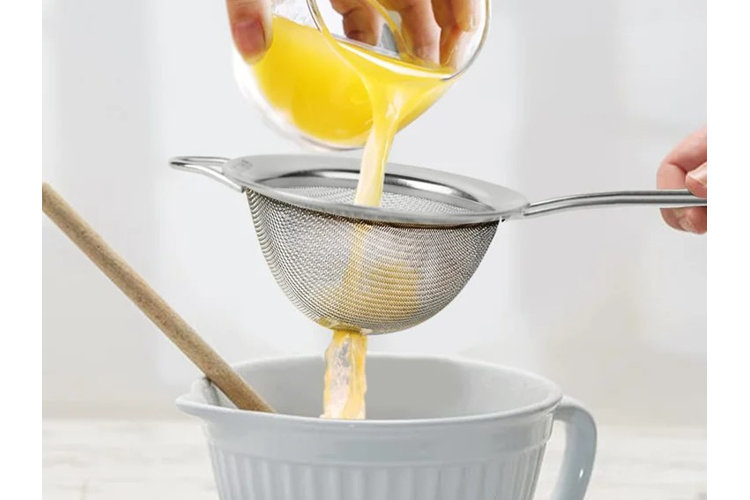
To further the debate in colander vs. strainer, we can move onto the next kitchen essential. Strainers – also known as sieves – are usually made from stainless steel and have a fine mesh for straining. They often come with a long handle for your convenience. Strainers come in a range of sizes, depending on what they are going to be used for. This includes straining tea leaves, soups, seeds, and even solids out of hot oil. They can also be used to sieve flour when baking as a way to filter out fine particles and aerate the powder.
Tip!
It is possible to use both a strainer and a colander together. By placing a strainer over a colander, you will be able to strain and drain something like noodles – catching them in the strainer but allowing the water to drain out through the colander.
Colander vs. Strainer
If you tend to get mixed up over the difference between a colander vs. strainer, here are a few direct comparisons.
Colander
- Has a bowl shape with larger perforations that allow liquid to drain out while keeping solids inside.
- Often has a base and two handles to allow for easy draining so you don't have to hold it while you use it.
- Can be made from a number of materials.
- Is used to drain and/or discard liquids.
- Can be used to wash produce in while allowing water to drain out.
- Can be used to drain water from pasta.
- Can be used to drain liquid from canned food.
- Can also be used to steam vegetables by placing it over a boiling pot (just make sure the material can withstand the heat from steam).
Strainer
- Usually made from a fine stainless steel mesh.
- Often has a round shape with one long handle to hold while in use.
- Come in a range of sizes depending on their use.
- Have a number of uses including draining fine particles from liquids, dipping in pots of boiling oil to remove food, and sieving flour.
- Ideal for more delicate straining of soups, consomes, sauces, and juices.
- Can be used to remove seeds and pulp, spices, herbs, and tea leaves.
- Ideal for rinsing rice in order to catch the smaller grains.
- Can be used to blanch foods by dipping them into the boiling water and quickly removing.
- Can also be used to strain soft cheeses and allow for full drainage of any liquid therein.
Types of Colanders & Strainers
Collapsible: Though colanders and strainers have their place in the kitchen, they do tend to take up a lot of space. If you are looking for something smaller and easier to store, a collapsible model does just the trick. Simply press the bottom out to use and back in when packing away
Handle Included: Many strainers come with a single handle for dipping, sieving, or pouring liquid over. Colanders will have two handles for a double grip to easily remove them from the sink after washing items or pouring out liquid into them. In both cases, handles make for easier use.
Dishwasher Safe: Due to the fact that colanders and strainers both have holes in them, they do tend to be a little tougher to clean – especially if left for too long. Dishwasher safe models allow a more thorough cleaning while ensuring they don't melt or get damaged in the process.
Now that you know the difference between a colander vs. strainer, you can choose if you need one, or both for your culinary endeavors.
