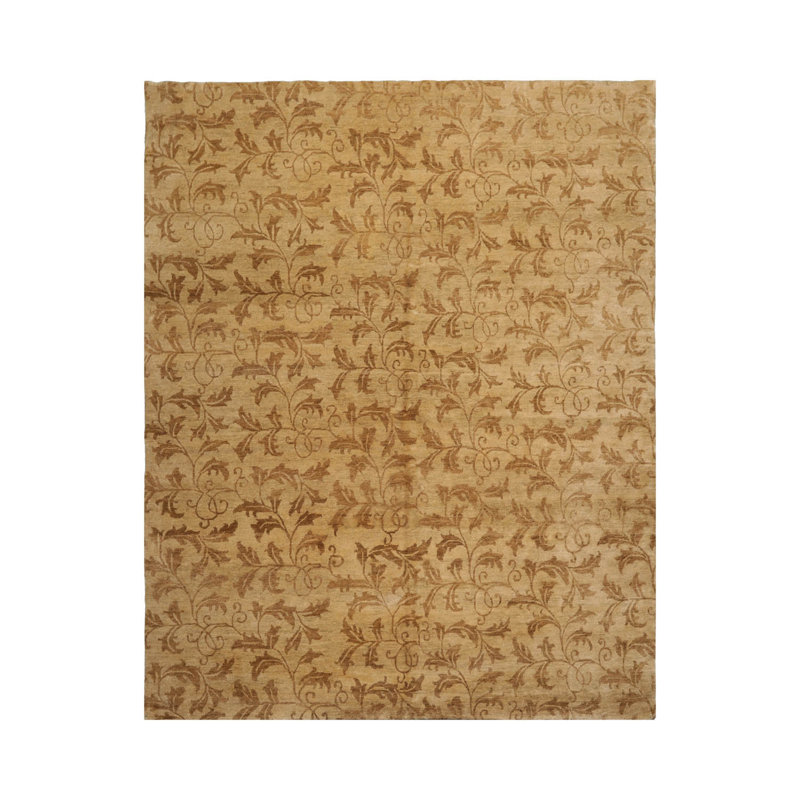
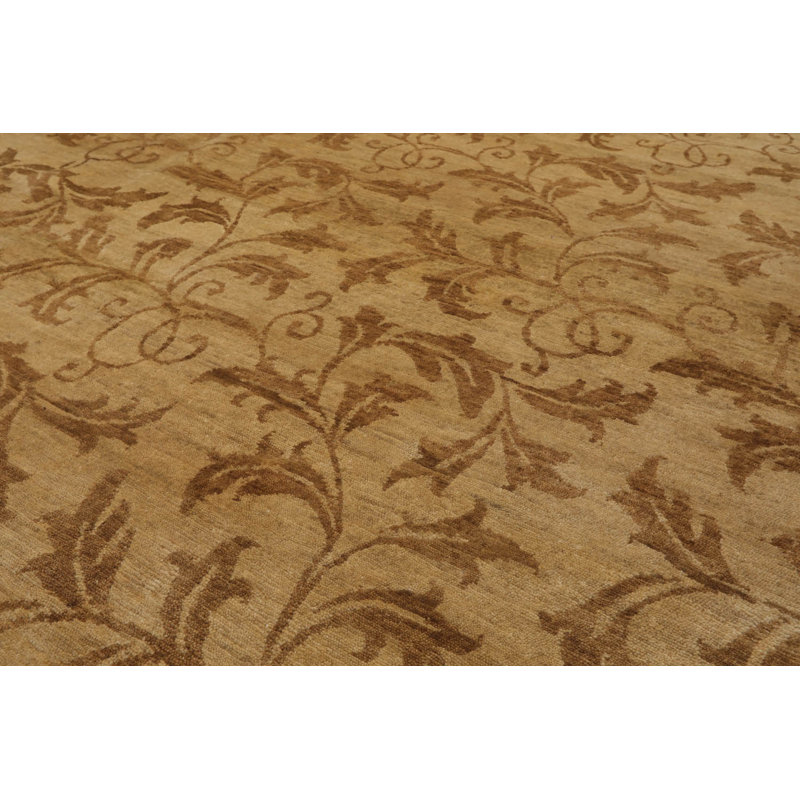
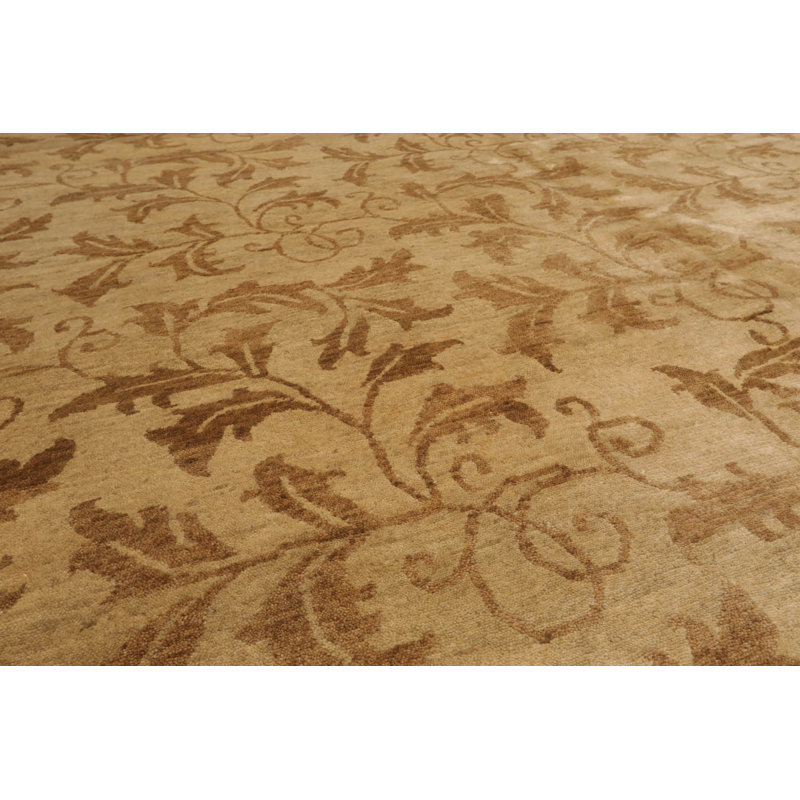
This is a beautiful Gold, Brown Hand Knotted Oriental Area Rug 100% Wool. Its elegant style is easy to decorate with and perfect for living room, dining room, bedroom or anywhere in the residence or office.
Story Behind the Art
Tibetans have a long history of using rugs for both functional and artistic purposes, incorporating various elements such as geometric patterns, auspicious symbols, real and mythical creatures, and natural imagery to create intricate and vibrant designs. However, it was not until after the Chinese invasion of Tibet in 1959 and the subsequent dispersal of Tibetan communities into Nepal and Tibet that Tibetan rug weaving experienced a critical commercial revival. By the 1970s, Tibetan rugs had gained prominence, and Nepalese artisans became instrumental in meeting the growing demand, becoming a pillar of Tibetan rug weaving traditions. Unlike many other Asian rug-making techniques that rely on Turkish or Perzian knots to create pile depth, Tibetan rugs employ a unique approach known as the Tibetan knot. In this method, a continuous yarn is wound over a rod placed across the stretched warps on the loom. After the rod is fully wound, a knife is used to cut the wound yarn into two rows of pile tufts, resulting in a pile that offers a captivating blend of depth, texture, and opulence. Traditional Tibetan rug motifs often reflect the significant influence of Buddhism on Tibetan art and culture. Additionally, design elements with Chinese origins, including symbols like the phoenix, dragon, and lotus, as well as motifs from Chinese decorative traditions, have seamlessly integrated into the diverse rug repertoire of the region. In modern times, designs featured in Tibetan and Nepalese rugs, including those woven by Tibetan refugees in Nepal, as well as Indo-Tibetan rugs woven in India, encompass a wide range, from Westernized adaptations of traditional Tibetan motifs like branching floral designs and snow lions to a diverse array of contemporary, free-form patterns, signifying the ongoing evolution of this culturally rich artistic tradition.