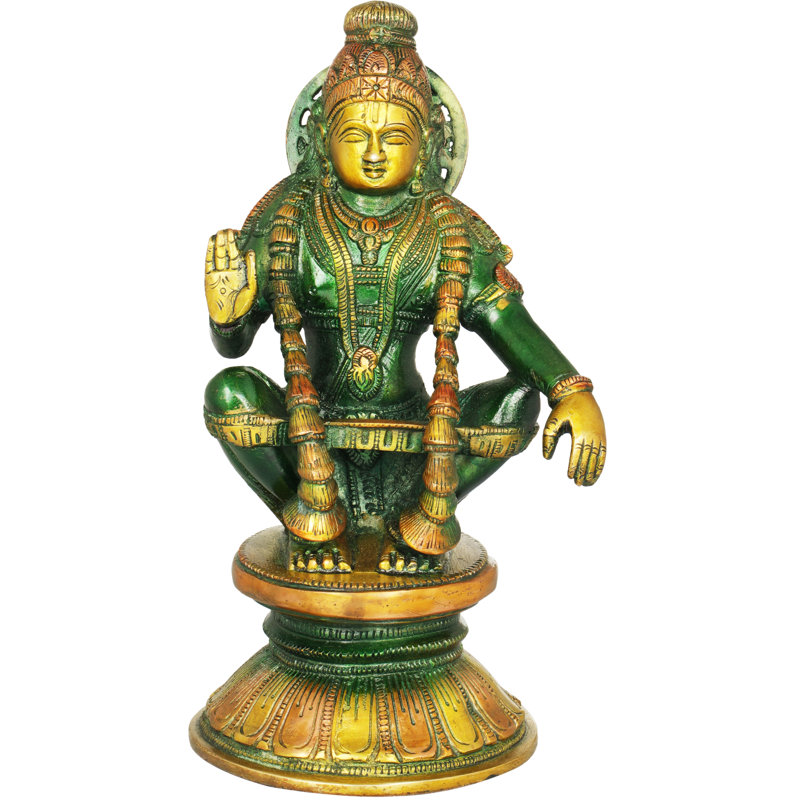
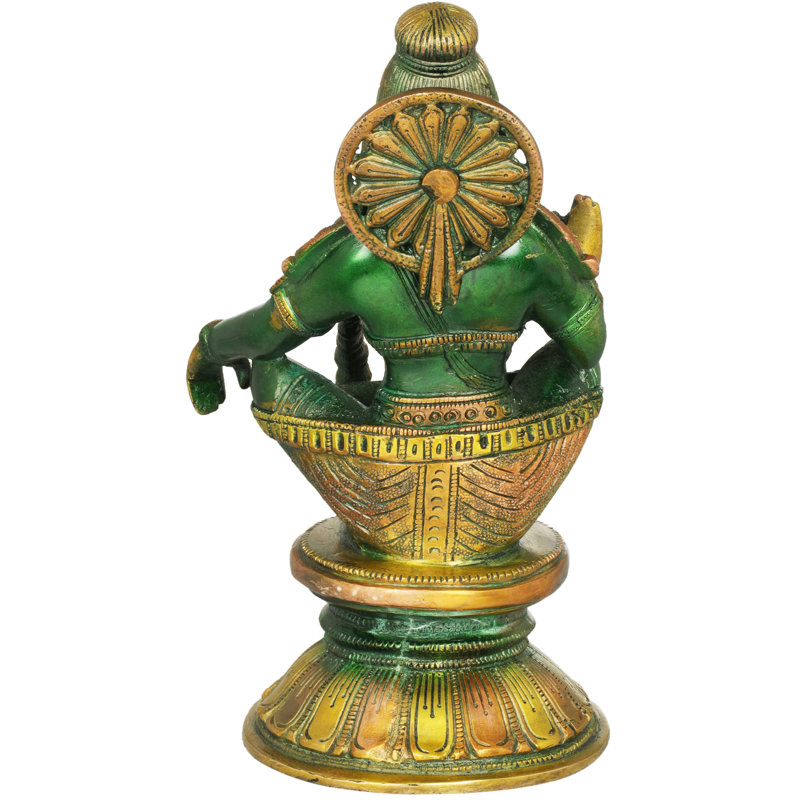
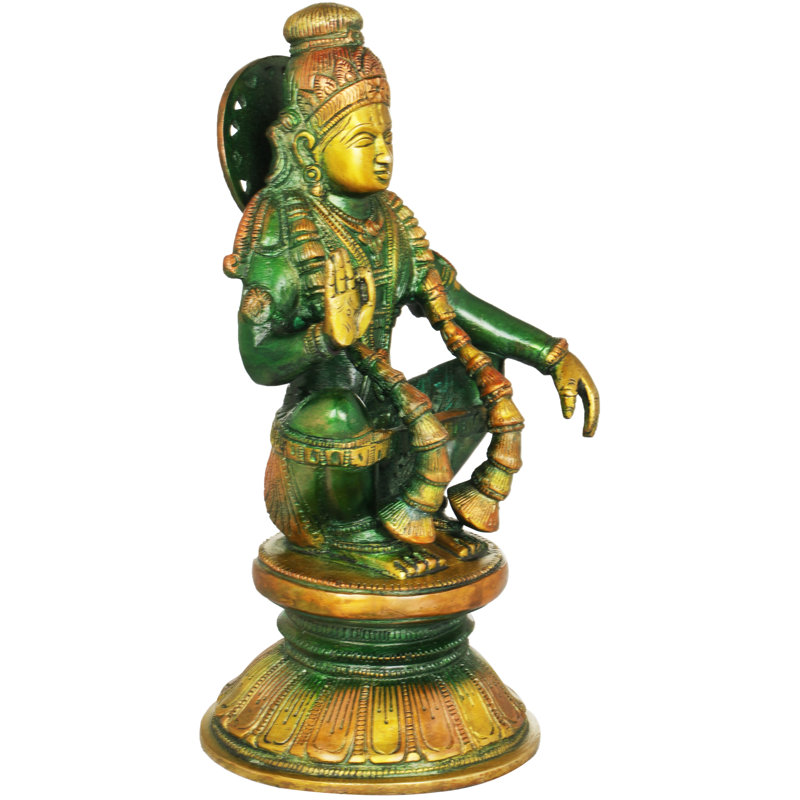
This brass statue, typical of South Indian metal-cast iconography and body posture with knees contained by an ornate band consisting of lotus motif design, represents Ayyappan, also known as Sastavan or Sasta, and sometimes as Manikandana or Manikantha for always wearing a mani jewel, around his neck. Ayyappan was a Hindusaintelevated to the status of a deity highly worshipped in the country's southern part. Characteristic to his image conceived as one engaged inYogahis statue has been cast representing him as seated in a posture characteristic to penancing Yogis - knees turned upwards and knotted by a band that Yogis use for holding their legs in position, besides the gesture of his hands, one indicating Abhaya freedom from fear, and other, varada liberation. A yogi, Ayyappan is seen as one in absolute unity with the Supreme what the term yogi literally means, and at the same time, he is seen as one in the world for the weal of mankind imparting Abhaya and varada.