FREE Delivery
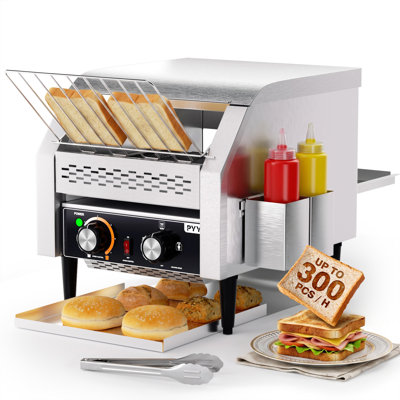
Conveyor Commercial Toaster — The All-In-One Toasting Station for Your Bakery & Café Six thirty a.m., Fang flips up the rolling gate at "Wheat Nest," her bakery-café on the ground floor of an office building. Bread display case on the left, sandwich station on the right — toast and coffee in the morning, sandwiches and burgers at lunch, two rushes a day, and that PYY Commercial Toaster right in the middle handling all the toasting. It's a conveyor-style commercial toaster, stainless steel body gleaming on the counter, with a discharge rack sticking out front — finished toast slides right onto it, no waiting, no popping up. The first time Fang used it, she laughed: this isn't a toaster, it's a mini toast factory. Seven to nine is morning rush. Office workers pour in, all ordering toast sets — white, whole wheat, bagels, each toasted differently. With her old pop-up toaster, Fang couldn't keep up alone — four slices at a time, customers waiting, scrolling their phones. Not anymore. The wide conveyor belt takes slice after slice, 300 slices an hour, more than enough for a two-person shop. Whole wheat on the left, white on the right, go in together, come out together, different shades — turn the speed knob to 3 for light golden, 5 for deep crispy. Seven settings, any shade you want. The heating mode knob is the real game-changer. Top heat only, top + bottom, warm without browning — twist and switch. Morning toast uses both elements. At lunch, for sandwiches, she twists to top-heat-only — one side toasted, the other soft for lettuce and ham, no stiff bread. Customer wants a warmed bagel or bun? Slow it down, one pass through, warmed all the way through, crispy outside, soft inside. Perfect. Eleven thirty, lunch rush hits. Sandwiches, burgers, paninis — all depend on this machine for the bread. Fang lays hamburger buns cut-side-up on the conveyor, single-side heat, one pass, and they come out crispy outside, soft inside — stack the patty, lettuce, sauce, and customers take one bite and say "the bread is amazing." That collection tray at the bottom comes in handy too — finished buns and bagels drop in, stay warm without getting cold. Grab and go when customers order, no re-toasting. There's even a little side caddy on the machine. Fang keeps her ketchup bottle and tongs there, right at hand — used to be scattered all over the counter, fumbling around wasting time. Now everything's right next to the machine, the counter stays clean, customers notice. Busy as it gets, cleanup is never a problem. A removable crumb tray at the bottom catches everything. At closing, pull it out, dump the crumbs, rinse it — done. The food-grade mesh belt comes off for washing too. Fang deep-cleans it once a week, takes minutes. All stainless body, splatters wipe right off — almost a year old, still looks brand new. Four tall legs lift it up high, good ventilation underneath, fast heat dissipation, the counter doesn't get hot — kitchens are already hot in summer, this machine runs cool enough to stand next to. Four non-slip feet keep it rock-solid through 4–5 hours of continuous running. Two p.m., lunch rush over. Fang leans against the counter with a drink, watching the toaster hum quietly, and feels good about it. For a small shop, you don't need a 450-slice monster wasting money. 300 is just right — not too big, not too small, does everything you need. Toast, bagels, burger buns — one machine replaces two or three, saves money, saves counter space. For a neighborhood bakery-café, the best equipment isn't the most expensive. It's the one that's just right.