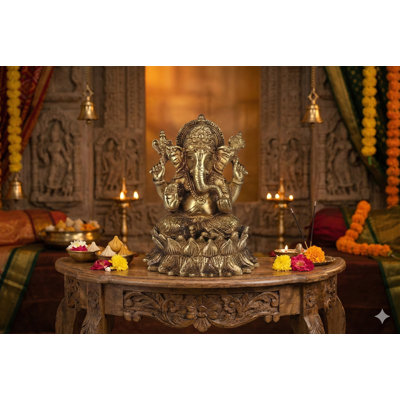
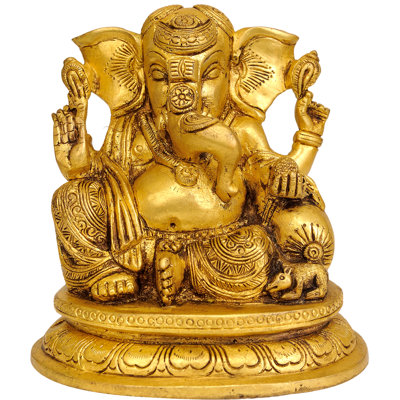
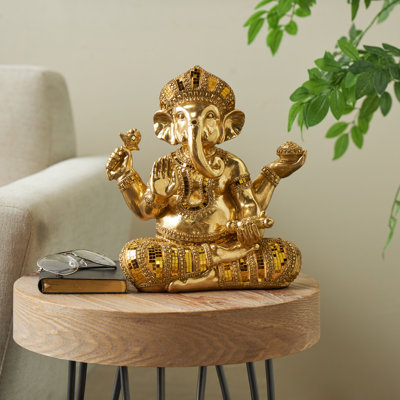
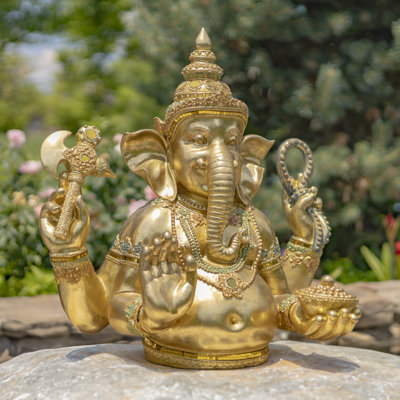
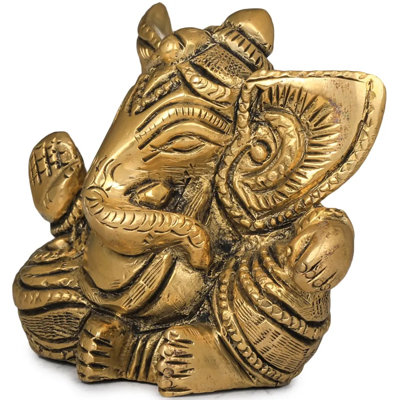
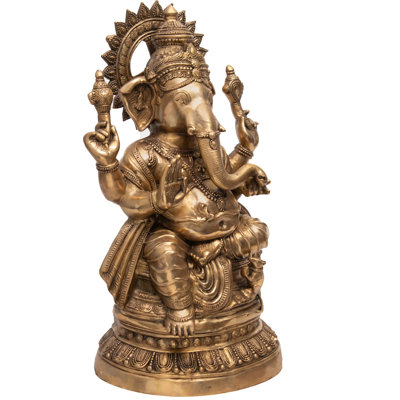
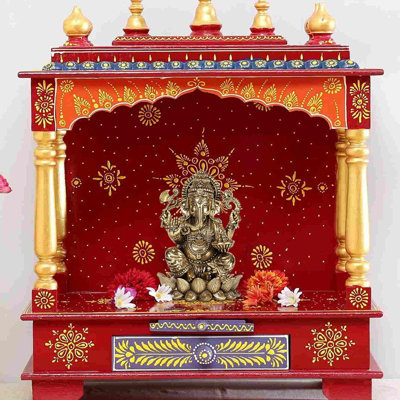
Transform your sacred space with this exquisite 7-inch Lord Ganesha brass statue, beautifully depicting the beloved remover of obstacles seated gracefully upon a sacred lotus throne that symbolizes purity, enlightenment, and divine beauty. This premium handcrafted masterpiece captures the essence of spiritual wisdom and prosperity, with the lotus foundation representing the journey from material concerns to spiritual awakening, making it an essential piece for discerning collectors seeking authentic sacred art with profound symbolic meaning.
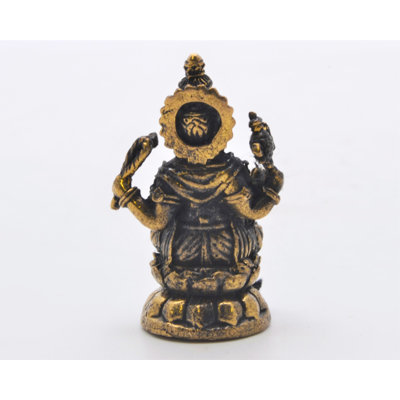
Meticulously crafted by master sculptors from Jaipur and South India using traditional brass-working techniques, this substantial 2.20kg sculpture showcases the warm golden brilliance that makes brass the ideal sacred metal for Hindu worship and meditation practice. The authentic iconography depicts Lord Ganesha in peaceful Padmasana (lotus position), embodying calmness, focus, and divine grace while the intricately detailed lotus petals beneath him represent the blossoming of spiritual consciousness.
Measuring 7.5"H x 4.7"W x 3.1"D, this perfectly proportioned statue creates a powerful focal point for home temples, meditation rooms, living spaces, prayer corners, or as an inspiring accent in offices and study areas. According to Hindu philosophy, the seated Ganesha on lotus represents the perfect union of earthly wisdom and divine knowledge, bringing clarity of thought and removal of mental obstacles to devotees.
The lotus throne holds deep spiritual significance, representing the soul's journey from the mud of material existence through the water of experience to the sunlight of enlightenment. This sacred combination of Ganesha's protective powers with the lotus's purifying energy creates a uniquely powerful spiritual focal point that promotes both material success and spiritual growth.
Perfect for Hindu practitioners, meditation enthusiasts, students, professionals, or anyone seeking meaningful décor that attracts wisdom, prosperity, and spiritual clarity, this authentic brass Ganesha on lotus represents both divine blessing and artistic heritage. The durable brass construction develops beautiful natural patina over time, ensuring this heirloom-quality piece becomes more stunning with regular worship and proper care.
Fast shipping and delivery. It was securely wrapped and packaged. It’s a beautiful statue. Goes perfectly in my home. Well made. It’s a heavy piece, but small so you can place it anywhere in your home.. Kristen. Merrick, NY. Fri Jan 07 2022