Hand Blender Buying Guide
Everything you need to know about hand blenders to make the perfect purchase.
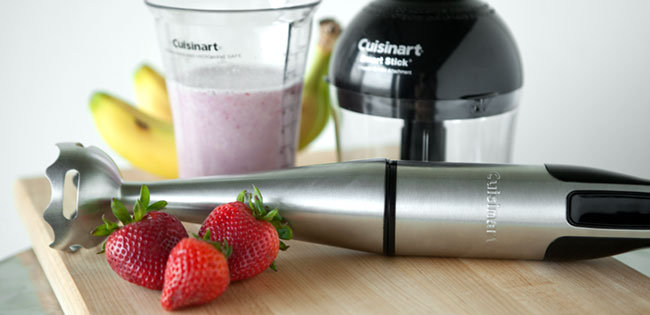
The hand blender (also called an immersion blender, stick blender, or wand blender) can help you make soups, sauces, smoothies, and spreads. It has the added benefit of being easier to use than traditional blenders and food processors—not to mention the convenient cleaning and storage.
This guide will help you determine the best hand blender for your cooking style and kitchen needs. This guide will cover:
- The difference between hand blenders and traditional blenders
- What to consider before buying
- Hand blender characteristics to keep in mind
- Accessories that help get the job done
Hand Blenders vs. Traditional Blenders
Hand Blender
Hand blenders, as you might assume, are a hand-held blending appliance. They can do much of what traditional blenders and food processors do, but have additional benefits:
- Lightweight : Most hand blenders weigh 2 to 5 pounds, making you more likely to pull them out than a heavy-duty food processor.
- Easy to use : No set up needed! Plug it in and go.
- Compact : Hand blenders are the smallest blending appliance and store easily in a drawer. They are ideal for small kitchens with already-cramped storage space.
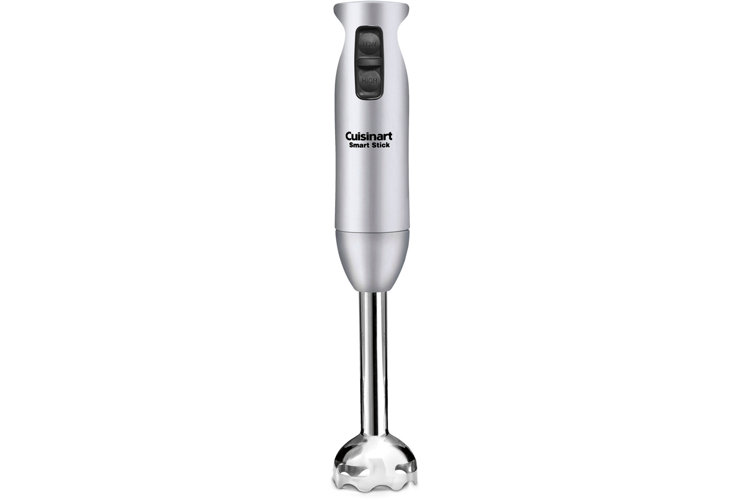
- Convenient : Bring your hand blender to the food, not the other way around! No more hauling hot soup across the kitchen and pouring it (in batches!) into your countertop blender. Simply immerse the hand blender into whatever you want to blend and you are done—without dirtying an extra vessel.
- Versatile : Hand blenders help you easily make lots of different things, from soup or gravy, to mayonnaise and whipped cream.
Countertop Blender
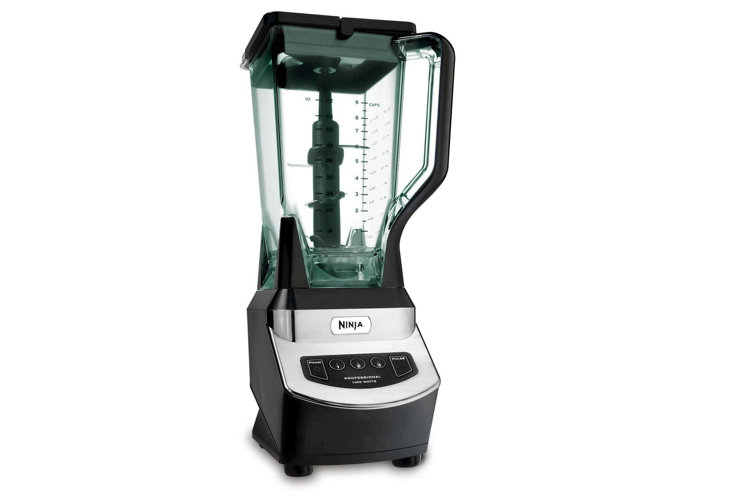
The traditional countertop blender has more power than a hand blender and therefore is best for heavy duty blending (think ice, frozen fruits, and fibrous vegetables). Quality blenders have a number of different blending options and speeds.
Food Processor
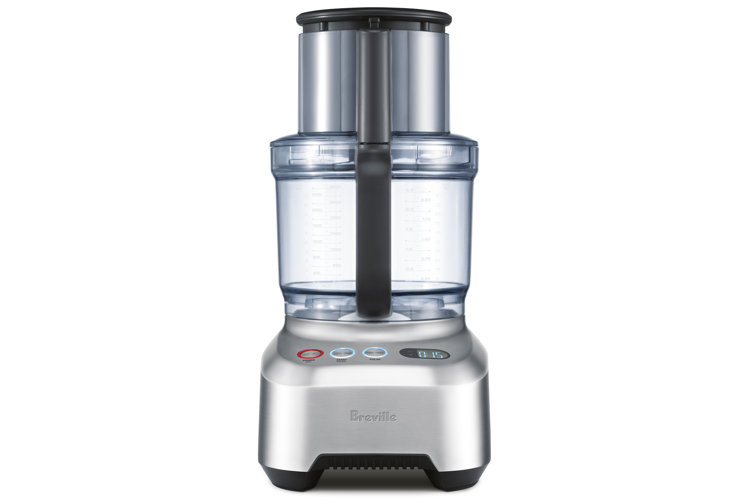
Unlike blenders which require liquid to blend, food processors excel at chopping, slicing, and dicing dry food. Food processors often have an array of blade types and attachments to allow for multiple uses. These appliances are larger and heavier than blenders and require more counter and/or storage space.
Hand Mixer
A hand mixer simply mixes ingredients together—it does not chop as it blends. Hand mixers are portable and relatively light weight, require less effort to set up, and take up less room to store
Considerations Before Buying a Hand Blender
- How often will you use it? If you are already salivating at the thought of all the delicious things you can make with your immersion blender and plan to use if every day, you may want to opt for a more powerful, durable blender at a higher price point.
- What do you plan to blend? Immersion blenders do best with softer foods. If you plan to make mostly soups, sauces, and spreads, an immersion blender will work great for you. But if you are more interested in crushing ice, a traditional countertop blender may be best. It is recommended that immersion blenders only be used for a minute or so at a time. Consider what you make most, or what you want to make more of, in the future, before buying.
- Corded or cordless? Corded immersion blenders tend to offer more power, but cordless ones can be convenient in a kitchen that does not have the best layout or easily accessible outlets. Think about your space and what would be best for your kitchen.
Blender Characteristics
- Motor: The true test of a quality hand blender is how well it purees substances into velvety smoothness. Pick a hand blender with a motor that puts out between 200 and 250 watts. This will create an effective vortex to pull food into the blades and circulate it back out.
- Cage: The cage, which houses the blade, is an important component of a hand blender that provides control over how finely something blends. The ideal cage has gaps or cutouts large enough to allow food to pass through. Solid cages can trap food, blending it finer than you may want. (Think salsa, guacamole, and pesto—you want varied textures with these foods, not liquid.) Stainless steel cages are the best for longevity. Plastic cages, though gentler on your cookware, can warp with heat and are not as durable. However, if the majority of your cookware is nonstick, you may want to look for a stainless steel cage that has a silicone edge to avoid damaging your pots and pans.
- Speeds: Some hand blenders come with different speeds—from one to five, or more. Having two speeds is better than one for greater control and is likely all you will need and end up using.
- Design: The blender should be comfortable and easy to hold. While it may not seem like the most important aspect of the handle, the size and location of the power button can be significant. Some hand blenders require the power button to be held down during use, so a well-placed, oversized power button is ideal for one-handed maneuvering.
- Length: If you plan to puree to make soup, be sure to buy a hand blender with a long enough wand to reach the bottom of your stock pot.
- Weight: Hand blenders are lightweight by nature, but more than 3 pounds can become unwieldy when holding the blender with one hand and adding ingredients with the other.
Accessories
- Blending container: Some hand blenders come with a blending cup. This can be very useful for small jobs as it keeps the food close to the blades which makes for more effective blending.
- Attachments: Additional wand attachments are also available on some models, like whisks and chopping blades. These expand the uses of the hand blender and make it an even stronger utility player in your kitchen.
Cleaning
An undeniably convenient aspect of a hand blender is how easy it is to clean. Simply rinse and let dry. Some hand blenders even have detachable, dishwasher-safe wands that separate from the motorized handle making cleaning a non-issue.
