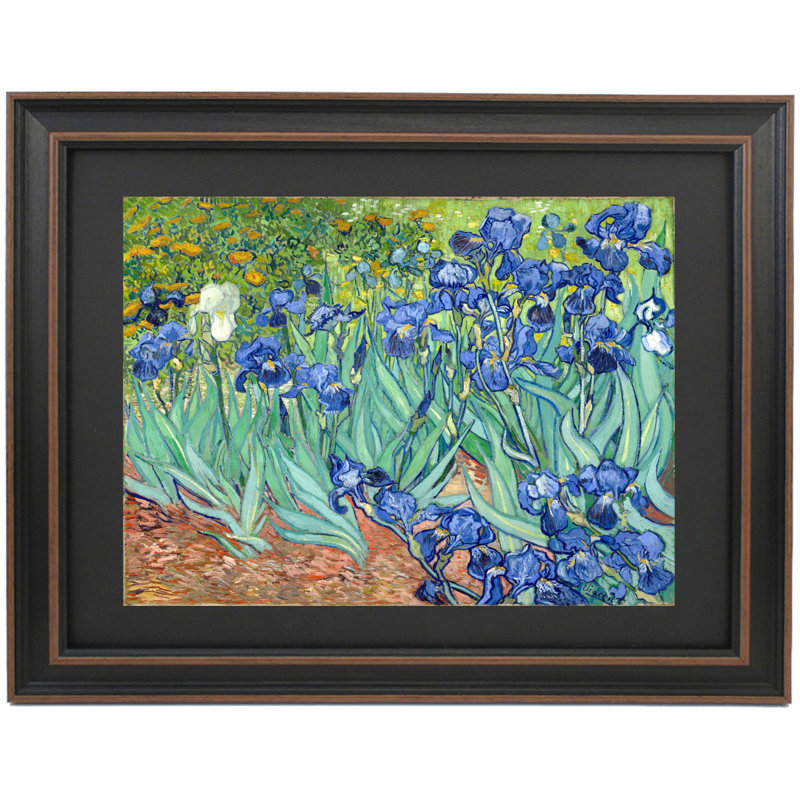
"Irises" by Vincent van Gogh is a vivid, swirling study of nature painted during his stay at the Saint-Rémy-de-Provence asylum, just a year before his death. The canvas bursts with the deep blues and purples of blooming irises, their curving, flame-like petals set against the fresh green of long leaves and the earthy tones of the background soil. Van Gogh used strong outlines and rhythmic brushstrokes, almost like stained glass, giving the flowers both solidity and movement. One pale white iris stands apart among the blue, often read as a symbol of individuality, fragility, or the artist’s own sense of isolation. Painted from direct observation in the asylum’s garden, the work radiates energy, but also a meditative calm—Van Gogh described such flower studies as “the lightning conductor for my illness,” channeling his mental unrest into structured, harmonious beauty.