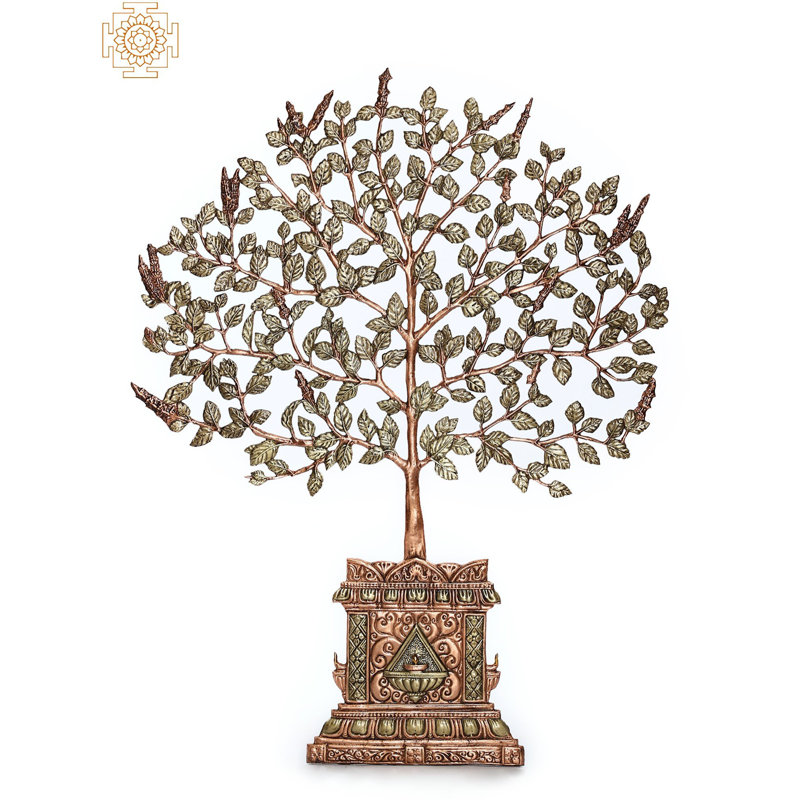
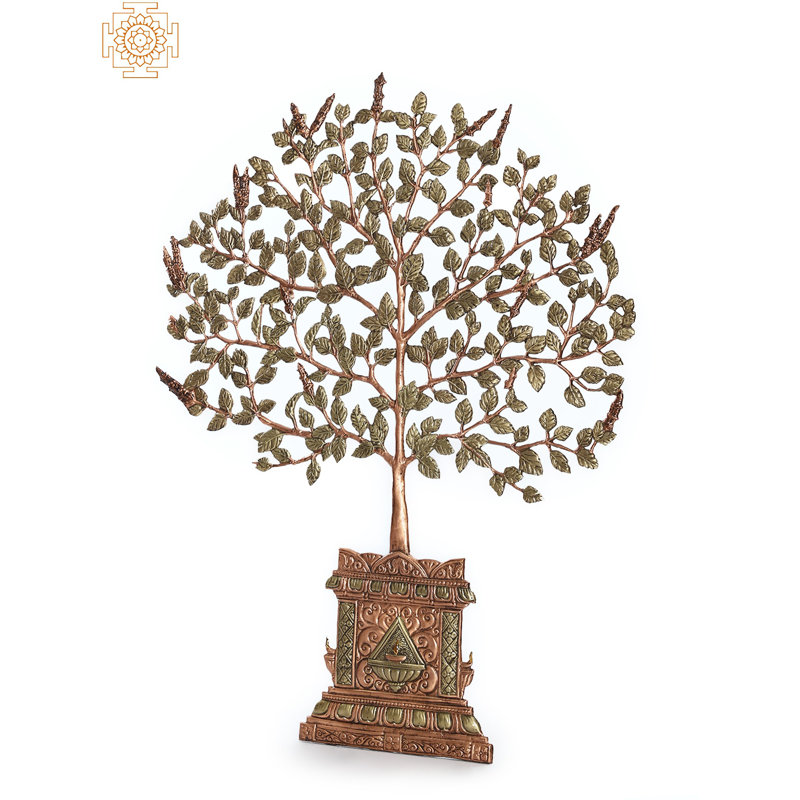
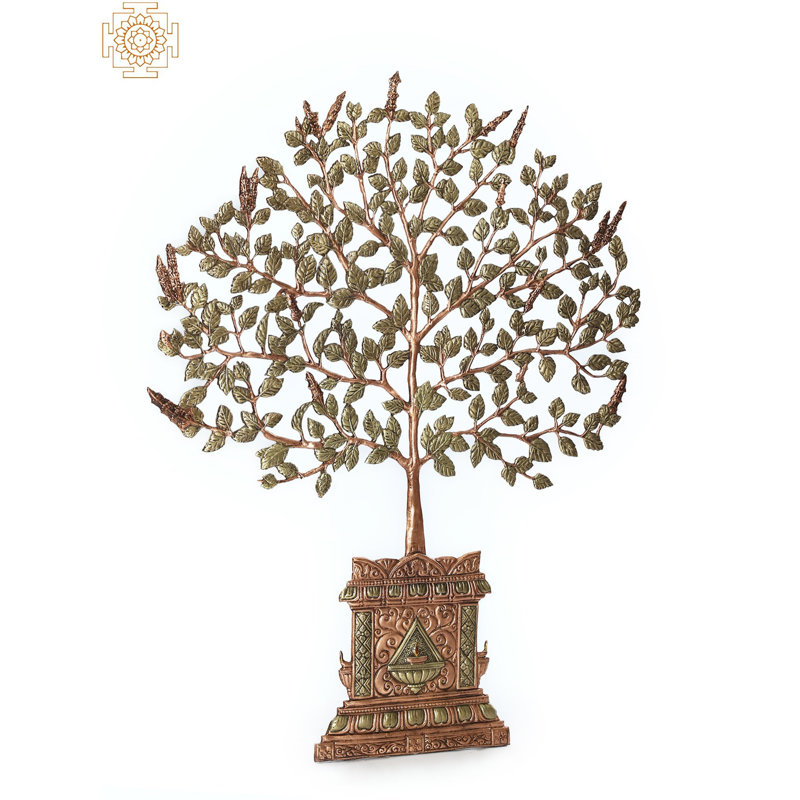
According to the Padma Purana, goddess Tulsi was earlier a princess called Vrinda, a great devotee of Vishnu, who was married to a demon-king Jalandhar. Protected by the powers of her wifely devotion, Jalandhar won over the human kings as well as the gods and took over Amaravati (Indra’s capital). Upon realizing the source of Jalandhara’s undefeated might, gods prayed to the savior of the Universe, Sri Vishnu, and pleaded with him to save the Deva Loka (the realm of gods). Vishnu after taking the form of Jalandhara visited the palace of Vrinda, who was joyful by seeing her husband return from battle and embraced him lovingly. Little did she know that the man standing in front of her was not her husband and her loving act toward another man (Para-Purusha) broke the shield of her Satitiva (chastity) which had protected Jalandhara so far. Vrinda soon realized her mistake, but her husband had been slain till then. Enraged by the chhala (deceitfulness) by her adored Vishnu, Vrinda cursed him to turn into stone, for he had been stone-cold toward her in his deceiving act. With a gracious heart, Bhagwan Vishnu accepted the curse and gave his devotee a boon, that he will marry her in the form of a black stone, keeping her words and showing his adorations toward her. When Vishnu became Shaligrama, Vrinda transformed into Tulsi and was married to him, an occasion which is annually celebrated as Tulsi Vivah. The Tulsi tree brass wall hanging is in the form of a Tulsi shrine maintained in the courtyard of a Hindu home, by placing the Tulsi plant inside a beautiful stone structure which is patterned with auspicious marks and has space for Diyas (earthen lamps), using which the Tulsi-Ghar (home of goddess Tulsi) is decorated every day. The balanced use of copper and golden shade on the wall hanging has given distinctive tones to the branches and leaves which are looking quite realistic. An integral part of the Tulsi plant, its seeds, is also added to the tips of the branches. The tree emerges from an ethnically decorated pot, with lotus petal adornments, vine sprouting pleasingly, and designated space for lamps where images of Diyas can be seen. Two waving components on each side of the pot represent the burning wick of the lamps, bringing a three-dimensional feel to the brass Tulsi wall hanging. Hanging it in your space, you can welcome the healing and divine ambiance of the Vrindavana (forest of Vrinda, Tulsi), where Sri Hari Vishnu and his universal auspiciousness dwell.