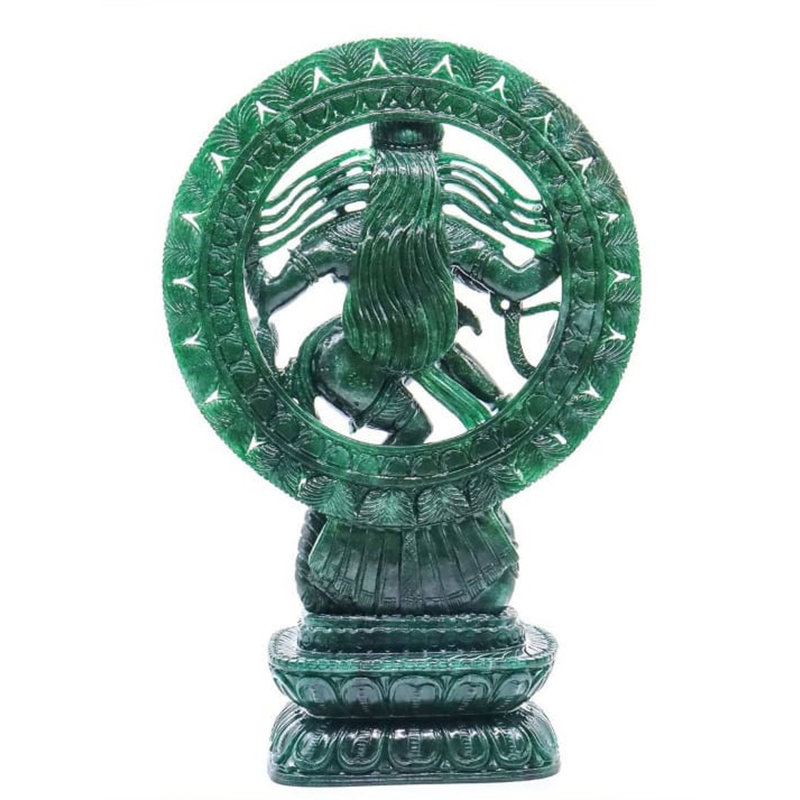
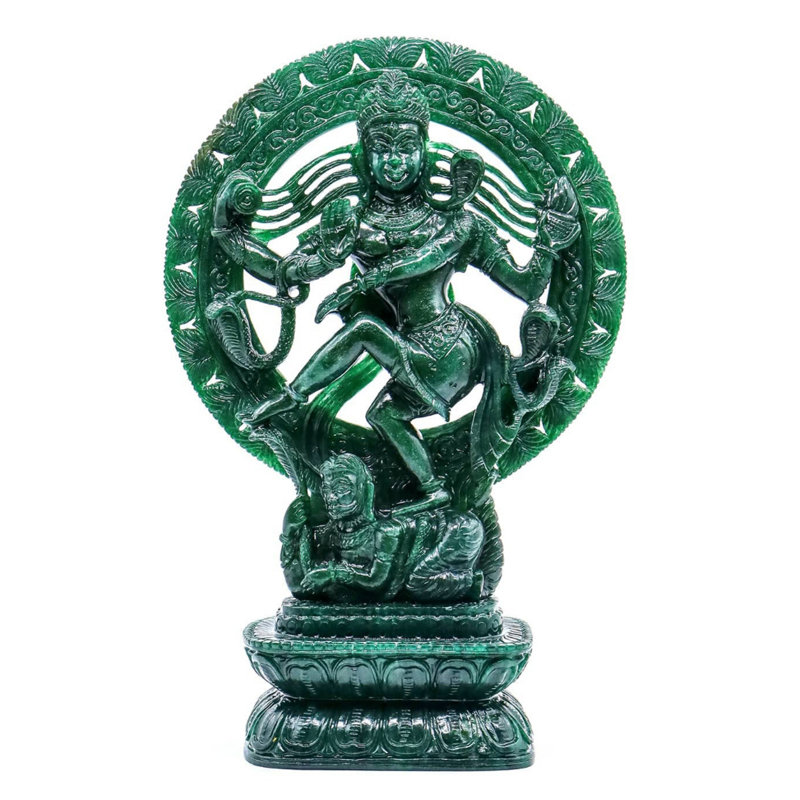
Bhairava’s presentation as the menacing figure adorned with coils of snakes for ornament and carrying weapons attests to his annihilating tendency – as is evinced in one of his origin legends, where he decapitates the fifth head of Brahma in order to teach him a lesson in humility and respect. Bhairava’s worship today is mostly associated with the Jyotirlinga temples across the subcontinent. A definite iconographic convention for identifying Bhairava is its divine ‘vahana’ or vehicle, the dog ‘Shvan.’ The Vishnudharmottarapurana further elaborates that the image of Bhairava must be adorned with a tiger skin, human bones, and the sacred thread ‘yajnopavita.’ This bronze depiction by the ‘sthapati’ comes skilfully close in presenting this violent avatar of Shiva. Today we have several historical examples of the Bhairava iconic image with us – from sculptural examples kept at the CSMVS Museum in Mumbai to the Met in NYC, and interestingly, Bhairava’s form is also manifested in Buddhism as a ‘dharmapala’ or dharma protector called variously as Herukas, Vajrabhairava, Mahakala, and Yamantaka. Such an expansive mythological underpinning to this bronze image’s history makes it a wholly interesting work of art.