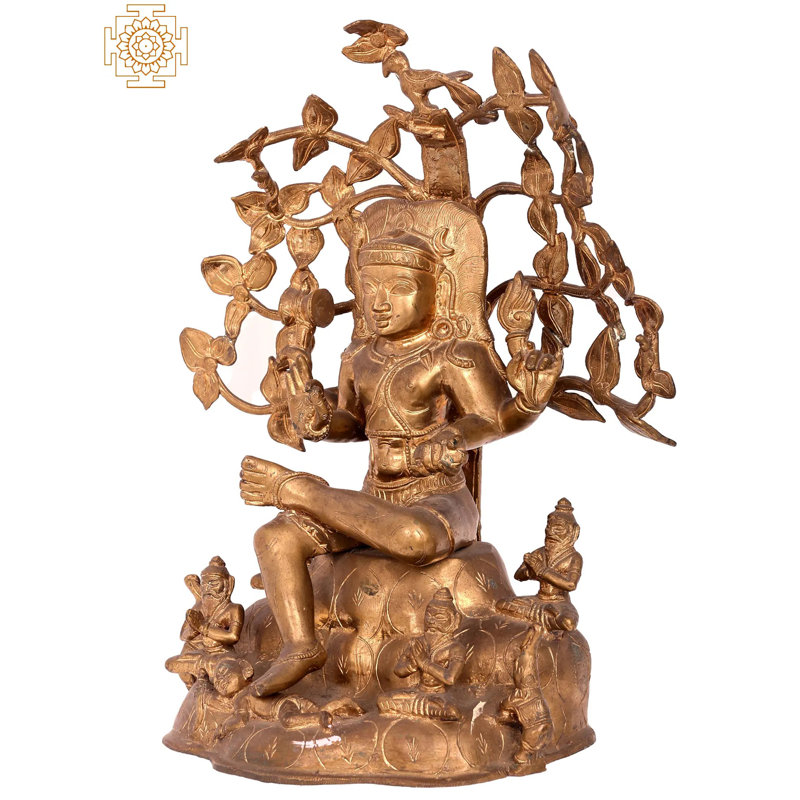
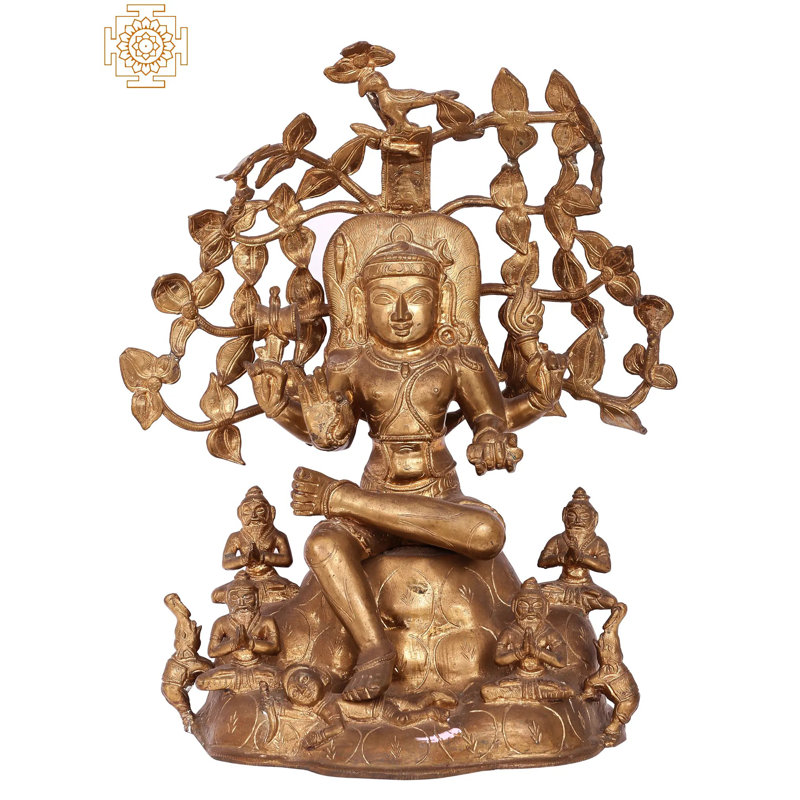
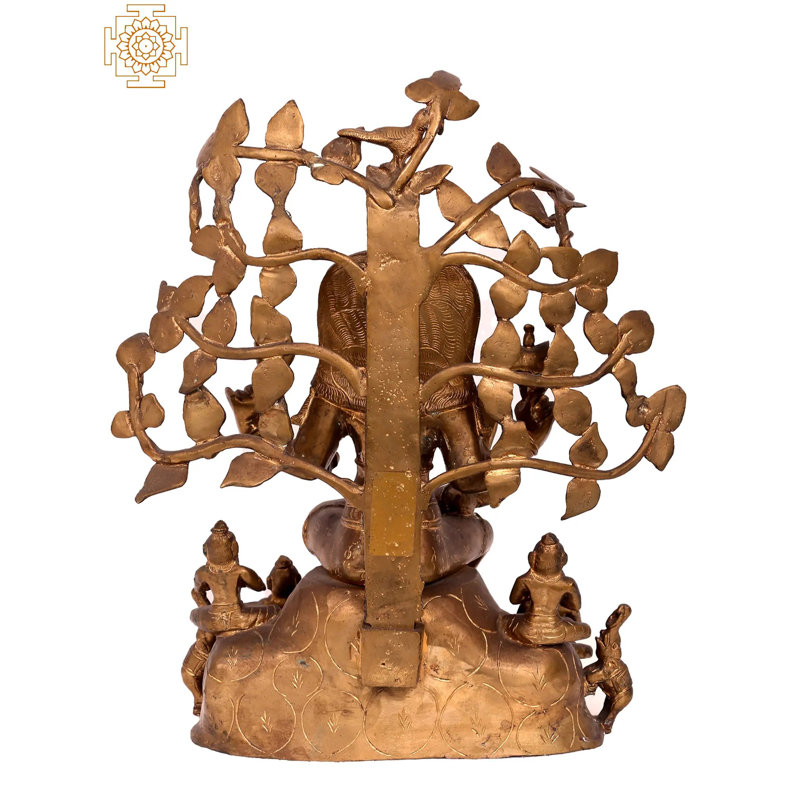
Maa Parvati’s standing images, similar to the brass statue we have here, are often related to her role as the prime audience to Shiva’s transcendental dance- Tandava. She remains gracefully poised and still as Shiva moves, enriched by the Shakti (energy) that is provided by Parvati herself. Enriching the actions of Shiva, enjoying marital bliss with Him in his presence, and meditating upon Him in his absence, becoming Uma for Maheswar (Shiva) when the world order requires the divine couple to procreate and becoming Kali when the universe needs them to wreak havoc, - Parvati is the ideal wife, whose only concern is supporting every endeavor of her husband. This roopa (form) of Uma-Parvati is offered on an upturned lotus pedestal to stand on by the sculpture on which the goddess remains, the very picture of femininity and poise. Personifying the ethereal beauty of the blossomed lotus on which she appears, this brass Uma icon fills the mind with a devoted appreciation of her celestial beauty. Devi Uma-Parvati wears a conical crown embellished with fine patterns and the Makara motif, earrings, a set of exquisite necklaces, Bajuband (armband), Keyura (arm ornament), Kada (bracelet), mekhla (girdle), Nupur (anklet). Beautifying her torso, this brass Uma Shivakamasundari icon has a delicate Yajnopavita diagonally clinging to her body. Devi’s dhoti (lower body garment) wraps her legs to highlight her graceful form, which can be better appreciated on the reverse of this brass Uma statue. Devi Uma Parvati’s heavenly aura is captured by the sculpture in her visage, which is carved with curving eyebrows, wide, almond eyes, a sharp nose, and full lips- features that are derived from the Hindu ideal of feminine beauty. Goddess Uma has her right hand in the “Katakhasta” mudra for holding a flower offering, while her other hand dangles appealingly in “Lolahasta” mudra named after the curving tail of a horse. Smiling inwardly in this brass icon, Maa Parvati as Shivakamasundari enchants the whole universe.