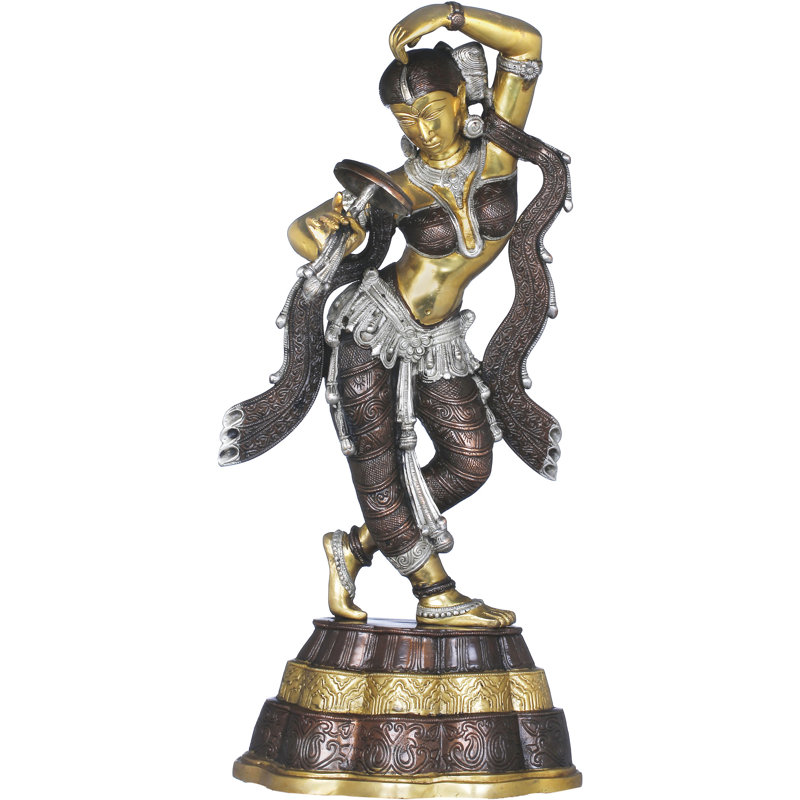
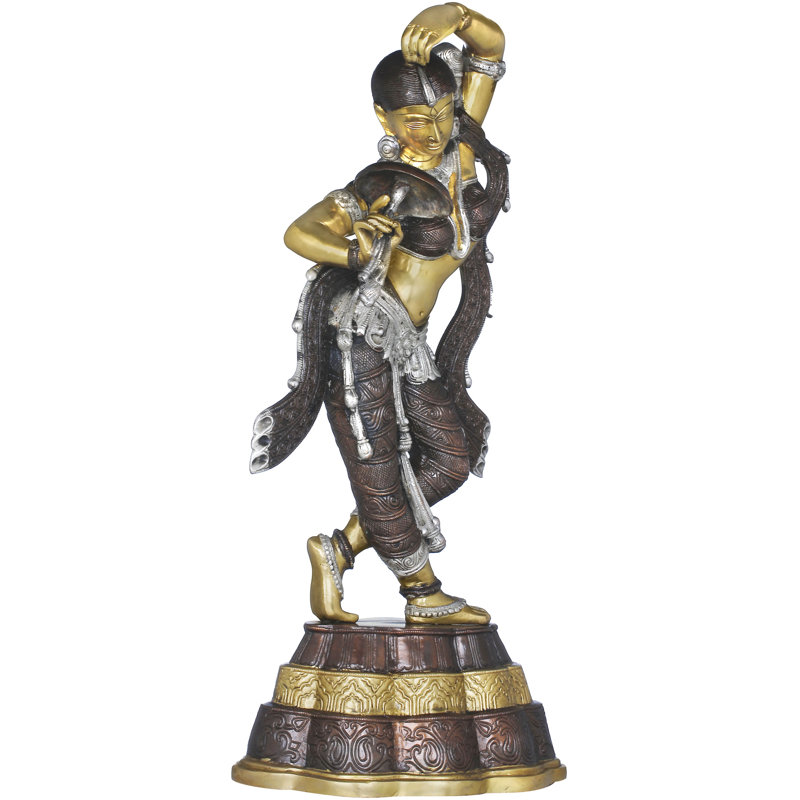
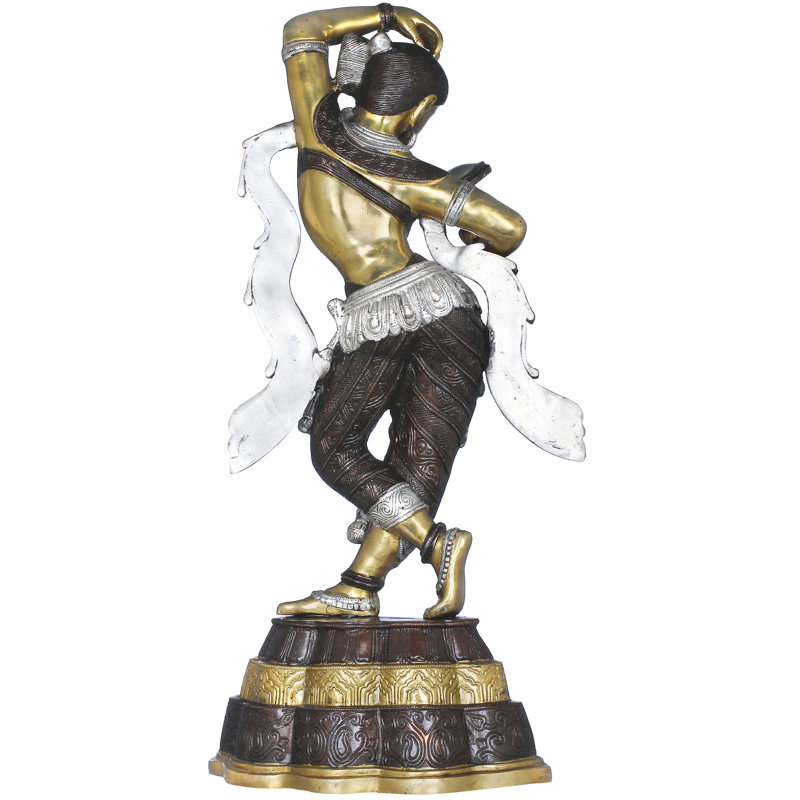
A brilliant brass transform of one of the world's best-known sculptures from Khajuraho, sculpted at Parshvanatha temple, represents a young damsel applying vermilion on her hair-parting while looking into a mirror: a centuries-old distinction of a married woman in India. This image of the Indian woman represented the Indian cult of perceiving the highest beauty as revealing the highest kind of virtue. Under Indian aesthetic norms, the degree of virtue determined the level of beauty, and hence, the most beautiful was also the most virtuous and the vice-versa. It was for such reasons that poets like Kalidasa, a Sanskrit poet of the third century of the Common Era, had no reservations in most sensuously illustrating and admiring the beauty of Parvati, the supreme mother, believing that while describing and appreciating her supreme beauty he was lauding her supreme virtue.