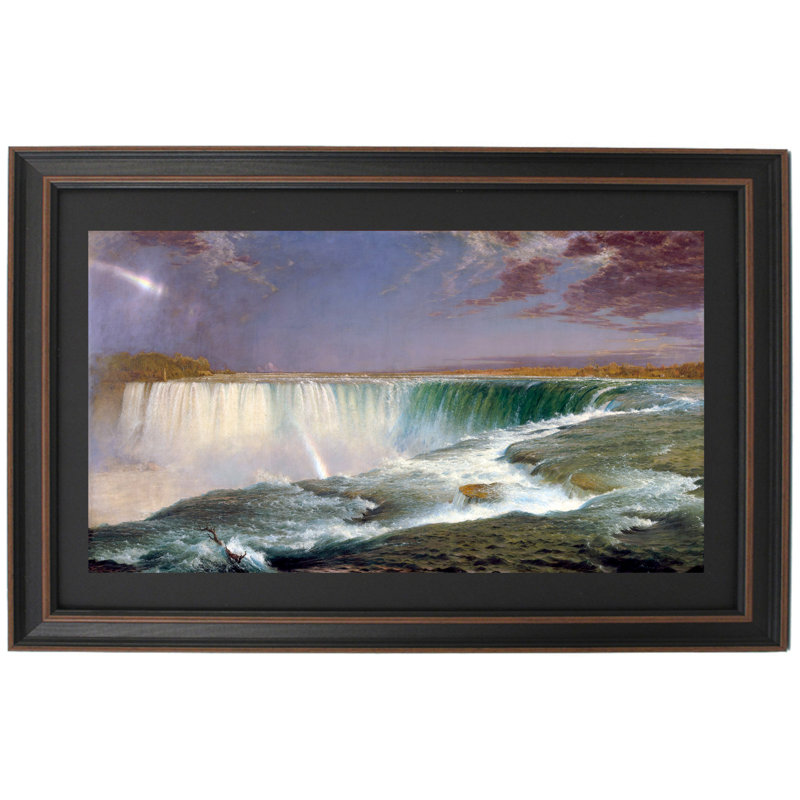
"Niagara Falls (1857)" by Frederic Edwin Church is a landmark of American landscape painting that captures the awe-inspiring power and vastness of one of North America's greatest natural wonders. In this painting, Church depicts the Horseshoe Falls from the Canadian side, allowing the viewer to feel as though they are standing on the edge of the precipice. The composition emphasizes the immense width and force of the waterfall, with a seemingly endless wall of rushing water plunging into mist. He deliberately omits human figures to let the sublime force of nature dominate the scene. The low horizon line and expansive sky amplify the sense of scale, while subtle details—like birds in the spray and rainbow effects—enhance the realism. Church’s Niagara Falls was a sensation when first exhibited, hailed for its technical precision and emotional impact. It reinforced the idea of American nature as majestic, untamed, and spiritually profound.