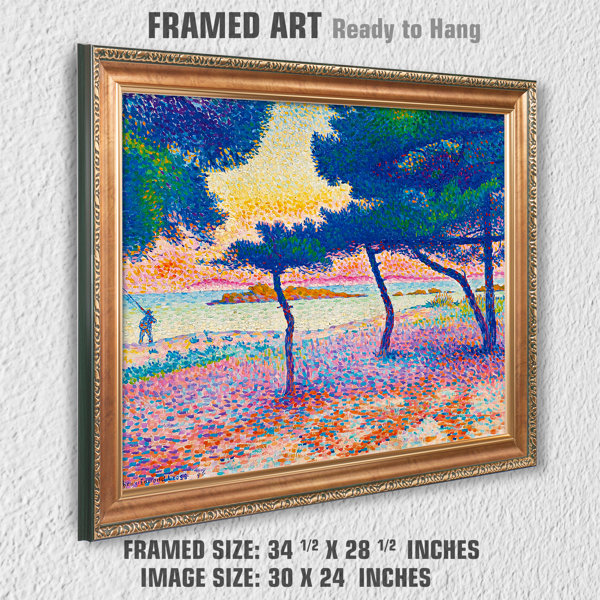
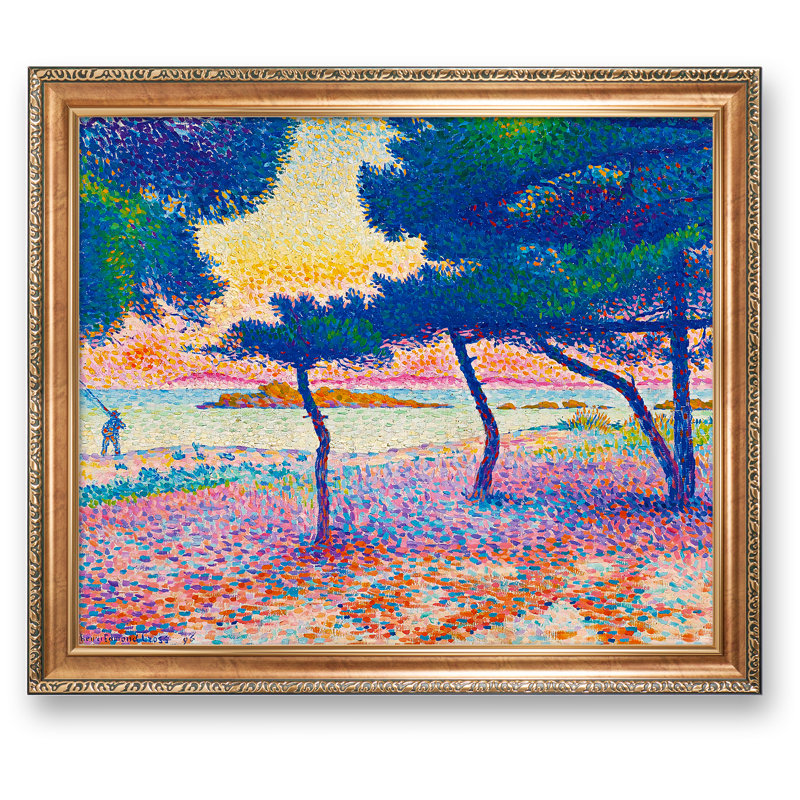
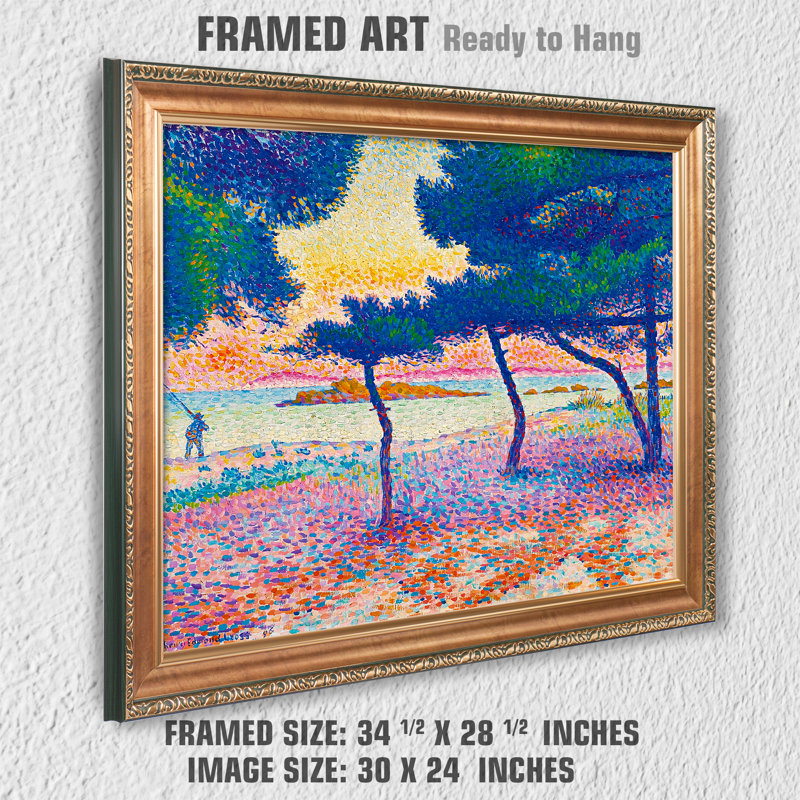
Cross's paintings of the early- to mid-1890s are characteristically Pointillist, with closely and regularly positioned tiny dots of color. Beginning around 1895, he gradually shifted his technique, instead using broad, blocky brushstrokes and leaving small areas of exposed bare canvas between the strokes. The resulting surfaces resembled mosaics, and the paintings may be seen as precursors to Fauvism and Cubism.In the Pointillist style, minute spots of paint were used to blend colors harmoniously; in contrast, the strategy in "second generation Neo-Impressionism" was to keep the colors separate, resulting in "vibrant shimmering visual effects through contrast".Cross stated that the Neo-Impressionists were "far more interested in creating harmonies of pure color, than in harmonizing the colors of a particular landscape or natural scene". Matisse and other artists were very influenced by the late-career Cross, and such works were instrumental in forming the principles of Fauvism.Among the other artists influenced by Cross were André Derain, Henri Manguin, Charles Camoin, Albert Marquet, Jean Puy, and Louis Valtat.