What Is a Baluster on Stairs?
What is a stair baluster?
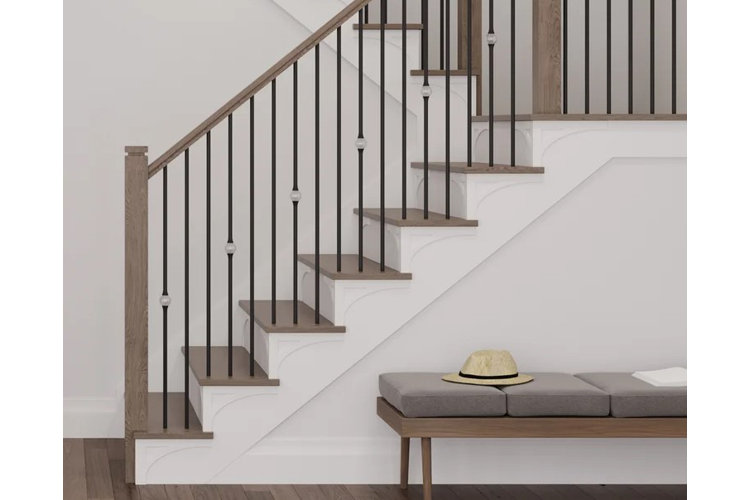
A baluster (often called a spindle) is a vertical post that connects the stairs or base rail to the top handrail. Whether updating an existing interior staircase or building a new outdoor deck railing, balusters are essential for structural integrity, code compliance, and visual appeal.
How Does a Baluster Work on Stairs?
Safety, Support & Style
While balusters contribute significantly to the overall look of a home, they perform three main jobs on any staircase:
- Support: A row of balusters holds up the heavy handrail above to prevent sagging over time and ensure the railing assembly stays firm.
- Safety: By filling the open gap beneath the handrail, balusters act as a safety barrier that keeps children, pets, and objects from slipping off the edge of the stairs.
- Style: Balusters are one of the most visible design elements on a staircase. Whether you prefer clean modern lines or traditional carved wood, they set the aesthetic tone for the entire entryway or deck.
Because staircases require multiple posts to cover the entire length of a handrail, balusters are typically sold in sets or multi-packs to accommodate standard project sizes.
Baluster vs. Balustrade vs. Banister
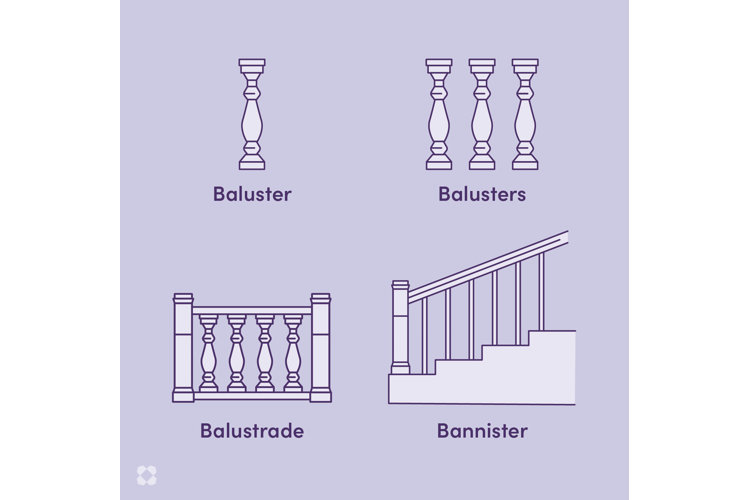
| Part | What it is | Where it sits | Also called |
|---|---|---|---|
| Baluster | One vertical infill post | Tread or base rail to handrail | Spindle, stair post |
| Balustrade | The full rail assembly | Along stairs, landing, or deck | Railing system |
| Banister | The rail you hold | Top of the balusters | Handrail, bannister |
| Newel post | Larger end/corner post | Start, turn, or landing | Newel |
Neighborly Tip!
Check out our full guide on balusters vs. banisters for even more information.
Types of Stair Balusters (Materials & Styles)
Choosing the right baluster material impacts both maintenance needs and design aesthetic.
Wood, Metal/Iron & Composite
- Wood Balusters: A timeless choice for traditional, modern farmhouse, and classic interior spaces. Common wood species include oak, maple, hemlock, and poplar (ideal for painting). Wood balusters can be plain square posts or intricately turned with decorative detail.
- Metal & Wrought Iron Balusters: Popular for modern, industrial, and transitional homes. Powder-coated metal balusters are sleek, highly durable, and low-maintenance. Options include solid square bars, twisted designs, or decorative baskets and scrolls.
- Composite & PVC Balusters: Ideal for outdoor decks and porch stairs. Composite materials resist rot, moisture, and UV damage, making them a weather-resistant choice that never needs painting or staining.
How Far Apart Should Balusters Be?
The 4-Inch Sphere Rule
Standard building codes (including the International Residential Code) require that balusters be spaced so that a 4-inch sphere cannot pass through any opening.
- The Safety Standard: This rule is designed to prevent small children from getting stuck or falling through the railing.
- Rule of Thumb: To meet code requirements, plan for roughly 3 balusters per linear foot of handrail, depending on the thickness of the baluster posts you select.
Neighborly Tip!
Always measure spacing from the inside edges of adjacent balusters, not from center-to-center, to ensure the open gap does not exceed 4 inches.
Stair Parts That Works With Balusters
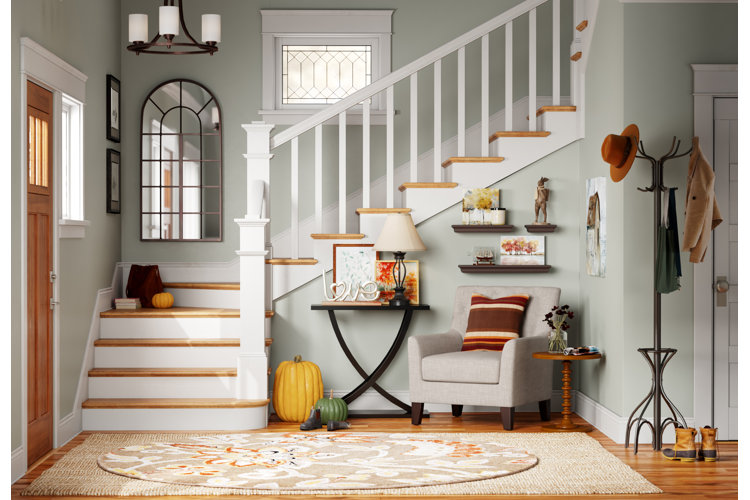
A complete staircase system relies on several complementary components.
Newel Posts, Base Rail & Handrail
- Newel Posts: Heavy-duty structural posts anchored at the top, bottom, and corners of a staircase. They bear the structural load of the entire balustrade.
- Base Rail: A horizontal piece running along the stair treads or floor that anchors the bottom end of each baluster securely in place.
- Handrail (Banister): The top guard section that anchors the upper end of the balusters and provides safe handhold support for people using the stairs.
Neighborly Tip!
Planning a full makeover? Check out our guides on staircase remodeling and staircase renovation.
Frequently Asked Questions
What is the primary function of a baluster?
A baluster is the vertical post that supports the handrail and fills the gap between the rail and the stair or deck so people cannot fall through.
How far apart should balusters be spaced?
Most U.S. residential codes use a 4-inch sphere rule: openings between balusters should be small enough that a 4-inch sphere cannot pass through. Confirm spacing with local building code before you install.
What is the difference between a balustrade and a banister?
A balustrade is the full railing assembly (posts, infill, and rail). A banister is the handrail you hold at the top of the balusters.
Is a spindle the same as a baluster?
On staircases the words are often used interchangeably. Spindle usually means a turned or decorative baluster rather than a plain square or metal bar.
What is a balluster or ballister?
Those are common misspellings of baluster, the vertical post in a stair or deck railing.
