Types of Pans & Pots: What Each Is For
Cookware compared.
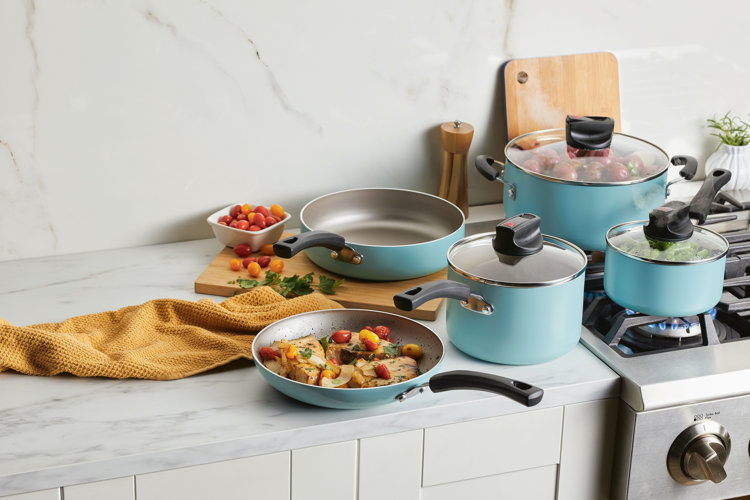
The right cookware set makes easy work of any recipe. Whether you are equipping your first kitchen or upgrading your collection, understanding the core differences between cookware shapes and materials will help you pick the right tools for your cooking style. Read on to learn about the different types of pans and pots, what each is for, and which pieces you actually need.
Pot vs. Pan: What’s the Difference?
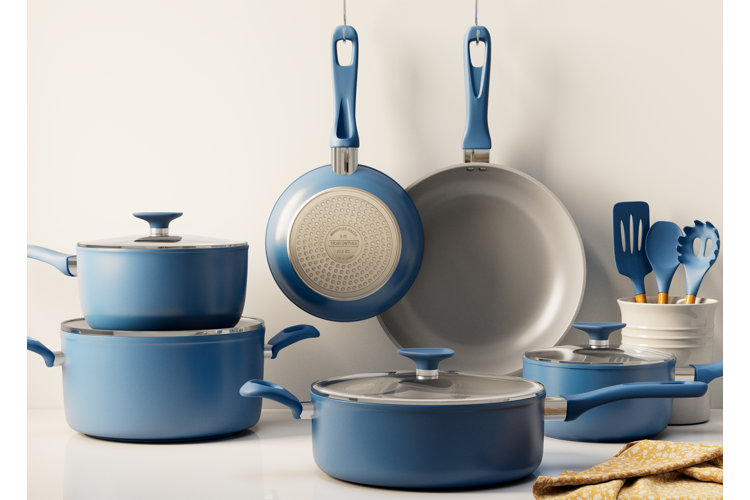
While the terms are often used interchangeably, pots and pans serve distinct culinary purposes:
- Pans: Built for heat circulation, moisture evaporation, and easy turning. They feature shallow or sloped sides and a long handle – ideal for pan-frying, high-heat searing, and sautéing.
- Pots: Designed to hold liquid. They have taller, straight vertical walls, two side loop handles, and a tight-fitting lid – making them best for simmering, boiling, stewing, and making stocks.
When deciding between a saucepan and a frying pan, choose the saucepan for liquid-heavy sauces, soups, and grains, and the frying pan for browning meats or cooking eggs.
Types of Pans & Pots for Cooking
| Type | Best For | Typical Size | Shop Path |
|---|---|---|---|
| Frying pan / skillet | Searing, eggs, stir-frying | 10–12 in. | Frying pans & skillets |
| Sauté pan | Browning then simmering | 3–6 qt | Sauté pans |
| Saucepan | Sauces, grains, small boils | 2–4 qt | Saucepans |
| Wok | High-heat stir-fry | 12–14 in. | Woks & stir-fry pans |
| Stockpot | Stock, pasta, batch soup | 8–16 qt | Soup & stock pots |
| Dutch oven | Braises, stews, bread | 5–7 qt | Dutch ovens (verify PLP) |
Types of Pans for Cooking
Frying Pan vs. Skillet
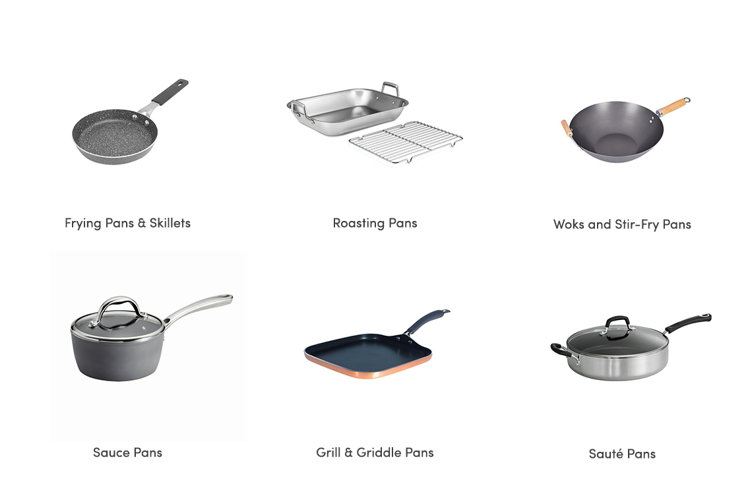
Frying pans and skillets are versatile, workhorse pans featuring flared sides and long handles. While the names are used interchangeably, traditional skillets tend to be slightly deeper than standard frying pans and frequently include a tight-fitting lid. Skillets and frying pans (available in nonstick, stainless steel, and cast iron) are ideal for pan-frying, high-heat searing, sautéing, and deglazing.
Sauté Pan
A sauté pan is often confused with a skillet, but it features straight, vertical sides and a wider bottom surface area. The high sides keep liquids inside, making it perfect for dishes that require browning meat first and then adding liquid to simmer (such as chicken cacciatore, bolognese sauce, or curries).
Saucepan
A saucepan is round with tall, straight sides, a long handle, and a tight lid. Its depth allows you to heat liquids evenly while minimizing evaporation. Saucepans excel at stewing, simmering, preparing grains like rice or quinoa, boiling eggs, and reducing sauces.
Neighborly Tip!
Learn more about construction, finishes, and capacities in our Saucepan Buying Guide.
Wok & Stir-Fry Pan
Woks and stir-fry pans feature high, sloping sides designed to retain heat and easily toss ingredients. A traditional wok has a small, rounded bottom that concentrates high heat in the center while keeping ingredients moving along the sides. A stir-fry pan has a flat bottom, making it more stable on flat induction or glass stovetops. Both allow you to cook quick, high-heat stir-fries using minimal oil.
Grill Pan & Griddle
Grill pans and griddles are typically square or rectangular:
- Grill Pans: Feature raised ridges that keep meat raised above liquid runoff and create authentic outdoor-style grill marks.
- Griddles: Feature a completely flat surface ideal for pancakes, eggs, bacon, and grilled cheese. The flat surface is easier to clean and keeps delicate food intact.
Roasting Pan
Designed for large cuts of meat like turkey, roast beef, or whole chickens, a roasting pan is a thick, oven-safe pan built with sturdy handles. Most come with a flat or V-shaped rack:
- V-Shaped Racks: Hold large meats steady so fat drips down into the pan basin for basting.
- Flat racks: Are easier to clean and work better for roasting poultry pieces or vegetables.
Neighborly TIp!
Remove the interior rack to use your roasting pan for baking dish meals like lasagna or casseroles.
Sheet Pan
A staple in any home kitchen, a rimmed sheet pan (half-sheet size) is essential for sheet-pan dinners, roasting vegetables, and baking cookies. Its shallow 1-inch edges allow moisture to escape so vegetables crisp up instead of steaming.
Stockpot & Soup Pot
Stockpots and soup pots are high-capacity cookware essentials:
- Stockpots: Have thin bases that heat quickly to bring large quantities of water to a rolling boil—ideal for boiling pasta, corn on the cob, or preparing light broths.
- Soup Pots: Feature thicker, heavier bottoms designed to distribute heat slowly and evenly, preventing thick stews or cream-based soups from scorching at the base.
Dutch Oven & Braiser
A Dutch oven is a heavy, thick-walled pot made of cast iron or enameled cast iron. It locks in steam with a tight heavy lid, making it unmatched for slow-cooking stews, braising roasts, and baking artisan bread. A braiser is a shallower variation with a wider base that encourages quick browning before low-and-slow oven braising.
Steamer Insert & Steamer Pot
A steamer pot is a stockpot fitted with a nesting basket or perforated steamer insert. It lets you steam vegetables, seafood, or dumplings over boiling water. Steamer pots save time because you can boil potatoes or pasta in the main basin while simultaneously steaming vegetables above.
Cookware Materials Compared
Choosing the right material ensures your pots and pans perform to your standards:
- Cast Iron & Enameled Cast Iron: Excellent heat retention and durability; best for searing, Dutch oven braising, and baking.
- Stainless Steel: Non-reactive, durable, and dishwasher-safe; ideal for high-heat searing, deglazing, and making pan sauces.
- Nonstick: Requires little oil and makes cleanup effortless; best for eggs, fish, and delicate recipes.
- Carbon Steel: Combines the high-heat searing performance of cast iron with the lighter weight of stainless steel.
Neighborly Tip!
Read our complete guide to find the best option for your routine: The Best Cookware Materials to Choose From.
Helpful Cookware Features
- Nonstick Finish: Prevents delicate foods from sticking. Use silicone or wooden tools to protect nonstick surfaces unless specified as metal-utensil safe.
- Dishwasher-Safe: Engineered to resist warping or surface degradation under high dishwasher temperatures.
- Oven-Safe: Built with metal handles that allow seamless transitions from stovetop searing to oven baking. Check product ratings for maximum oven-safe temperatures.
- Metal Utensil-Safe: Durable scratch-resistant coatings or solid stainless construction safe for stainless steel strainers and spatulas.
What Cookware Do You Need? Starter vs. Full Set
When equipping your kitchen, you can buy individual pieces ("open stock") or a complete cookware set:
- Starter Sets (3 to 5 Essential Pieces): Most home cooks only need a 10-inch skillet, a 2-to-3-quart saucepan with lid, and a 5-to-6-quart Dutch oven or stockpot.
- Cookware Sets: Purchasing a full set guarantees matching design, includes complementary lids, and is often more economical per piece.
- Open Stock: Buying individual pieces lets you select optimal materials per pan type – such as a nonstick skillet for eggs paired with a stainless steel saucepan for sauces.
Neighborly Tip!
For size recommendations, explore How to Choose the Right Pot & Pan Sizes for Your Needs and Your Guide to Stockpot Sizes.
Frequently Asked Questions
What is the difference between a pot and a pan?
A pan has lower or flared sides for frying and searing. A pot has taller, straighter walls and a lid for boiling and simmering. A sauté pan sits in between: a wide flat base with higher straight sides.
What types of pans does every home cook need?
Start with a 10- or 12-inch frying pan, a 2- to 4-quart saucepan, and either a stockpot or Dutch oven. Add a sauté pan, wok, or grill pan based on how you cook.
Is a sauté pan the same as a frying pan?
No. A frying pan (skillet) has sloped sides for flipping and fast evaporation. A sauté pan has straight sides and usually a lid, so it holds more liquid after you brown food.
Should I buy a cookware set or individual pots and pans?
A set is efficient if you need several matching pieces at once. Buy open stock if you already own a good skillet or want mixed materials, such as nonstick fry pans plus a stainless saucepan.
You Might Also Like
Shop Pot RacksPots & Pans to Shop by Type
| Product | Type | Best For | Price Band |
|---|---|---|---|
| Le Creuset Enameled Skillet | Frying pan | Searing and oven finish | Premium |
| Tramontina Enameled Saucier | Saucier | Sauces, risotto, grains | $55–$99 |
| Cuisinart 12-in. Stir-Fry Wok | Wok | High-heat stir-fry | Mid |
| Djavad 12-Piece Cookware Set | Set | Starter pots-and-pans kit | ~$117 |
