Types of Kitchen Sinks
From materials to mountings, we've covered all the basics.
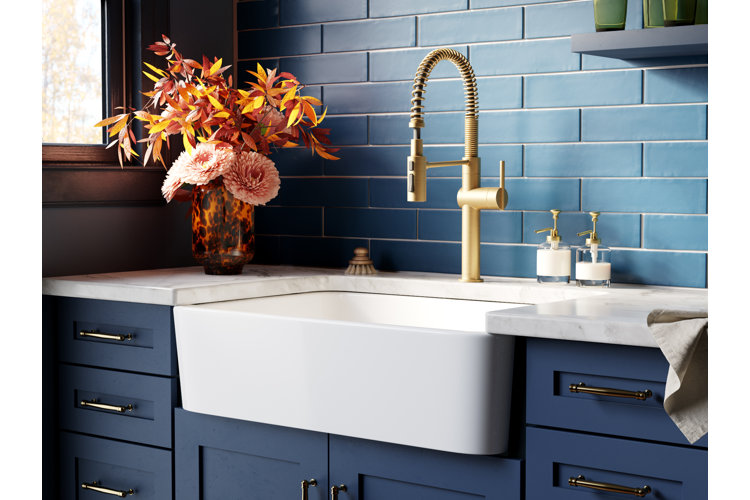
In the market for a new kitchen sink? The right kitchen sink style can make all the difference in your kitchen, so if there was ever a time to do your homework, this is it. Read our guide to learn how to choose a kitchen sink. We break down types of kitchen sinks, materials, and other important considerations, so you can find the best kitchen sink option to complete your culinary setup.
How to Choose a Kitchen Sink
Types of Sinks
Important Considerations
How to Choose a Kitchen Sink
From installation type to handy features, follow these considerations to find the right kitchen sink style for your home.
Types of Kitchen Sinks
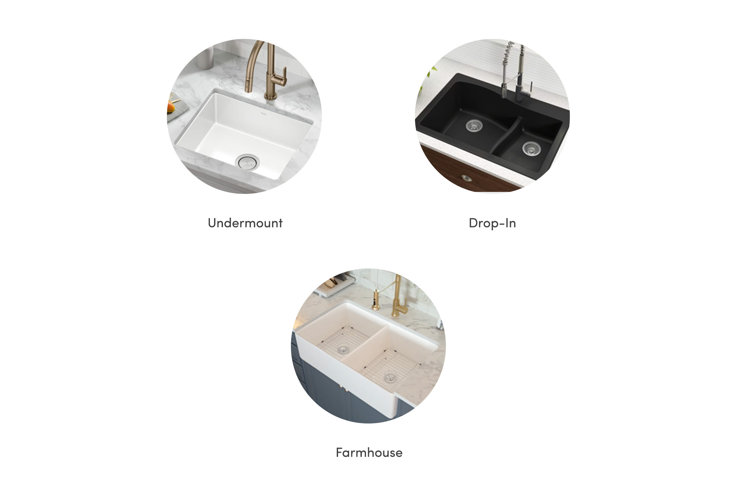
There are three types of kitchen sinks based on their installation method: undermount, drop-in, and farmhouse.
Undermount: Installed directly below the countertop, undermount sinks maximize space and result in an easy-to-clean counter. They’re best installed on a solid surface and nonporous countertops like granite or marble. These sinks should also be properly supported with screws and clips to ensure they don’t fall under the weight of heavy pots and pans. Depending on the design, some undermount sinks can also be installed as drop-in sinks.
Tip!
For specific kitchen sink styles you may be interested in, check out our guide “The Most Popular Kitchen Sink Sizes”.
Drop-In: Also known as a top-mount or self-rimming sink, this easy-to-install style drops directly into an opening in your countertop where it is secured from underneath with clips and screws. Drop-in sinks have a rim that rests on the countertop for support and security. This is typically the only installation type that can be used with laminate countertops. If you choose this type of sink, make sure you have a few inches between the edge of the rim and the back edge of the countertop or backsplash for easy cleaning. Depending on the design, some drop-in sinks can also be installed as undermount sinks. Just make sure the sink lip is wide enough to rest on top of your current countertop opening. There should also be enough faucet holes for your setup. If you are keeping your faucet, the amount of holes is very important to ensure your sink matches. If you're buying a new faucet, make sure the number of holes in your new sink match the faucet holes required. See the “Number of Accessory Holes” section below for more information.
Farmhouse: This type of sink is also called an apron sink. Farmhouse sinks feature an exposed front and a deep basin, making them ideal for washing large cookware. However, their large front requires special, short base cabinets, which most likely require modifications to your existing cabinets.
Single: Ideal for small kitchens, easy cleaning, and soaking pots and pans, single-basin sinks can be as long as 33".
Double: This style of sink has a separate basin for rinsing produce and soaking dishes. Double-basin sinks can be as long as 48". Depending on the design, the two basins may have a different width or depth. Since these are often larger than single-basin sinks, make sure you have enough counter space for them to fit comfortably.
Triple: Triple-basin sinks feature a small third sink to use as a prep sink. The two other basins look similar to a double-basin sink. If you cook and do the dishes often, this type is a great way to separate workspaces for prepping, cleaning, and rinsing. Depending on the design, the basins can be of equal width and depth, or can come in varying sizes. Triple-basin sinks can be as long as 60".
Basin Depth
To determine how deep your sink can be, look at the height of the base cabinet that sits under the sink. The average sink basin depth is generally 8" – 10" deep. Deeper basins are convenient and great for soaking pans; however, they use more under-cabinet space and can be uncomfortable for shorter family members. If you pick a sink that has multiple basins with different depths, look at the depth of the deepest basin to see if your base cabinet can accommodate. Make sure to account for immovable objects such as electrical wiring or plumbing fixtures. Along with the sink, space is still needed for plumbing, a garbage disposal, and dishwasher hookups.
Tip!
To learn how to measure for a new kitchen sink, read our “How to Measure for a New Kitchen Sink” guide.
Number of Accessory Holes
Drop-in sinks typically have between one and five holes in the back of the sink for accessories like faucets, soap dispensers, and spray hoses. Consider the features that you want to include and make sure the sink you choose can accommodate all of them. If you are keeping your current faucet and accessories, make sure your new drop-in sink has the correct number of holes. However, you can also choose a deck plate to cover unused holes – whether you are keeping your old faucet or getting a new one.
Undermount and farmhouse sinks do not have faucet holes, so you will need to drill the appropriate number of holes in your countertop if they do not already exist.
Tip!
Another important kitchen sink necessary is an organizer. Learn how to keep your sink area neat and tidy with our guide “ Must-See Under-Sink Storage Ideas”.
Features
(Shop this image: farmhouse/apron kitchen sinks, floating wall shelves, wood cutting boards, white hanging basket planters, white ceramic dinnerware sets, wood serving bowls)
Sound-Dampening: This feature allows you to prepare meals and do the dishes in peace. Sound-dampening sinks have added insulation to reduce the noises made from plates and cookware hitting the sink surface. This is a perfect way to get housework done without disrupting the rest of your family (and makes doing the dishes less painful!).
Overflow: An overflow drain is a hole in the rear or front of a sink that allows water to flow out if it rises to a certain height. It is connected below the drain to avert water in case of a clog or spill. The purpose of an overflow drain is to help your sink drain faster and prevent flooding, making doing the dishes that much easier.
Basket Strainer Included: A basket strainer is a perforated metal piece that sits in your drain and strains and filters out debris before it enters your plumbing system. While these can be bought separately from a kitchen sink, many sinks already include it for convenience. A basket strainer is often used as an affordable alternative to a garbage disposal.
Basin Rack Included: These racks sit on the bottom of your sink and allow water to drain beneath pots and pans. They also provide a cushion when placing items in your sink – keeping your sink scratch-free.
Soap Dispenser Included: Not all sinks have soap dispensers included. If this feature is important to you, choose a sink with a soap dispenser included.
Faucet Included: Cut down on time spent searching for the perfect faucet to pair with your new kitchen sink with a faucet included option. These packages give you the essentials of a kitchen sink by pairing the faucet that can match the look of the sink or be a nice visual contrast.
Kitchen Sink Workstation: More room to chop and prepare your meals? Yes, please! Kitchen sinks that feature a workstation provide a makeshift counter by coming with a wooden cutting board that fits over the length of your sink for a sturdy work area to prep your meals. These options also come with drying racks and colanders so you can optimize all of your kitchen prep in this multi-purpose area.
Tip!
An underrated kitchen sink feature? The garbage disposal. Read all about it in our guide: How to Choose a Garbage Disposal for Your Sink
Materials
Stainless Steel: A common sink material, stainless steel is popular for its resistance to both stains and heat. It is also comparatively lightweight, durable, and easy to clean. Stainless steel sinks are available in a brush or satin finish.
Acrylic: These sinks are made by molding acrylic material into the shape of a sink. Acrylic sinks are lightweight, easy to repair, moderately priced, and available in a variety of colors and shapes.
Granite: Formed by combining granite particles and acrylic resin, these sinks are reinforced to make them very durable. They have antimicrobial properties and are resistant to stains. Granite composite sinks are available in a variety of styles, finishes, and colors.
Fireclay: Glazed and fired at extremely high temperatures in order to produce a heavy-duty ceramic. Fireclay sinks are resistant to scratches, chips, bacteria, and stains.
Cast Iron: Finished with smooth enamel, cast-iron sinks have a luxurious look, while still being affordable. Their enamel coating makes them virtually indestructible and is resistant to scratching, helping them retain their glossy finish for years.
Copper: This artisan option is often constructed with hammered recycled copper. These are more costly, but have a one-of-a-kind finish, known as a patina,that will grow richer with time. This process of changing hues is how the copper protects itself over time. Make sure to clean your sink regularly with mild soap, warm water, and a soft cloth or sponge. Avoid harsh chemical cleaners. Copper also has antimicrobial properties that kill bacteria and viruses.
Stone: Offering a unique and natural look, stone sinks are often hand-carved and can be made to fit a variety of shapes and sizes.
(Shop this image: single drop-in sinks, marble counter kitchen islands, stainless steel kitchen sinks, white rectangle baking dishes, white cylinder table vases)
Faucet Compatibility: Not all sinks come equipped with a faucet. If you are buying one separately or reusing a current spout, be sure to check your sink’s mounting setup, including the number of faucet holes. If your sink of choice has more holes than needed, deck plates can be used to disguise them. If you are getting new faucets, learn how to pick the right one in our
Accessories: Take stock of any extra accessories you want, and check to see if they’re included. Typically, items like drain covers, sprayers, and filtered water spigots need to be bought separately.
Location of the Drain: Consider where the drain is in your current sink. If you are picking a new style sink and the drain is in a different location than your old sink, like the one on the left or right, the plumbing may have to be changed.
Garbage Disposal: To help dispose of food waste, invest in a garbage disposal. This will also prevent any food scraps from flowing directly down the drain pipes and plumbing, and causing potential clogs.
How to Measure & Install a Kitchen Sink
To ensure you are buying the right new kitchen sink, make sure you measure your space properly. To learn how to do this, read our “How to Measure for a New Kitchen Sink” guide.
Once you measure and pick out your new kitchen sink, read our “How to Install a Kitchen Sink” guide to learn how to install it correctly.
You Might Also Need
Now that you know how to choose a kitchen sink, it’s time to find the best new sink for your home!
