How to Use an Oven
Using your oven properly can lead to a lifetime of healthy, delicious meals and treats.
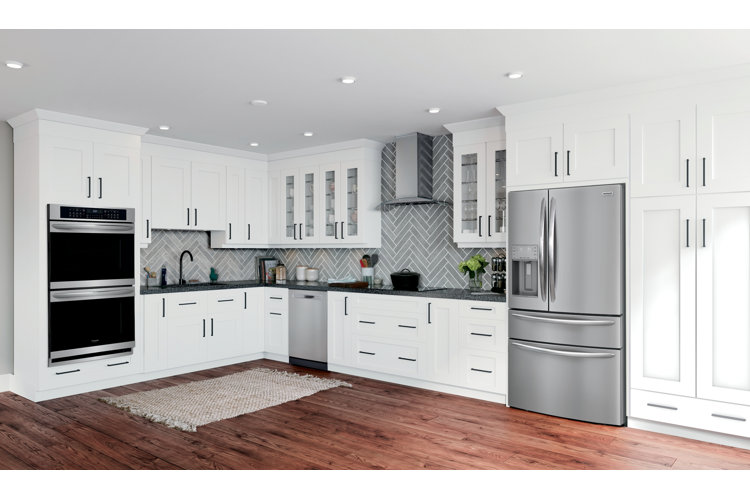
If you're unsure about how to use your oven, you'll be unlikely to try cooking meals for yourself, your family and friends. And home-prepared meals contribute to a healthier lifestyle as well as a warmer, friendlier kitchen. Taking time to learn how to use an oven can help you create the home you want. Get started with these steps.
In this guide:
Understand Your Oven
Preheat Your Oven Before Using
Monitor Your Food While Cooking
Keep Your Oven Clean
Frequently Asked Questions
Understand Your Oven
The first step is to know what type of oven you have and how that affects cooking. For example, a gas-powered oven and an electric-powered oven heat differently, which means that different times, temperatures, and rack positions may be needed.
Electric ovens have heating coils at the top and the bottom, while gas ovens produce heat only from the bottom. If you have a gas oven, you may need to move dishes up higher in the oven to avoid burning the bottom. If you have an electric oven, you can use the broil function to turn off the lower heat when you want to cook only the top of food, such as toasting bread or browning the top of a casserole.
For those who prefer a gas stovetop and an electric oven, the best option is a dual fuel range. Dual fuel means the appliance uses two different types of fuel – gas on the stove and electric in the oven.
Depending on what you're cooking, you may need to reposition the racks in your oven from time to time. Check to see how many different rack positions are available in your oven. Most ovens have at least three rack positions and some have up to seven.
For roasting meat or poultry, you will usually need to place the food on the lowest rack position. To bake larger cuts or meat that includes bones, the rack position should be closer to the middle of your oven. For all-purpose baking, place the rack in the middle of the oven, or if using two racks, place them evenly between the top and bottom of the oven.
Preheat Your Oven Before Using
Unlike a microwave, an oven takes some time to heat to the desired temperature. You will have best results if you allow time for your oven to preheat before putting food in it. Most ovens require about 15 minutes to preheat to 350 degrees.
If you insert food into your oven without preheating, the food will be less likely to cook evenly and you may end up with overcooked or undercooked food.
Monitor Your Food While Cooking
Even if you are following a recipe for cooking time, it's important to check on your food periodically as it cooks in the oven. That's because every oven is slightly different, and your oven may cook faster or slower than the recipe assumes. If a recipe instructs you to bake a dish for 30 minutes or until golden brown, and your dish looks golden brown after 20 or 25 minutes, your oven probably cooks faster. Remove the dish based on monitoring your oven rather than strictly following a general recipe.
Keep Your Oven Clean
Just like other appliances and surfaces in your house, your oven needs to be cleaned regularly in order to stay in tip-top shape. Every time you cook or bake something in your oven, there are likely to be food particles, drippings, sauces or grease left behind. It's a good idea to wipe out your oven with a damp sponge and a little dishwashing soap on a regular basis to remove what's left behind.
At least every three months, undertake a full, deep clean of your oven. Most ovens include a self-cleaning feature to make this task easy. If your oven does not have a self-cleaning feature, clean it thoroughly with a mixture of baking soda and water. After coating the inside of the oven, pour vinegar on the mixture to loosen food particles and debris. Then you can use a sponge to scrub the oven. When finished, use a paper towel to remove any remnants of baking soda, vinegar, or debris.
Frequently Asked Questions
How do gas and electric ovens differ in heating?
Gas ovens produce heat from the bottom, while electric ovens have heating coils at the top and bottom.
Why is preheating the oven important?
Preheating ensures food cooks evenly; without it, food may be overcooked or undercooked.
What should I do if my oven lacks a self-cleaning feature?
Clean it with a mixture of baking soda and water, then use vinegar to loosen debris.
Written by Nancy Mann Jackson
