How to Create a Biophilic Design
Become one with nature.
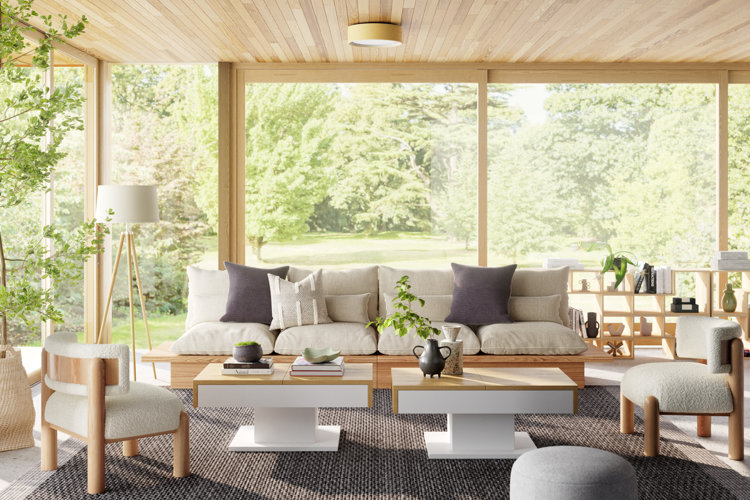
Biophilic design is about incorporating nature into your home to create a relaxing, rejuvenating environment. This guide will plant the seeds of inspiration to help you get started on your biophilic design journey.
In this guide:
What Is Biophilic Design?
How to Bring Biophilic Design to Your Home
Frequently Asked Questions
What Is Biophilic Design?
Biophilic design is a method of architecture and interior decorating that emphasizes natural elements and organic features to promote mindfulness and instill a sense of calm in your home. It’s believed that incorporating biophilic design into buildings can contribute to the productivity and overall wellbeing of the occupants. This comes from “biophilia” – the idea that humans are connected to the natural world and have an innate desire to be close to nature.
How to Bring Biophilic Design to Your Home
1. Surround Yourself With Greenery
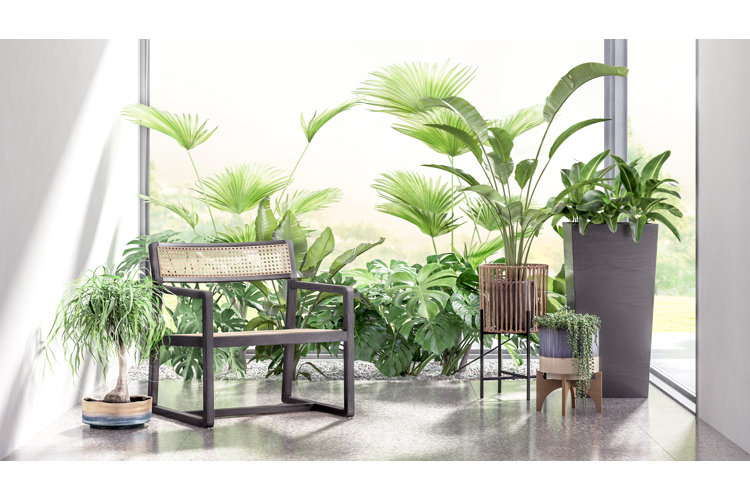
Incorporating houseplants is one of the easiest and most cost-effective ways to bring biophilic design to your home. Research suggests that keeping plants in your home can improve your mood, and many houseplants have air-purifying properties that can contribute to your overall well-being. Other than physical benefits, plants bring an element of nature to your space to create a beautiful and organic environment.
Natural wood brings a relaxed and warm feeling to your home and is often a key element in biophilic design. Consider installing wood wall paneling or flooring for an earthy foundation in your home. For a budget-friendly option, swap in wooden furniture or a rattan chair for an organic accent.
For a cool and grounding element in your biophilic design, incorporate stone fixtures. A concrete bathtub, ceramic pendant light, or carved stone sink will go a long way in adding organic texture to your bathroom. The weight of the material will make the space feel balanced and secure for an ultra-relaxing experience.
Air and light are two important elements to biophilic design. Maximize both by keeping your layout open and your decor minimal. Many biophilic-inspired buildings have floor to ceiling windows to maximize the natural light. If this isn’t in the cards for your home, simply opt for low-profile blinds or sheer curtains so as not to block out the sunlight.
Regardless of the style of your home, incorporating natural elements will help you relax and feel connected to nature. Choose an indoor fountain or a fireplace to introduce elemental features that are so central to biophilic design. Or curate an earth-toned color scheme with a green area rug for a soft, welcoming space.
Abstract and freeform furniture can help a space feel more natural and relaxed compared to the strict structure of many contemporary furniture pieces. Choosing rounded or abstract pieces for your biophilic design will soften the edges in your home to give it an especially cozy feeling. Natural stone patterns also highlight the beautiful imperfections of nature and will bring texture to your space.
Make your home flow seamlessly from the outdoors to the interior with thoughtful and purposeful landscaping. Tall outdoor planters can provide privacy in front of large windows and give you a lush view while you relax inside. Mimic features of your outdoor landscaping in your interior design – like matching tiles to the rocks – to make the space feel connected to nature.
Frequently Asked Questions
What is biophilic design?
Biophilic design is an architectural method that emphasizes natural elements to promote calmness and mindfulness.
How can I incorporate greenery into my home?
Incorporate houseplants, which can improve mood and air quality, to bring nature indoors.
Why use organic wood tones in biophilic design?
Organic wood tones create a relaxed and warm feeling, serving as a key element in biophilic design.
