Ask an Editor: How Do You Match Your Kitchen Table With Your Decor?
Create a seamless space.
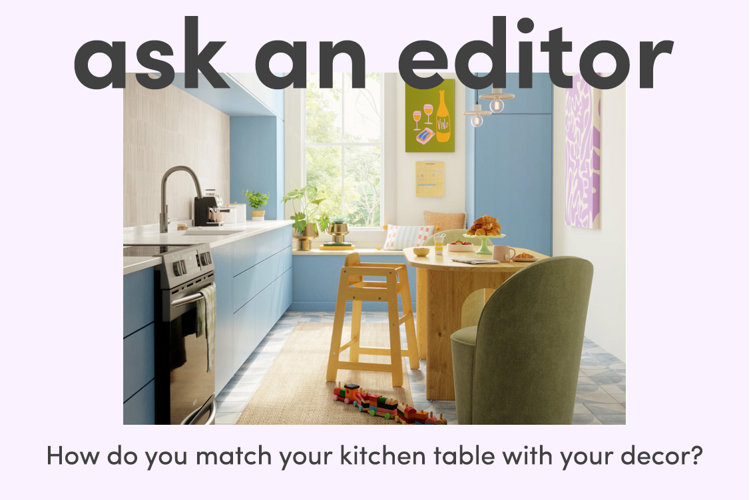
The Reader Question: Open-Concept Dining in a Modern-Rustic Home
Dear Editor,
I’m in the market for a new dining table, but I’m not quite sure where to start. My partner and I recently moved into a home with an open kitchen, dining, and living room layout, so whatever table we choose is going to be a very visible focal point.
Our kitchen has white cabinets and matte black hardware. We haven’t committed to one style exactly, but the rest of our decor leans modern with some rustic and vintage touches mixed in. What kind of dining table actually works with all that? Should I match the wood tone to our floors, or maybe to the wood accents in our living room? Or would contrast look more intentional? I’ve also seen a lot of dining sets where the table and chairs don’t match. I love the idea in theory, but I’m afraid it’ll end up looking chaotic instead of curated.
I really love round tables because they feel cozy and a little more casual, but my partner insists they’re impractical because they don’t fit as many people. I’m trying to find something that feels functional and fits the look of the rest of our home without totally losing my mind. Any advice on how to make the right decision?
Thanks!
- Design-Indecisive
Dear Design-Indecisive,
First of all, congrats on your new place! Furnishing an open-concept home always feels a little daunting, so you’re not alone. The good news is that you have a lot of flexibility when it comes to making design decisions. I’ve put together a comprehensive guide filled with tips to help you narrow down your decision so you can match your new dining table to your decor.
Don’t forget to trust your instincts. Lean into that warm, inviting feeling you’re drawn to and experiment with combining aspects of different interior design styles. You’ve got this!
Sincerely,
Wayfair Editor
Round vs. Rectangular: Which Dining Table Shape Fits Your Space?
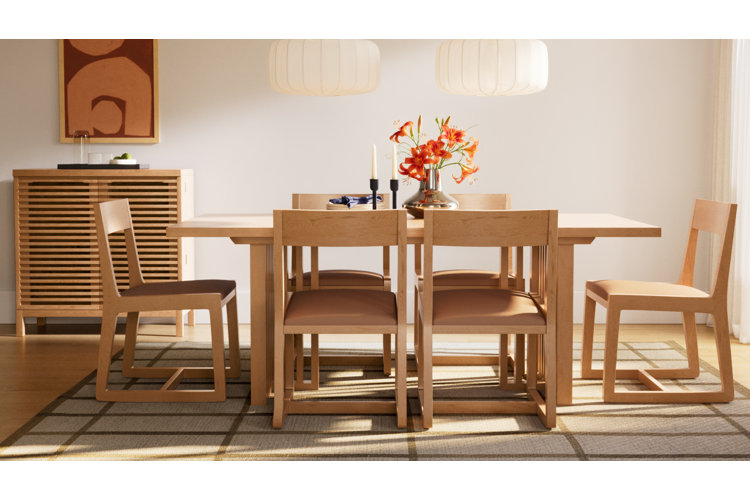
Choosing the right table silhouette is more than just an aesthetic decision – it dictates the spatial flow and layout of an open-concept home. The shape you select will establish a clear boundary between your cooking, dining, and living zones, making this an important decision.
When a Round Table Works Best
Round tables excel at softening sharp visual paths within a home. Because they lack harsh corners, round tables allow for fluid movement, ensuring walkways stay completely clear.
- Casual Conversational Flow: Circular tables naturally position every guest to face one another, removing traditional head-of-table dynamics and creating a cozy, welcoming atmosphere.
- Maximizing Open Floor Plans: A round table softens rigid, linear environments, such as a square kitchen nook or an open layout that sits adjacent to long kitchen islands.
- Small Space Optimization: If you’re styling a smaller dining zone or an apartment, a keeps your floor plan feeling airy and open. Pair a round top with slender wishbone chairs to maintain low-profile clearance and prevent visual clutter.
When to Choose a Rectangular or Extendable Table
Rectangular and extendable dining tables establish a sense of structure and scale, serving as strong linear anchors in larger or multi-zoned floor plans. They’re ideal for defining dedicated dining spaces within broad open-concept areas, providing clear spatial boundaries without blocking light.
- Hosting Large Groups: For large holiday celebrations, dinner parties, or busy family routines, the long surface of a rectangular table accommodates multiple place settings, centerpieces, and serving dishes with ease.
- Zoning Open Floor Plans: A rectangular dining table can run parallel to your kitchen layout or a living room sofa, acting as a functional partition that naturally sections off your dining area from your living space.
- Extendable Versatility: If you love the intimate feel of a smaller table for daily meals but need extra seating capacity for entertaining, an extendable dining table offers the perfect flexible solution. These tables slide open smoothly, growing instantly to match your guest list and sliding back down to preserve daily traffic flow.
Neighborly Tip!
When planning your layout, leave a minimum of 36 to 48 inches between the edge of your table and the nearest wall or cabinet boundary. This ensures your guests can pull chairs back comfortably and walk behind seated diners without interrupting the flow of the room.
How to Match Your Table to White Cabinets & Black Hardware
Designing an open-concept dining area that seamlessly transitions into a kitchen with crisp white cabinetry and matte black hardware is all about striking a deliberate balance between contrast and cohesion. Rather than trying to match every finish perfectly, aim for harmony by introducing textures that warm up your modern foundation while echoing existing accents.
Wood Tone vs. Hardwood Floors
You don’t want the wood grain of your table to perfectly mirror your flooring finish – this can cause your furniture to get lost visually and make the entire room feel flat. Instead, create an intentional layer of depth by choosing a wood tone that is one shade lighter or darker than your hardwood floors.
- Building a Natural Palette: If you have light oak or pine floors, consider anchoring the dining zone with a warm, weathered oak top or a rich chestnut finish.
- Embracing Structural Contrast: For homes with dark espresso or deep charcoal hardwood flooring, opt for a mid-toned honey brown or a natural ash table to draw the eye toward the center of the room.
- Coordinating Undertones: While the darkness of the finishes should vary, keep the temperature consistent. Pair cool-toned flooring with dusty gray or ash wood furniture, and complement warm-toned amber floors with tables featuring rich golden or reddish undertones.
Metal Bases & Mixed Materials
To bridge the gap between your dining furniture and your kitchen’s matte black hardware, look for tables constructed with mixed materials. A wood top dining table paired with a clean, minimalist black metal frame or trestle base instantly enhances the cohesion of an open-concept layout.
- Echoing Kitchen Accents: Bringing the black metal elements out from the kitchen and into the dining area subtly highlights your cabinet pulls, industrial light fixtures, or window trim.
- Softening Industrial Details: If you’re blending modern lines with vintage or rustic touches, select an option like a live-edge slab table featuring an organic, curved silhouette. The soft, natural lines of the wood beautifully balance the rigid, cold feel of black iron or steel support columns.
- Pairing With Seating: Carry this tactile look into your seating choices by selecting dining chairs that showcase matching black metal legs or woven matte frames, anchoring the look without making the configuration feel chaotic.
Mixing Modern, Rustic & Vintage Without Looking Disjointed
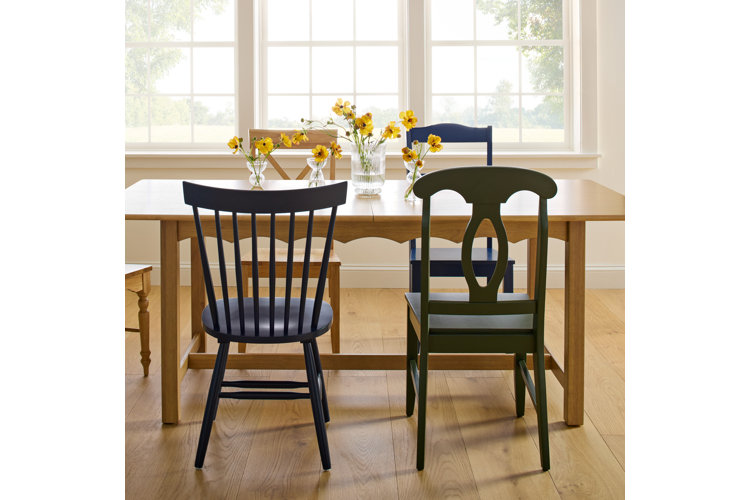
Blending distinct design aesthetics across shared living zones takes a deliberate approach to prevent your layout from looking cluttered. Rather than letting aesthetics compete for attention, focus on creating an intentional balance. By organizing your furniture around collective design principles, you can effortlessly craft an inviting, curated dining space that bridges the gap between old and new.
Consistent Lines & Neutral Palettes
The easiest way to unify modern, rustic, and vintage elements in an open-concept home is through highlighting geometric lines and a clean color palette. Establishing a strong structural foundation allows you to introduce eclectic textures without overwhelming the visual flow of the room.
- Calming Neutral Palettes: Maintain a cohesive environment by relying on cloudlike neutrals, warm ivory tones, and natural wood grain finishes to tie different zones together. For example, a crisp cream area rug
or a neutral linen window treatment can unify a sleek modern kitchen with an adjacent rustic dining setup. - Repeating Accent Details: Build an easy rhythm in your open floor plan by mirroring specific textures through different zones. If your kitchen showcases industrial matte-black cabinet hardware, extend that look into your dining area by selecting an art deco-style light fixture or furniture with matching black metal legs.
Mismatched Dining Chairs Done Right
An intentionally mismatched set of dining chairs is an excellent way to layer vintage charm into a home, but it requires a unifying element to keep it feeling curated rather than accidental. Master this look without your space feeling chaotic by following a consistent structure.
- Consistent Material, Varied Shapes: Keep the core material identical while selecting a range of distinct vintage silhouettes. You can source a beautiful array of mid-century modern and farmhouse-style chairs, but choose them in the same wood tone to establish an immediate visual connection.
- The Anchoring Power of Pairs: When arranging an eclectic seating layout, always work in symmetrical pairs. Place a matching set of upholstered end host chairs at the head and foot of the table to frame your arrangement, then use your varied side chairs along the lengths to give your dining room a polished, intentional finish.
Kitchen Table Decor Ideas to Complete the Look
Once your dining furniture is settled, layering in intentional tabletop accents bridges the gap between everyday utility and elevated style. Decorating an open-concept kitchen or dining table is an opportunity to introduce playful styling choices that echo the surrounding space.
Centerpieces, Runners & Everyday Styling
For an organic, everyday look that handles the hustle of a busy home, center your table with understated decorative accents.
- Textured Table Runners: Anchor your central arrangement with a simple, high-quality linen or textured cotton table runner. Running the textile lengthwise adds a layer of visual warmth against a natural wood dining table and creates an instant boundary for decorative elements.
- Low-Profile Everyday Centerpieces: Keep your everyday centerpiece low to ensure that conversational sight lines stay unobstructed across your open floor plan. A wide, shallow ceramic bowl or a polished marble tray makes an ideal functional anchor for everyday items.
- The Power of Triple Groupings: Following the rule of odd numbers, place a low bowl flanked by a pair of mismatched glass or matte black metallic candleholders
. This simple arrangement mirrors your kitchen's black hardware fixtures without creating an overly symmetrical or stiff environment. - Practical Tableware Accents: Don’t hesitate to use functional pieces as decoration. A striking ceramic pitcher or stacked stoneware plates can double as style-forward table accents when getting ready for routine meals.
Seasonal Updates for Open-Concept Spaces
Because an open-concept dining area remains highly visible from your kitchen and living room zones, updating your tabletop decorations seasonally is the easiest way to give your entire home a refreshed look without swapping your foundational furniture.
- Spring & Summer Freshness: Celebrate warmer months by placing fresh seasonal blooms or simple leafy branches inside a collection of clear glass vases. This infuses a bright, airy coastal energy that coordinates beautifully with clean white cabinetry.
- Autumnal Warmth: As the climate transitions, layer in deep, cozy textures. Swap lightweight runners for woven jute linens, and trade out greenery for organic accents like dried pampas grass, terracotta objects, or rich wood tones that introduce deep dimension.
- Winter Elegance: For festive winter gatherings, construct a cohesive holiday centerpiece by winding fresh evergreen garland along your runner. Weave in warm, battery-powered fairy lights or a series of unscented white taper candles to establish a welcoming glow that encourages family and friends to linger all evening long.
Frequently Asked Questions
Should my kitchen table match my cabinets?
No. Your kitchen table doesn't need to match your cabinets exactly. Instead, aim for a coordinated look by choosing materials, finishes, or colors that complement your cabinetry. For example, a natural wood table can warm up white cabinets, while a black metal base can echo matte black hardware for a cohesive design.
What can I put on my kitchen table to make it look nice?
Keep your kitchen table styled with a few simple, functional accents. A textured table runner, a low-profile centerpiece, decorative candleholders, or a ceramic bowl can add personality without making the table feel cluttered. Swap in seasonal flowers, greenery, or natural decor throughout the year to keep the space feeling fresh.
Does a round table seat fewer people than a rectangular one?
Generally, yes. Rectangular tables typically seat more people because they make better use of their length and can accommodate additional chairs along the sides. However, round tables create a more intimate dining experience and work well in smaller spaces, while extendable round or oval tables offer extra seating when you need it.
You Might Also Like
Shop Kitchen Tables at Wayfair
Updated: July 2026
