Your Go-To Guide to Interior Door Types
Open the door to a world of possibility.
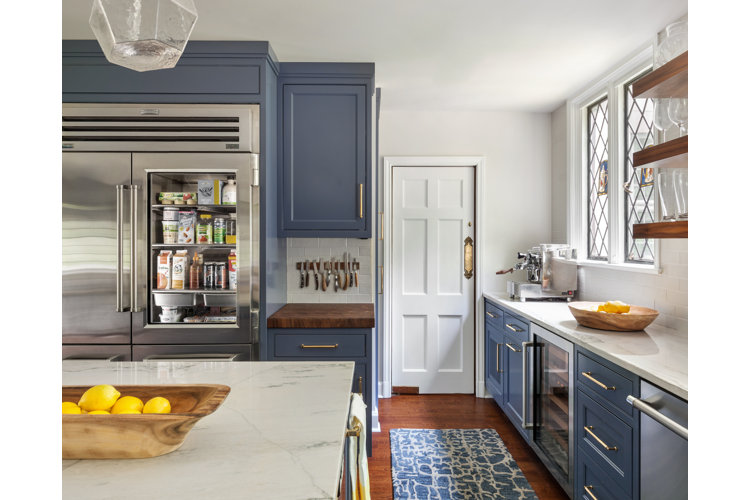
Even though we pass through them every day, most of us probably don't pay much attention to the style of our homes' interior doors. But we should! Interior doors are an essential part of your home's functionality. Choosing the right interior door can make a big difference in the appearance of your interiors as well as improve your ease of mobility throughout your home. Read this guide for a comprehensive look at all the different interior door types, installation options, and styles you can use to change up the look and feel of your home.
Slab
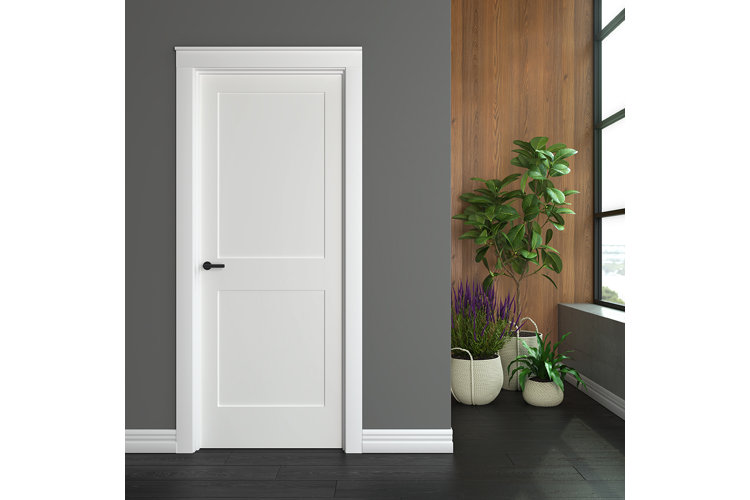
Slab interior doors don't come with pre-attached hinges like prehung doors, and may or may not have a pre-drilled hole for a doorknob. This gives you more control over the types/finishes of hinges and door hardware you go with, as well as the placement of the doorknob (if without a pre-drilled hole spot). Overall slabs are a great budget-friendly choice due to the simple components they come with. Slab doors come in a variety of options and styles, from standard or paneled doors to barn-style doors.
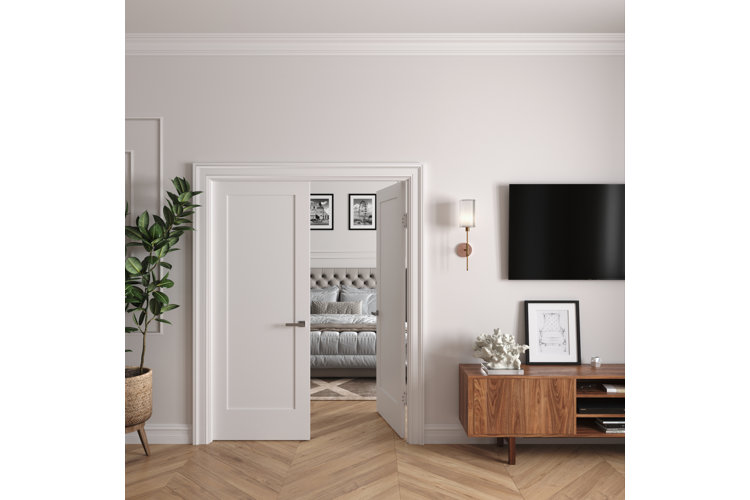
Prehung interior doors come with pre-attached hinges and may already have the doorknob hole drilled or the knob itself installed. Prehung doors come as standard, paneled, French, or hidden door configurations and can have a variety of style features, too. These are super easy door types for interior spaces because they come already assembled. Essentially, prehung doors limit the amount of work you have to do to prep a door for installation. Going with a prehung door also takes away the stress of sourcing hinges and other door hardware. Be sure to review which components a door product comes with by reviewing the product overview on a product's page.
Tip!
Read our guide Prehung vs. Slab Door: What Is the Difference? to find an in-depth comparison between the two types.
Bifold
Traditionally installed over wide, reach-in closets, bifold doors are interior door types that are lightweight and and often louvered (slatted) to allow for airflow, which is essential in preventing a closet from becoming mildewy and smelly. Each bifold panel is made up of two wood planks held together by hinges that allow them to fold together as the door is pulled open. Because they don't swing outward to open, bifold doors are less obtrusive than standard doors.
Instead of swinging open into an interior space, barn doors are impressive panels that come sliding along wall-mounted tracks that run parallel with the wall, making this style accessibility-friendly and excellent for small interiors. Read our guide Buying Barn Doors: How to Choose the Right One to learn more about this stunning door style and its applications.
Sliding interior door types are a sleek, modern alternative to the traditional bifold or accordion-style closet door. These sliding doors can be transparent, semitransparent, opaque, simple, or decorative. Sliding doors are unobtrusive, as they won't fold or swing into your interior. Though most sliding doors trend modern, there are several more traditional options.
French doors are door styles that are inlaid with an array of glass panels that allow an abundance of light to stream through them. French doors usually come in styles that either swing open where they meet or go sliding over each other. They're customarily installed in large interior door frames and hung by hinges, especially ones that open to the outdoors. While beautiful and classic, these doors are a bit more fragile than their solid wood counterparts.
Accordion doors are space-saving interior door options. Typically made out of vinyl and PVC, these lightweight, accordion-style doors are designed to be compressed neatly to one side when open and extended across the entire doorway when closed. Most accordion doors are opaque, which makes them perfect for covering cluttered closets and other unsightly storage spaces.
Hidden doors have a built-in bookshelf on one side for the ultimate secret door vibe. They come in a variety of wood finishes, sizes, and opening orientations, too! These interior doors are perfect entrances into private studies, kids play rooms, or home movie theaters.
With a swinging, wall-mounted design, saloon doors (also known as café doors) have a distinct look. They feature short bi-directional doors that are typically attached in the middle of the doorway, providing less privacy than a traditional door but supplying ample air flow. Saloon doors can add vintage-inspired flair to your space and create visual separation between two spaces.
Tip!
Planning to change our interior doors yourself? Take a look at Replacing an Interior Door: Your How-To Guide to ensure success.
Start browsing for types of interior doors that will fulfill your home.
