How to Store Wine: Our Guide to Choosing the Best Wine Fridge
Keep your wine chilled and ready to enjoy.
Whether you're an avid wine drinker or an occasional indulger, a wine refrigerator will give you peace of mind knowing your bottles are being kept in ideal conditions. Keep reading to find out how to store wine with the help of the right wine fridge.
In this guide:
Select the Right Type of Wine Fridge Type
Pick Your Wine Fridge Size
Choose a Fridge Cooling System
Determine the Number of Temperature Zones
Consider Wine Fridge Features
Frequently Asked Questions
Step 1: Select the Right Type of Wine Fridge
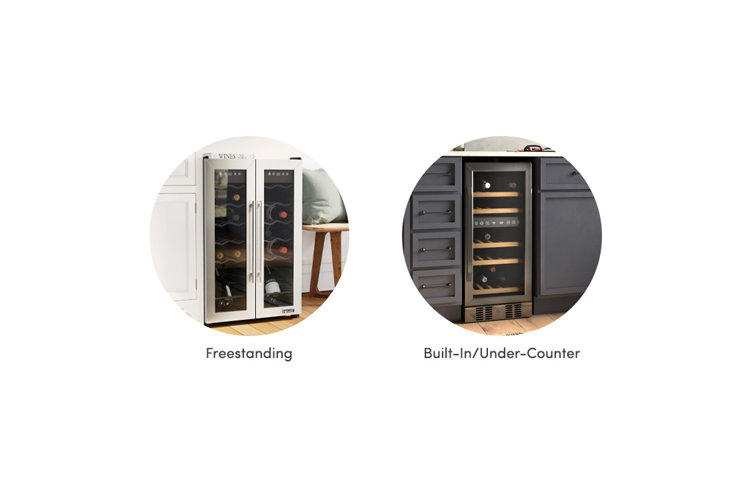
Your ideal wine fridge depends on the space you have and the look you're going for. Check out the differences between freestanding and built-in wine fridges to narrow your search.
Freestanding: A freestanding wine fridge is ideal if you want a straightforward installation or want to place your wine fridge in a room besides the kitchen (as long as there's an outlet nearby). Its portable design allows you to place the refrigerator anywhere and move it easily if needed. Because these appliances have back-facing ventilation, it’s best to keep 1/4" of space between the wall and the back of the fridge to promote proper ventilation and avoid overheating.
Built-In or Under-Counter: A built-in or under-counter wine fridge works best if you want a seamless addition to your kitchen layout. It sits flush with your cabinetry, creating a polished look. Built-in fridges have front ventilation that lets the hot air out of the front instead of the back so you don't have to worry about its proximity to the wall.
Tip!
Wait 24 hours after your wine fridge has been plugged in to reach maximum cooling temperature before you start storing wine.
Step 2: Pick Your Wine Fridge Size
Now that you have an idea of which installation type you want, it's time to get measuring. Use our step-by-step sizing instructions to find the key measurements you’ll need and tips for determining the correct capacity.
Measuring for Your Ideal Wine Fridge Dimensions
Check off each of the steps below to determine the proper height, width, and depth.
1. Measure Entry Points
Before you do anything else, measure the width and height of your front door and interior doorways to make sure your wine fridge will fit through the doors.
2. Measure the Installation Spot
This is an especially important step for built-in or under-counter wine fridges, since the fridge needs to slide between sets of cabinets. As a general rule, leave 1/4" between the sides of the cabinets and the sides of the wine fridge.
For a freestanding wine fridge, measure the width of the space where you want to put the wine fridge. For example, measure from the edge of the cabinet to the doorway if you want to install a freestanding wine fridge in the open spot in your kitchen. Alternatively, measure the available space between furniture in your lounge to determine the maximum width you can afford.
3. Measure the Height for Built-In & Under-Counter Fridges
Measure from the floor to the bottom edge of the above-counter space to ensure that you choose a wine fridge that isn't too tall. Be sure to leave at least 1/4" of space between the counter and the top of the fridge.
4. Measure the Depth of the Installation Spot
To get the depth for built-in and under-counter varieties, measure from the edge of the cabinet to the wall the fridge will rest against to ensure it doesn't jut out among your cabinets. Be sure to leave about 1/4" to 1/2" space from the back side of the fridge to the wall for ventilation. For freestanding models, use furniture or an area rug as a guideline to determine the right depth of the wine fridge – make sure the fridge has enough room to avoid running into any furniture.
5. Measure for the Open Door
This is especially important if installing built-in or under-counter varieties that may be in close proximity to the kitchen island. Measure from the edge of the installation spot to the kitchen island or other potential obstacles to see how wide your wine fridge door should be to easily clear the space.
Choosing the Right Wine Storage Capacity
Most wine fridge sizes base capacity on the standard wine bottle size (750 ml), so any wine bottles larger or smaller than this size will either increase or decrease available storage space. Read below to help narrow down your decision.
Less Than 50 Bottles: These wine refrigerators can fit comfortably under counters or in room corners while still giving you the wine storage you need. This size can hold up to 50 bottles of wine at a time, which is more than enough to stock up before a big celebration or stash fine wines with room to spare.
51–100 Bottles: These wine fridges are typically wider with more shelving space. They can hold 51–100 bottles and are often placed under counters as built-in units.
101–200 Bottles: If you're a wine collector in your spare time, these large wine fridges might be the way to go. They come in tall, narrow configurations and take up less horizontal space – more storage for less room! Just make sure there's enough room to open the fridge door and you're good to go.
201+ Bottles: These wine refrigerators are ideal if you want a wine cellar, but don't have a basement. They can hold 201 wine bottles or more, so this size is a smart investment if you collect wine or host a lot of people frequently.
Tip!
Maximize storage in your wine refrigerator with creative layouts. If you have a set of wine bottles with wider bases and thin tops, you can make sure they all fit by weaving them. Start by placing a wine bottle horizontally with the cork side facing you. Place the next wine bottle on the shelf cork-first, so that the bottom of the wine bottle faces you. Continue this process until you run out of shelf space.
Step 3: Choose a Fridge Cooling System
Wine refrigerators use either compressor or thermoelectric cooling systems to maintain a set temperature. This ensures a uniform distribution of cold air across each wine bottle being stored in order to keep them preserved and flavorful. Most built-in wine refrigerators operate on a compressor cooling system, while freestanding refrigerators tend to use a thermoelectric or compressor cooling system based on their size.
Thermoelectric Cooling Systems
Thermoelectric cooling systems use two metal components to create an electric charge, which in turn creates a heat flux and sucks warmer air out of the fridge. This keeps the interior of the wine fridge consistently cold, no matter how many times you open and close the door.
Pros:
- Thermoelectric cooling systems can come in small sizes due to the small surface area required to draw out heat.
- This cooling system is less expensive than compressor options.
- Thermoelectric cooling systems don't use refrigerants, meaning no harmful chemicals exposed to you or the environment.
- These models don't vibrate like compressor models, making them quieter and better for the aging of your wine.
Cons:
- Thermoelectric systems tend to use more energy because of the electricity required to draw out heat.
- The cooling abilities of thermoelectric systems typically can only reach 30° to 40°F below the surrounding exterior temperature, but if you keep your home within normal temperature ranges like 68° to 72°F, don't fret. This is the ideal temperature range for thermoelectric cooling systems to function properly. Don't place one of these wine refrigerators in areas of your home that don't have air conditioning, like a garage, as it may not be able to maintain a consistently cool temperature as the outside temperature rises.
Tip!
Wine fridges are also specifically designed not to vibrate like normal refrigerators. This is important if you want to naturally age wine without disrupting the chemical process that gives older wines a distinguishable quality.
Compressor Cooling Systems
Compressor cooling systems are the standard type of cooling system used in air conditioning and refrigeration. They keep wine refrigerators at an ideal temperature through a vapor compression cycle. This cycle uses a refrigerant to cycle through four stages (compress, condense, valve, evaporate) to remove hot air from the inside of the refrigerator and reduce the interior temperature.
Pros:
- This system is ideal for cooling larger wine refrigerators because of its efficiency.
- Compressor cooling systems don't use the same amount of energy as thermoelectric units because they can start or stop the cooling process based on interior temperatures.
- You don't have to worry about how exterior temperatures could affect interior temperatures.
Cons:
- Compressor cooling systems are more likely to vibrate and therefore make more noise in comparison to thermoelectric units.
- They use refrigerants, which can potentially harm the environment.
Wine refrigerators come with either single-zone, dual-zone, or triple-zone temperature zones to keep wine cool and at its best. The temperature zone that's best for you depends on your wine drinking preferences. Only a fan of white wine? Or do you like to mix things up with a red wine every now and then? White wine needs to be chilled at 40° to 55°F to maintain its flavor, while red wine likes it a bit warmer, between 55° to 65°F. So does this mean you need two separate wine refrigerators if you plan to store both? Nope! Read below for more info on fridge temperature zone options, so you can choose the style that best suits your drinking preferences.
Single-Zone: A single-zone wine refrigerator is the perfect addition to a kitchen or home bar. It has one main column that maintains one temperature and is ideal for someone who loves either red or white wine.
Dual-Zone: A dual-zone wine refrigerator is for a more serious wine drinker, as it allows you to store both red and white wines comfortably. It enables you to set the temperature for each zone, letting you prolong the life of your wine. Store white wine at a colder temperature and red wine at a warmer temperature. This wine refrigerator is the perfect option for someone who entertains often.
Triple-Zone: A triple-zone wine refrigerator has three different temperature zones, letting you store a variety of wine that requires different temperatures. It is the perfect option for a wine connoisseur.
Wine fridges have a variety of available features, ranging from aesthetic-detailing to flexible storage options to safety considerations to long-term preservation tactics. Check out potential features for your wine fridge below.
Glass Door: Sunlight can cause wine to oxidize, ultimately changing the flavor. A wine fridge with glass doors has glass that is designed to protect wines from harmful ultraviolet rays. The glass door lets you see your wine collection without having to open the door but still keeps your wine insulated and protected.
Integrated Door Lock: Having a wine refrigerator with an integrated door lock lets you store your wine and keep your mind at ease knowing that little hands won’t be able to get in.
Adjustable Racks: Adjustable racks allow you to move the racks inside of the wine fridge, letting you accommodate large bottles of wine.
Anti-Vibration Technology: Anti-vibration technology helps keep your fridge from vibrating, ensuring that your wine does not get disrupted. If your wine refrigerator vibrates, it can alter the chemical structure inside and change the flavor of the wine. Be sure to keep your wine refrigerator away from large devices that could potentially cause a vibration, like a washer or dryer.
Reversible Door: Reversible door hinges allow you to adjust which way your fridge door swings. Adjust the swing of the door to better suit the area where you place your wine fridge. For example, you may need to adjust the door to avoid swinging it into cabinets or you might want to change the orientation after moving your wine fridge to a new location.
French Door: French doors feature two doors which open independently of one another to allow easy access to your bottles. This is especially helpful for fridges with multiple zones.
Humidity Control: A humidity control feature is essential to the preservation of your wine collection. These controls regulate interior temperatures and ensure humidity levels don't exceed 70% or dip below 50%. If humidity reaches more than 70% in a wine refrigerator, there's an increased chance that a wine bottle's label will deteriorate, and there is a potential for mold to form. If humidity goes below 50%, this could affect the wine's flavor or dry out the cork, leading to a reduced amount of wine to drink.
Tip!
Now you have the perfect wine fridge, it's time to get ready to host a party. Read How to Host the Ultimate Wine Tasting Party for all the info you need.
Frequently Asked Questions
What are the key differences between freestanding and built-in wine fridges?
Freestanding wine fridges are portable, have back ventilation, and can be placed anywhere with an outlet. Built-in fridges are integrated into kitchen layouts, with front ventilation for a seamless look.
How should I measure for a built-in wine fridge?
Measure the width, height, and depth of the space, leaving 1/4" of space on all sides for ventilation. Ensure the fridge fits under counters and doesn’t protrude.
What are the advantages of thermoelectric cooling systems?
Thermoelectric systems are quieter, don't use refrigerants, and are less expensive. They are suitable for smaller spaces but require stable ambient temperatures.
