Considerations for Your Kitchen: Nonstick vs. Stainless Steel Cookware
From delicate dishes to serious searing, find out which cookware works best.

Whether you're buying your first set of pots and pans or investing in a singular piece, you will need to decide if you want a nonstick vs. stainless steel version. While there are other material finishes on the market (such as ceramic or copper), nonstick and stainless steel choices are by far the most popular. But there's a reason why both are so beloved by cooks – each works well for specific types of cooking. Once you know how you'll use your cookware, then you can decide if you need nonstick vs. stainless steel.
Stainless Steel Cookware vs. Nonstick: How Do They Compare?
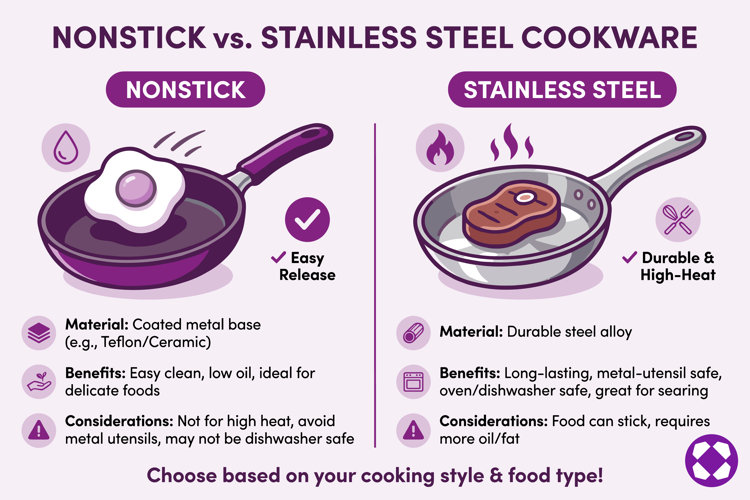
When it comes to choosing stainless steel vs. nonstick cookware, there isn't a right or wrong choice. It's more a question of the types of recipes you'll mostly be using the cookware for that will help you decide.
Material & Coating
The biggest difference between the two types of cookware is the material used in construction.
Stainless Steel: This cookware is made from uncoated stainless steel and does not have any type of coating on it. It's a highly durable material and can take almost any abuse in the kitchen (except for the dishwasher, which is discussed below). Stainless steel is most often made with multiple layers with an aluminum or copper core. If you do choose a stainless steel option, look for a thicker bottom on the pan, which is best for conducting the right amount of even heat.
Nonstick: These pans simply feature a nonstick coating (often under a brand name) wrapped around layers of aluminum, ceramic, or stainless steel. The nonstick surface is designed to release the food easily and keep it from sticking. Over time, this nonstick coating can wear off though, which is why nonstick pans are sometimes a less durable option compared to stainless steel. Picking a higher quality nonstick pan can help extend the life of the coating and avoid "shocking" it by going from cold to hot temperatures too quickly.
Stainless steel cookware is ideal for high-temperature cooking since there is no coating to interfere with the temperature or durability. This type of cookware can transfer from your cooktop to the oven with ease, making it a better choice for stovetop-to-oven recipes like pan-roasted pork chops or steaks. If you ever need to sear food, then stainless steel is the best option. You can also achieve great browning results with stainless steel.
Nonstick cookware is ideal for the more delicate recipes you need to stay intact. Think of eggs, fish, crepes, and pancakes, or anything else that would be disastrous from sticking. This coating is sensitive to high temperatures though, so your nonstick pans will likely not transfer to the oven as well as the stainless steel options.
For years there has been discussion around the safety concerns of nonstick cookware. In years past, there was a link to health and environment risks with use of the chemical PFOA in the nonstick coating. Since 2013, manufacturers of nonstick coatings have phased out the use of this particular chemical. There are also warnings about using nonstick pans above 500 degrees, which can release a toxin into food. By avoiding these high temperatures and opting for a non-toxic pan, you can avoid the potentially harmful chemical release.
Stainless steel cookware does not have the added chemical coating to it but there are safety concerns regarding the temperature. A handle constructed of stainless steel could be too hot to handle, making it dangerous for the household. Look for stainless steel cookware featuring a cool touch handle to avoid this issue.
When it comes to washing, the stainless steel vs. nonstick debate ends in a toss up. Most manufacturers of stainless steel pots and pans do not recommend placing them in the dishwasher for cleaning, and instead recommend hand washing. Over time, using the dishwasher could cause corrosion to the material, water spots that can't come out, and generally dull the finish.
Nonstick pans don't fare much better in the dishwasher either. The manufacturers of the actual coating material will generally tell you it's safe to put them in the dishwasher, but this only applies to the coating. It's the material the coating is covering – such as aluminum – that is not recommended for the dishwasher. You're better off hand washing either stainless steel or nonstick cookware to maintain the finish and extend the life.
Are you ready to stock your kitchen or find the one essential pan you can't cook without? Check out these options for the best nonstick vs. stainless steel cookware options.
Written by Sara Coleman
