Playground Equipment Buying Guide
Learn about the different kinds of playground equipment, safety concerns, and what you’ll need for installation.
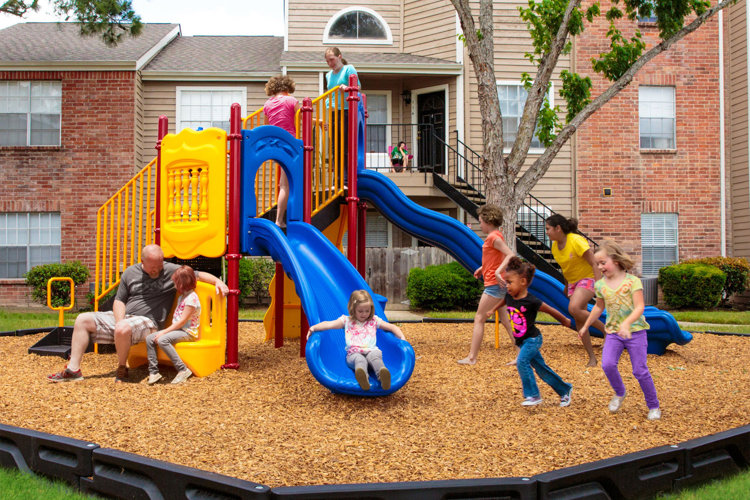
The playground is an important feature for schools, parks, daycare facilities, and businesses. These structures are a safe place for children to play, while developing gross motor skills, balance, strength, and imagination. Here are some things to consider before purchasing playground equipment:
• Location
• Scale
• Budget
• Finding an Installer
• Safety Considerations
• Installation
• Maintenance
Location
Decide where the play structure should be located; in the shade, close to the building, in a fenced-in area, etc. Flat areas are best so that the structure will be level once installed. Also look for a space with good drainage to prevent water from collecting in and around the structure which may interfere with the stability of the equipment. Avoid locations with hard surfaces—in the inevitable case of a fall materials such as asphalt and concrete may cause injury.
Scale
There should be at least 8 feet of open space surrounding the structure on all sides allowing enough room to run, play, and use equipment safely. Check product descriptions carefully to make sure the model you select is a good fit for your space. Consider the age of the children who will be using the equipment when deciding on the proper scale. Here is a breakdown of what to look for:
5 and Under
• Look for plastic equipment, it has softer corners and surfaces
• Platforms should be no more than 4 feet tall
• Swings with high backs, front supports, and buckles or straps
• Themes, playhouses, and mobile parts encourage imaginative play
• Slides with a gentle slope, specifically spiral or 5 feet or shorter in length
• Ladders and stairs should be single file, and have five steps or less
• Balance beams and toys
5 to 9
• Platforms up to 7 feet tall
• Swing sets and U-shaped seats
• Slides ranging from 7 to 9 feet long
• Vertical, arch, and horizontal climbers and rock walls
9 and Up
• Rope and chain climbers on angles challenge older children
• Climbing pieces
• Horizontal bars match the physical ability of older children
• Tire swings
• Slides and sliding poles
Budget
Playground structures come in a large price range depending on size, material, and play features. Small budget-conscious institutions like daycares spend on average between $2-4.5k while larger public institutions spend between $10-30k. You will also need to budget for additional products for installation including ground anchors and protective surfacing material.
Finding An Installer
Finding a certified professional to come and install your playground will ensure a safe play place. We suggest you seek a professional before making your purchase so you have the opportunity to consult them about ground anchors, surfacing material, and what to expect from them during installation. This will save you time and energy later on.
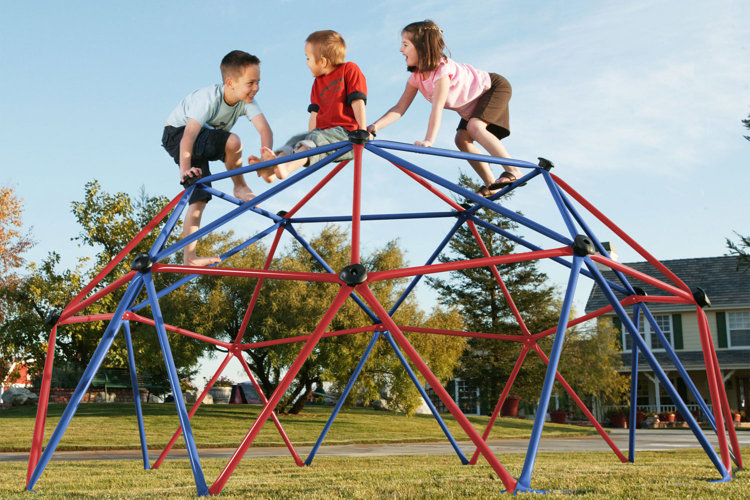
https://www.wayfair.com/school-furniture-and-supplies/pdp/lifetime-climber-lxt1010.html
Safety Considerations
It is important to carefully consider the safety of the children who will be using your playground. The material that the playground is made of and the ground cover material are important factors that contribute to the overall safety.
Keep In Mind
• Falling off playground equipment is the leading cause of playground accidents.
• Accidents can also occur because a child is playing on a structure that is not appropriate for their age and size.
• Climbers pose the highest risk of falling off equipment.
Material Types
The weather can have a negative impact on the materials so be sure to consider your environment before selecting your material option.
• Wood : Pressure-treated to last longer, wood is a durable and cost-effective option. It is recommended for areas with a dry climate, as wood is susceptible to rot and mildew. Some varieties need to be re-stained once a year.
• Metal : Built to last, metal playgrounds are durable in dry conditions but can get hot and burn exposed skin in the summer months. Opt for treated galvanized steel which is less susceptible to rusting.
• Plastic : Perhaps the most durable choice, as it will withstand most weather and climate conditions. However, plastic playgrounds are the least sustainable choice due to the difficulty in recycling this material.
Material Features
Many playgrounds are now reinforced to keep them in shape. Look for these key elements to ensure longevity of the equipment and safety of the children:
• Weather resistant: stands up in severe weather conditions, such as snow and heat
• UV resistant: UV radiation can damage the material making it brittle
• Mildew resistant: in areas with significant rain fall, porous materials can start to form mildew
• Chip resistant: prevents surface damage
Tip! Look for eco-friendly options, such as recycled plastics, which are durable, safe for kids, and have minimal impact on the environment. Shredded rubber, made from used tires, is an earth-friendly mulch option.
Protective Ground Cover Materials
There are two types of surfacing materials:
Unitary
• Unitary surfacing materials include rubber mats and tiles.
• They are best used under equipment like see-saws and merry-go-rounds.
• Dark colored rubber tiles can heat up easily.
Loose-Fill
• Loose-fill materials include wood-chips and rubber mulch.
• They are filled into a contained space.
• They are best used on slide exits and monkey bar landings.
State Laws, Regulations, and Certifications
According to the National Program for Playground Safety (NPPS), there are 16 states that have regulations in place to address playground safety. Other states have adopted a number of standards from the U.S. Consumer Product Safety Commission or ASTM international. Although the NPPS has only noted these 16 states, the prevalence of playground fatalities has made playground safety legislation a priority for lawmakers nationwide. Before purchasing, you should check for local regulations.
In addition to ensuring that the equipment is age appropriate for the children using it, look for these certifications to ensure the highest level of safety:
• CSA Certified: Products that have been certified by American National Standards Institute (ANSI), Underwriters Laboratories (UL), CSA Group, NSP International, and other organizations for safety.
• CPSIA or CPSC Compliant: The Consumer Product Safety Improvement Act and Consumer Product Safety Commission both regulate that products comply with children's product safety rules, are tested by a CPSC-accepted laboratory, and have permanent tracking information. These rules include the ban of toxic chemicals and substances.
• ASTMCompliant: The American Society for Testing and Materials is a global leader in developing consensus standards to increase product and consumer safety.
Read The US Consumer Product Safety Commission's Public Playground Safety Guide to learn more.
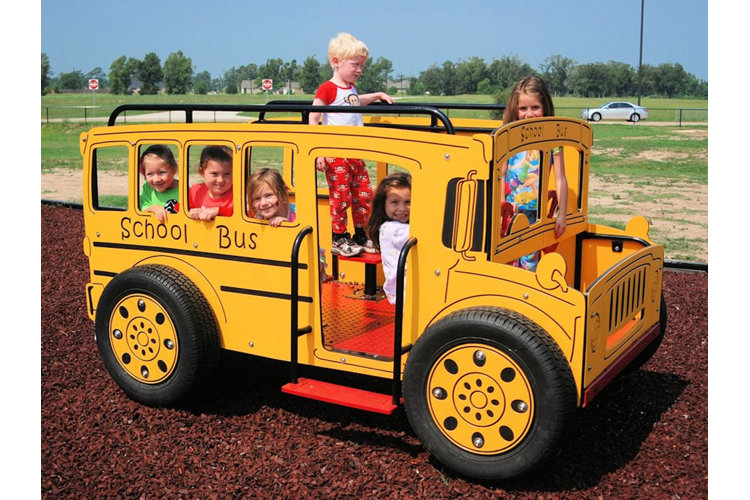
https://www.wayfair.com/school-furniture-and-supplies/pdp/kidvision-school-bus-ktps1114.html
Installation
Although it is possible to install a playground by yourself, we do not advise it. Hiring a professional playground installer will guarantee a swift installation and a safe playing experience for your children. Professional playground installers with certifications from reputable organizations such as the CPSI and NPCAL are preferred.
Protective Surface Materials Installation
Unitary surfacing materials are secured by a pour-in binder that is cured to form a unitary shock-absorbing surface that won’t move around. If you’re planning on using a unitary surface material as the protective surface of your playground, be sure to request data from ASTM (The American Section of the International Association for Testing Material) that identifies the critical heights to make sure you are buying the right products.
Loose fill protective surfaces should only be used in a bordered area. The area should also have good drainage to prevent rot or other water issues. Because loose-fill compresses over time, it is also advisable to buy extra loose-fill to top-off when needed.
Ground Anchors
Ground anchors keep equipment fastened to the ground, ensuring the safety of children playing on it. These anchors are secured to the ground with cement to keep the playset steady at all times.
Maintenance
The materials that playgrounds are made of can be treated to last longer in comparison to their natural state. However, there are still limitations to a structure’s longevity. Wear and tear will still occur and it is important to inspect your purchased structure regularly to keep the set safe to use. Issues to look for include loose bolts and screws, cracks in wood and plastic equipment, insect damage, and rusted or rotting parts.
Should you need assistance anytime between the point of purchase and delivery, do contact your Wayfair Business Account Manager.

