How to Choose a Rug
Find the best option for your space.
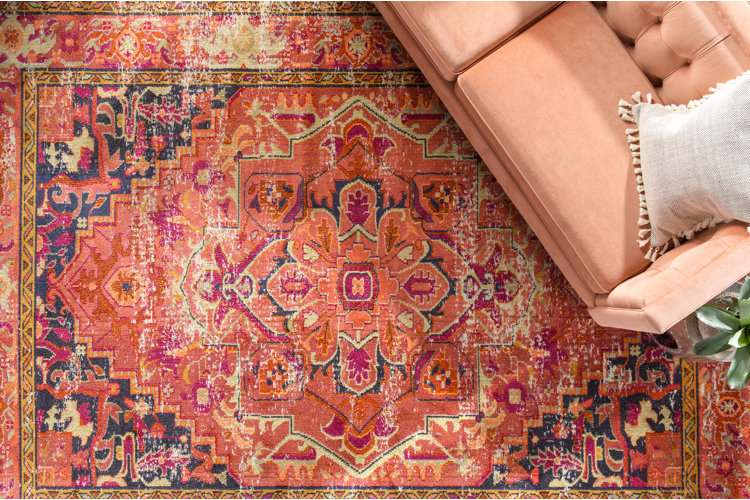
Choosing an area rug can be overwhelming with so many rug styles available, but we’re here to help. This guide should answer your questions about how to choose an area rug and help you find the size, quality, and style of rug that’s the best fit for your indoor space.
For information about choosing an outdoor rug, check out our guide on How to Choose the Right Outdoor Rug.
What Size Area Rug to Choose
The size of your space and furniture layout are the two main considerations when choosing a rug size. If you’re unsure or between sizes, err on the larger side for a final look that feels thoughtful instead of haphazard.
Standard small area rug sizes are 2’ x 3’, 3’ x 5’, 4’ x 6’, and 5’ x 8’.
Medium sizes are 6’ x 9’, 7’ x 9’, and 8’ x 10’.
Large rugs can be found at 9’ x 12’, 10’ x 14’, and 12’ x 15’.
Round or square rugs are available with diameters from 3’ to 10’. Novelty rugs including animal hide rugs come in many shapes and sizes.
Runners are long rectangular rugs that typically have a width of 2’ – 3’ and range in length from 4’ to 10’+.
For a more detailed look at area rug sizing, check out our guide on How to Choose the Right Rug Size
What Area Rug Qualities Are Best?
A rug’s material, make, and pile height (thickness) determine its durability, washability, and vibrance. To find the rug that’s right for you, think about the qualities you value most.
For an in-depth rundown of all the different types of area rug, check out our guide on How to Choose the Right Rug Material.
Holds up to High Traffic
Rugs are made to be walked on, but some are better for it than others.
Material
- Wool
- Sisal
- Bamboo Slat and Seagrass
- Hemp
- Polypropylene/Olefin
Make
- Hand-Knotted
- Tufted
- Looped/Hooked
- Flatweave
Pile Height
- Flat
- Medium (on the flatter side)
The most durable rug options are handmade, especially hand-knotted or flat weave wool, sisal, bamboo slat, seagrass, hemp, and polypropylene/olefin rugs that are either flat pile or medium-flat pile. Hand-knotted wool rugs can last long enough to be passed down through generations.
Avoid: Over time, shag or high-pile rugs will flatten underfoot, especially synthetics. Silk and viscose rugs are too delicate to stand up to wear.
Feels Luxurious Underfoot
Soft rugs can add comfort as well as style to your floors.
Material
- Wool
- Cotton/Chenille
- Silk
- Microfiber
- Viscose
- Faux fur
Make
- Tufted
- Looped/Hooked
Pile Height
- Medium (on the thicker side)
- Thick
- Shag
- High-Low
The softest natural rug materials are silk, wool, and cotton or cotton chenille. Viscose feels similar to silk. Faux fur feels as soft as real animal fur. Tufted and looped/hooked rugs are plushest. Thicker piles will feel comfier underfoot, but soft flat piles include silk, viscose, and microfiber rugs (usually made of polyester).
Avoid: Braided rugs or rugs made of natural fibers like jute, sisal, bamboo, seagrass, hemp, and some synthetic fibers can feel more rough and firm than soft and cozy.
Stands up to Stains
Messes and spills happen. For these rugs, they’re no big deal.
Material
- Wool
- Cotton
- Bamboo Slat and Seagrass
- Polypropylene/Olefin
- Polyester
Make
- Flatweave
Pile Height
- Flat Pile
Cotton and synthetic materials can often be machine washed. Wool, polypropylene/olefin, and polyester are mostly stain resistant. Bamboo slat and seagrass rugs resist stains and are easy to wipe down. Low-pile and flat woven rugs are the easiest to spot treat and clean because they retain less water than thicker piles.
Avoid: Jute and sisal can irreversibly stain. Silk, viscose, and faux furs stain easily and are difficult to clean. Animal hide rugs require careful maintenance to remain in good, clean condition.
Can Handle Humidity
Excessive moisture in the air can be a killer to some rugs, but not these.
Material
- Polypropylene/Olefin
- Polyester
- Nylon
- Bamboo Slat and Seagrass
Make
- Flatweave
Pile Height
- Flat pile
- Medium pile (on the flatter side)
Many synthetics are designated as indoor/outdoor rugs for their ability to handle moisture and repel mildew. Tight, flat weaves and lower piles are less absorbent than thicker makes.
Avoid: Wool, Silk, jute, and sisal can all be mildew-prone in moist conditions. Higher piles and thicker constructions will absorb humidity.
Makes a Statement
A bright rug can bring a minimally designed room to life.
Material
- Wool
- Cotton
- Silk
- Polypropylene/Olefin
- Polyester
- Nylon
- Viscose
- Sheepskin
- Cowhide
Make
- Power Loom
- Hand-Knotted
- Flatweave
Pile Height
- High-low
Wool, cotton, silk, polypropylene/olefin, polyester, nylon and viscose can all be brightly dyed. Synthetic fibers are fade-resistant in sunlight. Sheepskin and cowhide rugs’ natural patterns are gorgeous and eclectic. Power loom and hand-knotted styles including Oriental and Persian rugs as well as flat woven rugs including kilim and dhurrie styles are vivid and intricate. High-low pile rugs are uniquely textured.
Avoid: Natural fibers like jute, sisal, bamboo slat, seagrass, and hemp don’t dye well and thus can typically only be found in limited designs and solid earth tones.
How to Style an Area Rug
Choosing a rug is a matter of taste, but if you’re not sure how to style yours, here are some ideas.
Neutral Room, Statement Rug
Consider a high-contrast pattern or thick pile in a more neutral room. Shags, bold geometric prints, Orientals, and Persians can be the star of the show.
Neutral Room, Quiet Rug
Monochromatic rooms can also benefit from a rug with the same color palette that features a subtle pattern or texture. Neutral flat weaves and natural fiber rugs like jute, sisal, seagrass, and hemp are great options.
Bold Room, Quiet Rug
A solid, neutral-color or natural-fiber rug won’t take away from a bold design. A solid rug in the secondary color of your room’s palette will contribute to a cohesive look.
Bold Room, Statement Rug
If you have a dramatic style, go all in with the rug you love. Bright, large patterns and thicker piles tend to be the most eye-catching styles.
Not Sure?
That’s OK! Stick with the standbys: stripes, solid color, or neutral natural fiber rugs. Think of it as a starter rug, and look for simple, more affordable options.
Tip!
Layering rugs is a great way to elevate a room’s design. If your room allows it, experiment! Mix and match shapes, sizes, thicknesses, and patterns for a look unique to your space.
How to Care for an Area Rug
For tips on how to clean your area rug, read our guide.
