Dry-Erase Boards Buying Guide
Dry-erase boards are offered in a variety of materials, sizes, and shapes. That's why we created a guide to assist you in selecting the right board for your space.
Dry-erase boards today are designed to serve many purposes and are offered in a variety of materials, sizes, and shapes for nearly any application in schools, offices, healthcare facilities, and more. Wayfair Professional has created a guide to assist you in selecting the right board for your space.
The first question to ask when choosing a board is “How will this board be used?” How you plan to use it and the space you have available will impact the type, material, size, and style of board that will best meet your needs.
Board Types:
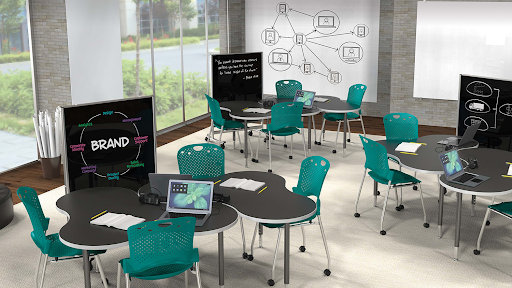
Wall-Mounted Boards: These boards come with hanging brackets or clips that can be mounted to the wall for efficient use of space. (Make sure to closely follow mounting instructions to maximize the lifetime of your board.)
Freestanding/Mobile Boards: Lightweight boards that feature locking casters provide flexibility for your environment and offer a great surface for writing when wall space is limited. These boards are sometimes reversible to maximize the writing surface.
Partition Boards: These are used to divide, organize, or customize a space. Larger-format mobile boards can be joined together to create mobile or temporary walls.
Other Boards: Other board types include chalkboards, bulletin boards, easels, and more.
Board Materials:
Glass Boards: The newest and most trending board material offers a sleek and sophisticated look to a space and is easy to use and clean. Glass boards are resistant to “ghosting” (when writing does not fully erase) since they are made of a nonporous material, making them a great long-term solution to any space.
Melamine: These boards are generally made from a lighter-weight and lower-cost plastic material that is well suited for infrequent use, and they are less susceptible to ghosting over time. Melamine boards are typically made with steel backing, which makes them magnetic, so they are good options for showcasing projects or other content.
High-Pressure Laminate: These boards are made with a medium-density fiberboard (MDF) backing and are coated with a nonporous, high-pressure laminate surface. These boards are typically considered to be good value and quality as they are very durable and are generally lower priced than more premium glass boards.
Board Size:
Dry-erase boards come in a variety of sizes so you should have no trouble finding a board that fits your space. We recommend measuring the space where you are planning to use your board to help inform the size that you need. If you are considering a larger wall-mounted board, you may want to look for a thicker material (~¼” vs. ~⅛”) to provide the sturdiest writing surface.
Today’s boards incorporate a variety of design elements to help you achieve the perfect look and function for your space:
Colors: Traditionally, dry-erase boards were only offered in white. Today, however, you can choose from a number of different brightly colored options for your space. This is a great way to add a pop of color to your learning or working area.
Graphic Boards: Some boards come with imprinted graphics to add functionality for specific purposes or areas.
Visible Hardware: Boards today offer a number of designs such as frameless or those with hidden marker trays and other features to help create a clean, modern look for your space.
Magnetic: Magnetic boards offer additional versatility and interaction to assist in lessons or demonstrations.
Looking for something different? Check out our interactive boards to incorporate more technology into your space or our projection boards and equipment.
