Cafeteria Tables Buying Guide
In order to find cafeteria tables that are suitable for all your needs, there are many choices and features to consider.
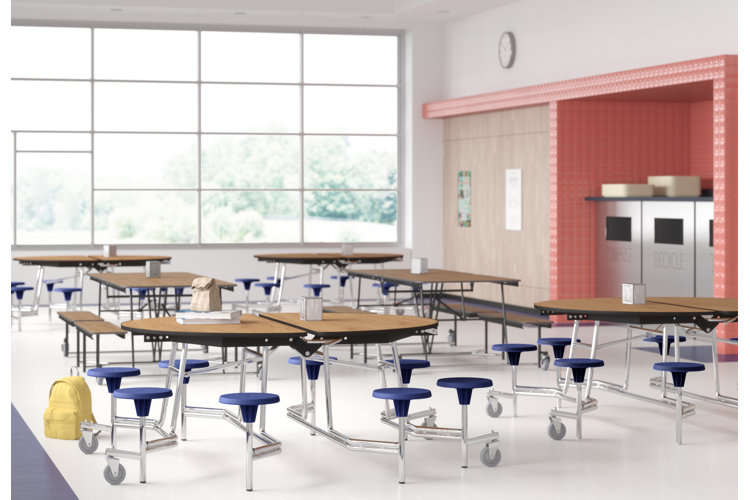
Today’s cafeteria spaces are more dynamic than previous school lunchroom spaces, often acting as multipurpose areas that foster a sense of community. In order to find tables that are suitable for all your needs, there are many choices and features to consider.
Cafeteria Layout
The size and layout of the cafeteria space will determine how many tables can fit. For comfort and safety, tables should have a minimum of 48” between each other and should not impede access to any doors or other exits. Round or other non-rectangular tables generally require additional space to accommodate their shape.
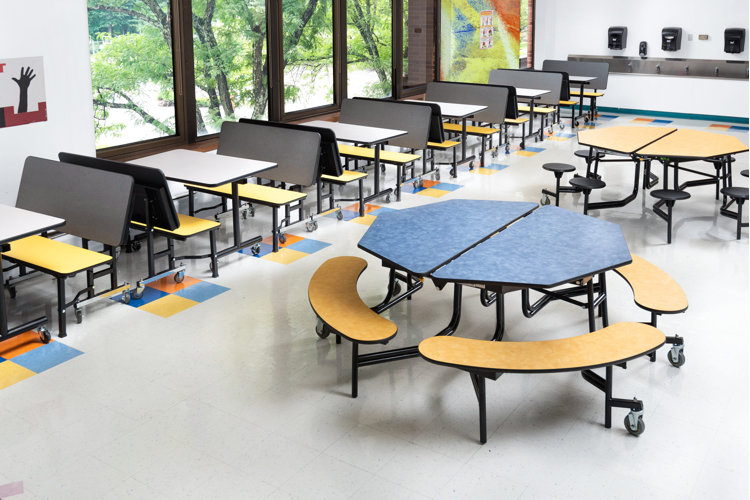
Table Shape & Size
Cafeteria tables come in a variety of shapes to help achieve particular looks and environments. Here are some common shapes and sizes:
Rectangle: The most common shape of table, rectangular cafeteria tables are typically the most space efficient options, allowing multiple people to sit together at once and can be efficiently placed alongside other rectangular tables. Traditionally, rectangular cafeteria tables come in lengths of either 8-feet, 10-feet, or 12-feet.
Round: Another common shape, round cafeterias help foster conversation and community.
Elliptical: Less common are Elliptical shapes; however, these are a nice option to help create an environment that appears less like a conventional cafeteria.
Table Height: Most cafeteria tables come in either a 27” or 29” height, with either 17” or 15” high stools or benches, respectively.
ADA Compliant Tables: Specifically designed with extended lips and appropriate sizes to be comfortably accessed by those who use require mobility support.
Mobility
Folding: To support dynamic spaces, cafeteria tables typically have a folding feature to help store them against a cafeteria wall or in another space. Folding tables will usually include a locking or safety feature to prevent injury while moving or storing.
Casters: Due to their size and weight, cafeteria tables often feature casters to support easy movement.
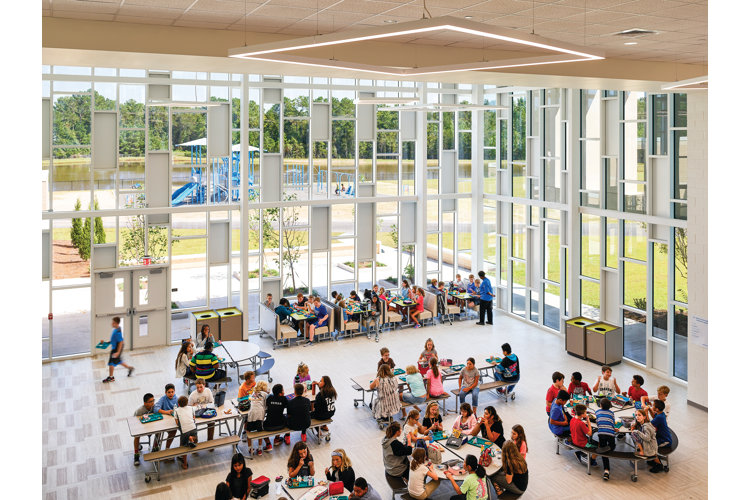
Table Configurations
Convertible: For tables that will have multiple use types or serve multiple purposes, convertible tables can convert into a bench with a backrest. These tables can be easily stored and can be used as training tables or activity tables, and can be used with other convertible tables to make a small cafeteria table.
Bench Seating: Offers more flexibility for capacity than Stool Seating as users can adjust space between each other to accommodate additional people. A table with a 97” length can typically seat 8-12, a 121” table can sit 10-14 and a 145” table can sit 12-16 people.
Stool Seating: Generally easier to get in and out of than Bench Seating tables and allow for more personal space for users.
Tables Without Seating: Cafeteria tables without attached seating (sometimes called shape tables) are used when additional mobility and flexibility is required.
Material and Finish
In order to stand up to a lot of use and transport, cafeteria tables are generally constructed from high strength materials including particleboard, steel, epoxy, vinyl, and plastic. Particleboard surfacing is the most common due to its lightweight and sturdy design; however, plywood can be used as a more durable alternative. Table edges are typically either vinyl or spray-on epoxy, with epoxy generally offering more durability, tighter sealing, and greater resistance to chipping.
Particleboard is standard for most cafeteria tables. It's low-cost, lightweight and sturdy, so it's a great choice if you frequently move tables around. If durability is top-of-mind, you'll probably want to consider a plywood or MDF top. They are generally more expensive but are stronger and will hold up longer under heavy use. It also resists water and retains strength in high humidity. Almost all cafeteria table tops, whether particleboard or plywood, have a high-pressure laminate surface to make cleaning easier.
Edging is generally offered in either a vinyl mold that is glued onto the table or an epoxy spray. Vinyl mold is a lower price point option, but is susceptible to being picked at by users of the table. Epoxy spray-on is generally used as an alternative for a more seamless edging.
Table legs and frame are most commonly offered in chrome or powder coat. Chrome options are traditionally seen as higher design value; however, powder coat can offer a lower cost option that can avoid showing scuffs from use.
If you have any questions about cafeteria tables sold on Wayfair Professional, contact your Business Account Manager.
