Using a Japanese-Style Knife
Japanese-Style knives are crafted to be durable and precise to bring out the best quality in foods.
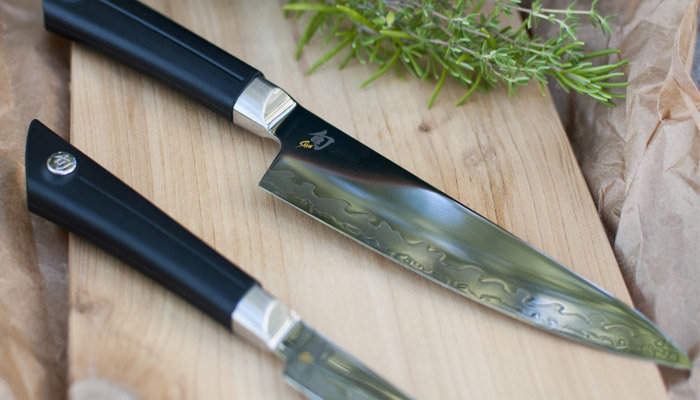
Japanese knives are styled after ancient swordmaking techniques that have been passed down through masters and apprentices for hundreds of years. These knives are equal parts utility and pieces of art, as Shun artisans take more than 100 handcrafted steps to create each knife. This ancient craft, combined with the best quality materials, and newest technology make it no surprise that many elite chefs choose Shun knives for their kitchens.
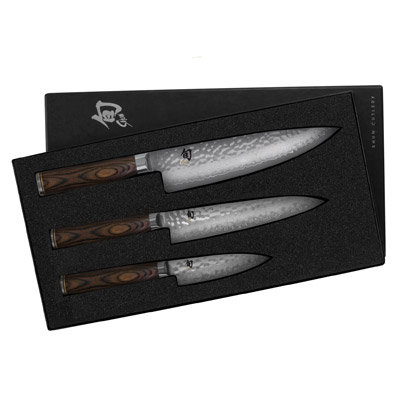
In Japanese, Shun (pronounced shoon) means "at the peak of perfection".
From the sweetest fruits to the freshest vegetables, Shun's quality and craftsmanship help you to enjoy foods at their best. The incredibly sharp edge of the Shun knife helps to preserve the texture and colors of foods while creating effortless cuts. (A less sharp knife can damage food and make jagged cuts.)
Japanese-style knives are made of high-grade steel and, with proper care, are very durable. Shun knives offer the perfect tools for any culinary challenge. Find out more information about these knives in our Shun Cutlery Collection Guide.
Shun knives are constructed with the finest steels that are made exclusively for cutlery and preferred by the artisans who have been making them for hundreds of years. Read all about how each style knife is hand-crafted here.
While there are only about 20 various German-style knives, there are roughly 200 varieties of Japanese-style knives, which are all uniquely designed for both general and very specific purposes. For example, the Japanese-style chef's knife (Gyuto) is a general utility tool that is handy for all kinds of prep work, where other Japanese-style knives are available for prepping specific foods.
Here are just a few of the most popular Japanese-style knives:
- Deba for processing fish and poultry
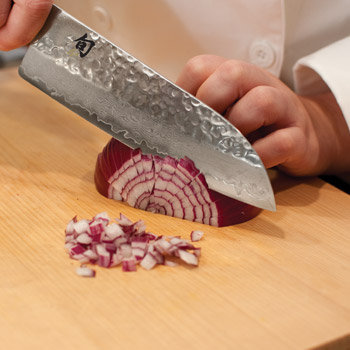
- Santoku (meaning "three virtues") for fish, meat, and vegetables
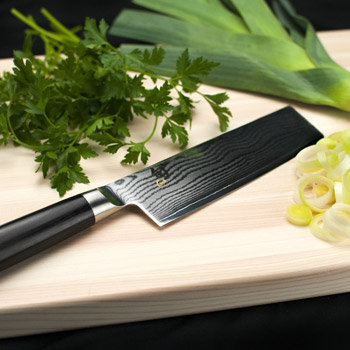
- Nakiri or Usuba for chopping vegetables
- Yanagiba for slicing sashimi
Benefits of using a Japanese-Style Knife:
- Edge stays sharper longer than other knives
- Needs to be sharpened less
- Smaller angle blade for precise cutting
- Made of harder, thinner steel
- Durable and long-lasting, many are family heirlooms
- Easy to handle when cutting
- Lightweight and balanced
- Hand-crafted by highly skilled artisans
- Chosen by many profressional chefs
What is the difference between Japanese- and German-style knives?
Japanese style knives are made of a lighter, harder steel. This allows the knife to have a thinner and sharper edge, which makes for more fine and precise cuts. Shun knives have a 16 degree angle on each side of the blade. German- and Western-style knives tend to be heavier with a wider cutting angle (20-25 degrees on each side of the blade). These styles require a bit more muscle to chop and cut foods. The steel used is often tougher but softer than Japanese-style knives. This other type of steel can dull faster, and therefore may require more maintenance.
Article Sponsored By: Shun
