How to Care for Nonstick Cookware
Learn how to care for your nonstick pots and pans to keep you cooking for years.
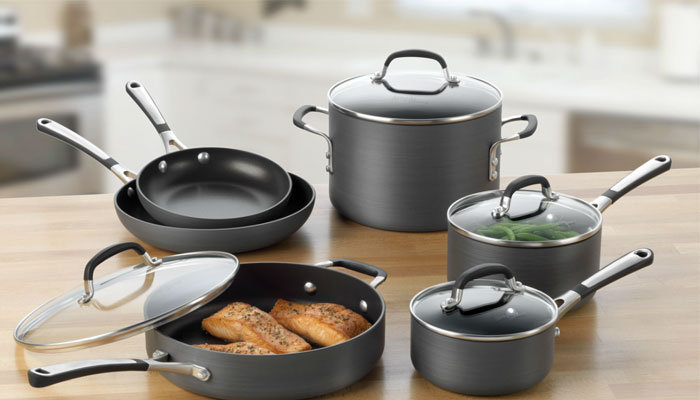
Cleaning and Care
- Always allow your pans to cool completely before washing. Immersing hot pans in cold water can cause warping and permanent damage.
- Nonstick cookware is not dishwasher safe. Never use an automatic dishwasher or abrasive scrubbing pads or cleansers on your nonstick cookware; these will damage the nonstick coating and can void your warranty.
- To clean food debris and residue from the inside of a nonstick pan use liquid dishwashing soap and a non-abrasive sponge or soft bristled plastic brush.
- To clean the exterior also use liquid dishwashing detergent and a non-abrasive sponge or soft bristled plastic brush. For spotting or discoloration you can also use a Bar Keeper's Friend® cleanser and a non-abrasive sponge, note this is for cleaning the exterior only.
- Never use any of the following types of cleaners as these will cause damage and void your warranty: abrasive cleaners or cleaning pads, oven cleaners or other caustic cleaning solutions, baking soda, bleach, or liquid household cleaners used for floors, porcelain, etc.
(Bar Keeper's Friend® is a registered trademark of SerVaas Laboratories.)
First Use
Before using your nonstick cookware for the first time, wash in warm soapy water and dry thoroughly. Wipe the interior with a light coating of cooking oil to condition the pan before cooking for the first time.
Stovetop, Oven, and Broiler Use
- Nonstick cookware is safe for use on gas, electric, electric coil, halogen, and ceramic cooktops.
- Nonstick cookware is also oven safe up to 400 degrees F.
- Nonstick cookware is not approved for use in the broiler. The high temperatures will damage the nonstick coating.
Tip! Be cautious when using Calphalon cookware in the oven. Always use a potholder or oven mitt when removing pots and pans as handles will become very hot.
Cooking with Nonstick
- Many people preheat a pan on high heat, however this is not recommended. When preheating a pan, use the heat setting you intend to use when cooking. Allow the pan to heat up before adding butter or oil.
- High heat should be used for boiling liquids only.
- Medium heat is sufficient for sautéing, frying, and searing. You can also use medium heat to reduce liquids, make pancakes, cook eggs, and more.
- Low heats are most often used to warm or reheat foods, simmer a liquid, or prepare a more delicate sauce.
- Allow oil to heat for a minute before adding food to the pan.
- Try the 'butter test' to determine whether your pan is hot enough for sautéing. Put a small dab of butter into the pan. If it the butter begins to bubble briskly without burning, your pan is perfectly preheated.
- Do not use aerosol cooking sprays with nonstick cookware. These sprays can build up on the surface of your pans and become difficult to remove.
- To protect the nonstick finish on your pans only use plastic, wood, or coated cooking utensils.
- Never use metal utensils, sharp instruments, or hand-held electric mixers with any nonstick pan. These will all damage the nonstick coating and void your warranty.
Tip! One of the benefits to nonstick cookware is that you need less oil and butter for cooking! To reduce the amount of oil, try using an oil mister filled with your favorite olive or vegetable oil. You can also try dabbing a small amount onto a paper towel and carefully wiping the cooking surface.
Tip!
Cold food is more likely to stick to a hot pan, so remove food from the fridge about 10-15 minutes before cooking. This will help to keep food from sticking and make cleanup much easier!
Article Sponsored By: Calphalon
