Bathroom Faucet Buying Guide
Learn how to choose the right sink faucet for your style and needs.
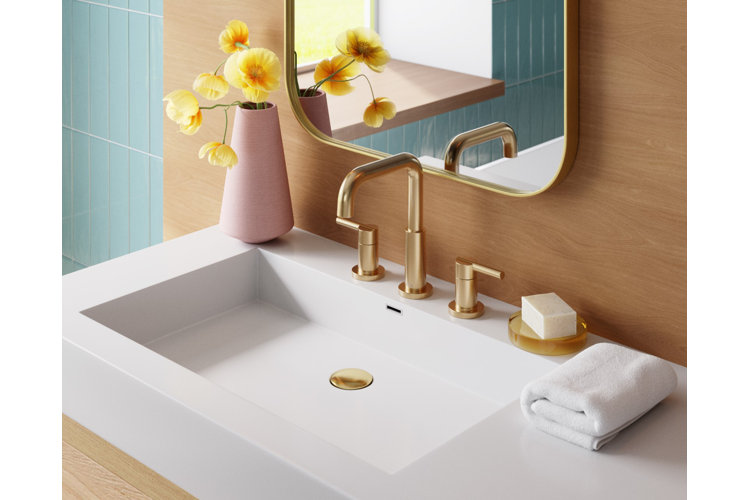
Whether your bathroom is a private spa-like oasis or a functional room used by everyone in the family, it is important to choose the sink faucet that best meets your needs without compromising your style. In this bathroom faucet buying guide, we break down the different types of bathroom faucets, finishes, and special features so you know what to look for when buying a faucet.
Glossary of Key Terms
- Faucet centers: The distance, in inches, measured from the center of the left pre-drilled hole to the center of the right hole
- Deck plate (escutcheon): A cover plate that attaches to the base of a faucet to conceal unused sink holes
- Rough-in valve: The plumbing valve installed inside the wall that connects to wall-mounted faucets
- Aerator: A flow-restriction device attached to the faucet spout that mixes air with water to reduce water usage while maintaining pressure
Step 1: Check Your Bathroom Sink Compatibility
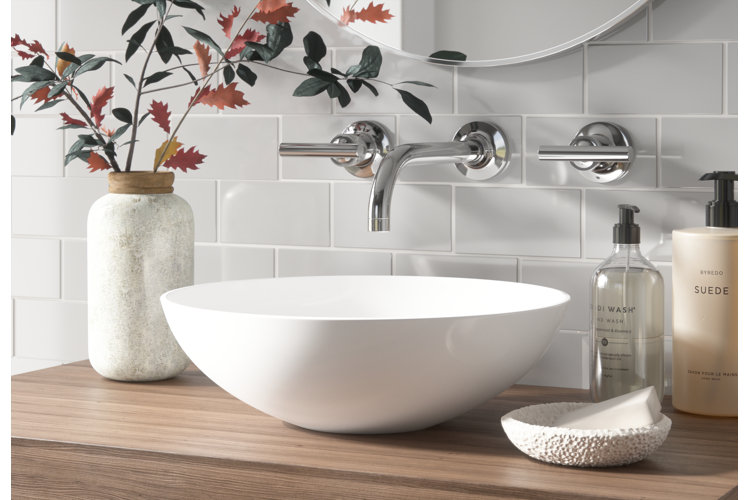
(Shop this image: vessel bathroom sinks, wall-mounted faucets, subway bathroom tile, white vases, faux flower stems, and soap dishes)
Review the following measurement and installation considerations before you start your faucet search to ensure you make the right decision.
Take Your Bathroom Sink Measurements
- If you are trying to swap out a bathroom faucet that is already installed, use it as a measuring guide for the replacement.
- Measure from the edge of the sink to the wall or backsplash tile to determine the right depth for the bathroom faucet. It will typically be centered directly behind the sink, about 3" to 6" from the wall.
- Use pre-drilled faucet holes as a guide to measure the space between where the faucet will go and the edge of the sink. This will also tell you how long a faucet spout will need to be to correctly drain into the sink portion. The spout should typically project between 4" to 8" from the back of the sink, which ordinarily equates to about 25% to 50% of the diameter of the bowl.
- For vessel sinks that rise above the counter, measure the height of the sink to determine the minimum height for a vessel faucet. There should be at least 6" of clearance from the bottom of the sink bowl to the spout.
- For small bathroom sinks, measure the width from one side of the counter to the other to determine how wide your faucet can be. A 4" centerset faucet will likely work best.
- Your toothbrush holder and other toiletry essentials will take up additional space on your vanity, so make sure to consider them.
Check Your Bathroom Sink Compatibility
The number of faucet holes your sink has will determine the type of faucet that will work the best. For example, if you have one faucet hole, you can choose between a vessel, single-hole, or centerset faucet, while a widespread faucet requires three faucet holes, and wall-mounted faucets don't require any faucet holes at all. If your sink has three pre-installed faucet holes but you want a vessel or single-hole faucet, you can attach a deck plate (also called the escutcheon) at the base of the faucet to cover the empty holes on either side.
Tip!
You may need a professional to help drill additional holes into your sink's counter portion to ensure the right placement and prevent cracks or breaks in the surface.
Step 2: Choose Your Sink Installation Type
The five most common types of bathroom faucets are single-hole, centerset, widespread, vessel, and wall-mounted. If you're installing a new faucet into an existing sink or countertop, it is especially important to choose the correct mounting option (the number and placement of holes).
A bathroom sink or countertop generally has three holes, but that number can vary. If your selected faucet type has more than one hole, make sure to measure the faucet centers (this refers to the distance, in inches, between the pre-drilled faucet holes from the very center of the left hole to the very center of the right hole).
For three-hole faucets, make sure you measure the width of the combined installation holes on your countertop and the distance between each hole to ensure a faucet meets those size requirements. Sink hole covers or deck plates, as mentioned above, can be used to hide unused holes.
- Single Hole: Single-hole faucets make the most of a small sink space and are also much easier to install, especially if you have only one hole in your existing sink or countertop. If you have chosen a single-hole faucet but have multiple holes in your existing vanity, look for a faucet with an optional escutcheon plate.
- Centerset (4" Faucet Center): This popular type of faucet can be used with sinks and countertops that have one to three holes. Centerset faucets have a deckplate that contains the handles and spout together. They require holes with 4" centers (this is the measurement from the center of the left hole to the center of the right).
- Widespread (8" – 16" Faucet Centers): A faucet spread refers to the width between handles. Faucets and handles are mounted individually to the sink or countertop without a deckplate in a widespread faucet. Multiple holes on your countertop or sink are required for installation. Widespread faucets require holes with a range of 8" to 16" centers. Also known as non-deckplate faucets, widespread faucets are the most popular option.
- Vessel Sink Faucets: Vessel sinks sit above the countertop and therefore require taller faucets. Faucets measuring 4" and higher will clear most vessel sink basins and are therefore called vessel sink faucets. It is important to measure the height of your vessel sink before purchasing a faucet.
- Wall-Mounted (8" Faucet Center): Wall-mounted faucets are installed on the wall above the sink, making countertop cleanup easier. They require a separate wall-mounted valve. A new rough-in valve may also be required when replacing an existing wall-mounted faucet.
Your faucet handle is quite important because you will use it every time you run the water. Not only can you select your handles based on size and sink type, but you can also match them to the style of your drawer handles, shower handles, and bathtub handles.
- Single Handle: A single-handle faucet usually (but not always) comes attached to a deck plate that covers up unused handle holes. Hot and cold water are both operated through one handle.
- Double Handle: Double-handle faucets may have individually mounted handles or the handles may be integrated into a deck plate. They feature separate handles for hot and cold water.
- Lever Handle: One of the more common handle styles, lever handles swivel forward to turn the faucet on and off. Lever faucets come in options that turn horizontally or vertically and in versions with two handles or a single handle.
- Cross Handle: Cross handles twist left and right to turn the water on and off. Thanks to their distinctive design, cross handles often have a vintage look.
- Knob Handle: Similar to cross handles, knob handles also twist to turn the faucet on and off. These handles can offer a more minimalist design or a vintage look, especially those with glass knobs.
The type of finish you choose for your bathroom faucet can help create a cohesive theme when matched to other fixture finishes in your bathroom. It can also enhance the durability of your bathroom sink faucet. Check out these finish options to learn about the benefits of each and which would work best for you.
- Brushed Nickel: Brushed nickel bathroom faucets are super durable because of their matte finish. Because it doesn't showcase water stains, this finish also keeps faucets looking clean. The quality of brushed nickel makes it more expensive than other finishes, but it's still relatively budget-friendly and long-lasting.
- Bronze: Bronze faucet finishes come in a variety of shades from golden brown to silver, meaning you'll have a range of options to choose from when matching your faucets to other bathroom fixtures. In addition to their versatile look, bronze faucets are also durable and stain-resistant.
- Chrome: Chrome faucets typically have a chrome-plated coating overtop of a metal base like nickel or steel to protect it and lengthen its lifespan. Chrome finishes also give faucets a glossy sheen at an inexpensive price point.
- Brass: Brass faucets have been used in homes for a long time – and for good reason. They have a solid construction that is rust- and corrosion-resistant, which prevents corrosion from the inside out and makes them less prone to cracking or wearing down over time.
- Black: Black faucets are made either of a material like iron, stainless steel, or brass that is coated in a black finish. This faucet finish works well in contemporary bathrooms with other black fixtures. Review the base material under the specifications tab on the product page to determine durability.
- Stainless Steel: Stainless steel faucets are affordable, are rust- and corrosion-resistant, and create a polished look for your bathroom sink.
- White: Create a fresh, clean look with a white faucet finish. These usually have a base layer of brass, nickel, or steel. They complement white marble countertops and white bathroom fixtures.
- Copper: When it comes to finishes, copper faucets are on the higher end of the price range. But they’re also at the higher end of the quality and durability spectrum. Not only do they look striking, but they also resist rust and corrosion and prevent bacteria build up that could damage the faucet and even potentially contaminate your water supply.
(Shop this image: matte black bathroom faucets, gray-patterned wallpaper, and soap dishes)
Be on the lookout for bathroom faucets with these beneficial qualifications or special features that cater to your needs.
- ADA-Compliant Faucets: These faucets comply with the requirements set by the Americans with Disabilities Act.
- Low-Flow Faucets: Low-flow faucets use less than 2.2 gallons of water per minute for an eco-friendly design. These faucets use aerators (a flow-restriction device) to limit water use.
- WaterSense-Certified Faucets: In order to be WaterSense-certified by the EPA, a bathroom sink faucet must use a maximum of 1.5 gallons of water per minute to reduce water flow by nearly 30% from the standard flow of 2.2 gallons per minute. These faucets are eco-friendly. Find out if a product is WaterSense-certified by reviewing the product description on the product page.
- Swivel-Spout Faucets: These faucets are designed with spouts that can rotate left and right on the base, allowing you to direct water flow to different areas of the sink.
Tip!
Looking to read more about bathroom sinks or find renovation inspo? Read our guides:
How to Replace a Bathroom Faucet
How to Choose the Right Type of Bathroom Sink
Bathroom Layout Dimensions: Your Guide to Bathroom Space-Planning
