Editor’s Guide to Fine China
Dreaming of a formal set? Get registry-ready with our tips for finding your perfect pattern and pieces.

China has long been a staple of the wedding registry for its elegant style and sentimentality. These classic pieces, while traditionally reserved solely for special occasions, instantly elevate any table.
Gone are the days of formal rules. China can be tailored to your own distinct aesthetic and to match your lifestyle. Set the foundation for many memorable meals over the years to come with a little help from our editors.
The Basics
When we say china, we actually mean formal or fine china, which is designed to be a step above your everyday dinnerware. It’s traditionally treated as a complete second set, and typically made of porcelain or bone china, which are (unexpectedly) the most durable dinnerware materials.
Want to know more about materials? Our dinnerware guide is here to help. Read now »
The “should we shouldn’t we” debate around registering for china is normally rooted in two practical factors: use and storage. And while these realities should absolutely be discussed, don’t let them dissuade you!
Avoid the temptation to dive straight into the plethora of stunning patterns. Instead, take the time to consider as a couple how you envision using your china, and whether you’re likely to put it on display or store it away. This will help you easily decide on the basics: the number of place settings and the pieces you want.
Tip! If an open china display isn’t a reality for your space, don’t fret—specialized china storage makes stashing it away safely a breeze.
The Patterns
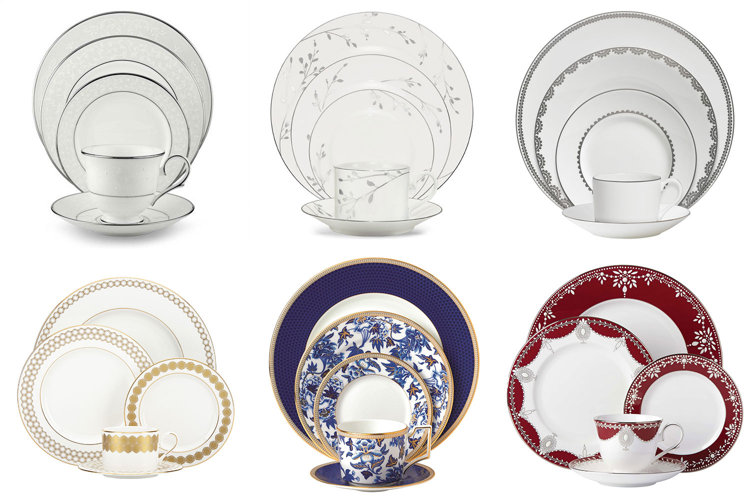
Now comes the fun part—and be prepared for variety! Let your china be a natural extension of your style as a couple. These are heirloom pieces to last a lifetime, but should also make you giddy to unwrap boxes as soon as they arrive.
There are five core designs for china, and more than one of these often comprise the final pattern:
1. White: This crisp, classic option can be simply unadorned or invigorated with textured patterns.
2. Floral: Open to many interpretations, this flourished choice channels nature’s inspiration.
3. Geometric: Its clean lines can skew modern or classic, all bringing eye-catching appeal.
4. Banded: This dynamic style features a rim accented with metallic, solid colors, or pattern.
5. Oriental: Global influences across colorways capture a worldly sophistication.
The Modern Twists
While many couples cherish the traditional formality of china, others are bringing a more dynamic mindset to the equation—choosing to make the everyday memorable too. Your imagination (and daring) is the limit when it comes to the creative freedom china provides, from mixing and matching different colors or patterns to layering china with casual dinnerware.
For the Traditionalists
Add a hint of the unexpected by registering for a serving accessory or two that counters your complete place settings. Opted for an ornate print for your full set? Try a textured white charger for neutral grounder. Went for a more subtle pattern? Inject a dose of color with a bold saucer or platter.
For the Design Minded
Spark your tabletop inspiration by giving yourself the gift of variety. Consider a collection of smaller sets—and create an endless stream of one-of-a-kind looks by playing with pairings. Switch up hues within the same pattern (split two or three ways), or broaden your reach and bridge different styles with a common color thread.
For the Skeptics
Think small and get clever with the details. Skip the formal second setting, and instead invest in a few practical pieces of china that compliment your dinnerware. Large serving dishes get the most mileage and offer functional diversity—transitioning from centerpiece to food platter to fruit bowl in a pinch.
