Outdoor Fountain Guide
Read this guide for everything you'll need to know about fountains, from functionality to style to material.

Design: Boxhill Design
https://www.wayfair.com/shop-the-look/slp/b45s7441--photo-id146956
The addition of an outdoor fountain to a garden or yard can create a stunning focal point or add a subtle decorative touch. There's an outdoor fountain that suits every personal preference and style. Before purchasing an outdoor fountain, read this guide for everything you'll need to know about fountains, from functionality to style to material.
3 Types of Fountains
1) Floor and Free StandingPlace these fountains on a level surface to protect from motor burnout and uneven water flow, which harms the fountain.
2) TabletopSmaller than free standing outdoor fountains, tabletop models give a softer, relaxing sound.Be sure not to overfill your tabletop fountain to avoid overflow and water damage to surfaces that shouldn't be consistently damp.
3) Wall
Commonly used in smaller yards or side yards, these fountains attach to a wall or the side of a house.These should be hung on a level plane to allow for motor protection and even water flow.
Tip!
Try to maintain the water level. It will ensure the longest life of your fountain pump and motor. Low water levels can cause the motor to burn out and the fountain will make more noise. High water level causes overflow, spillage, or splashing.
8 Popular Styles
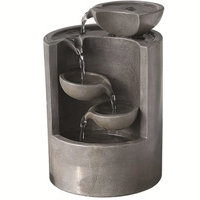
1. Tiered: Ranging from two to six tiers, this outdoor fountain is designed with a series of levels that water collects into and flows over. A classic addition to any garden.
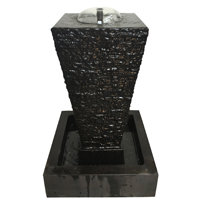
2. Column: Featuring a single pillar design, a column fountain is the ideal subtle accent for your outdoor living space.
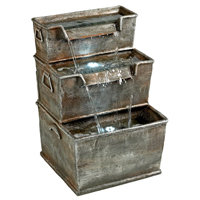
3. Waterfall: Designed to create a waterfall effect when the water runs over the edge, a waterfall fountain—whether placed on a tabletop or in the center of your garden—brings a tranquil feel to your outdoor area.
4. Rock: This style, designed to resemble rock or slate, blends in with the rest of your landscape creating a seamless organic look.
5. Birdbath: Designed to serve as a small basin for birds to bathe in, this fountain is perfect for birdwatching enthusiasts and will add a lively touch to any backyard.
6. Sculptural: Featuring a three-dimensional sculptural design, this style of fountain will serve as an elegant finish to any outdoor space.
7. Sphere: Prominently displaying a modern spherical design or decorations, this style will a touch of zen.
8. Urn: Featuring one or multiple large, decorative vase designs, an urn water fountain can bring a modern or even antique feel to any garden.
Tip!
Drain and store non-permanent outdoor fountains to avoid any damage to mechanical parts, construction, and finish, such as freezing or cracking.
7 Common Fountain Materials
To consider what type of material best fits into your landscape, think about the climate you live in (whether it's cold or warm, humid or dry), how the fountain will age, and how it will coordinate with the your plants and other outdoor decor. Check out the 7 most common materials below:
1. Fiberglass
- Durable and lightweight
- Can mold into different shapes
2. Resin
- Durable
- A budget-friendly option
- Mimics the appearance of various natural materials
- Scratches are easy to remove
3. Stone
- Includes rock, granite, marble, and more
- Available in a range of natural colors
- Highly durable and resistant to wear
- A heavier material
4. Copper
- Ages and develops a greenish patina over time for added character
- A more delicate material, as it can be easily scratched or dented
- Often paired with other elements, such as slate or stone
5. Brass
- Durable and long-lasting
- Commonly used in sculptural fountains
- Best suited for a permanent installation because it's heavy
- Durable and long-lasting
- Resistant to corrosion and rust
- Easy to clean
7. Ceramic
- Durable and long-lasting
- Available in a wide variety of colors and glazed or unglazed
- Often paired with rocks or pebbles to generate soothing sound effects
Tip!
For most outdoor fountains, use a garden hose as the water supply. Make sure to add an algae treatment to the water to help prevent harmful algae growth and build-up.
